Metadata Tool Consolidation

Four capabilities on one metadata foundation

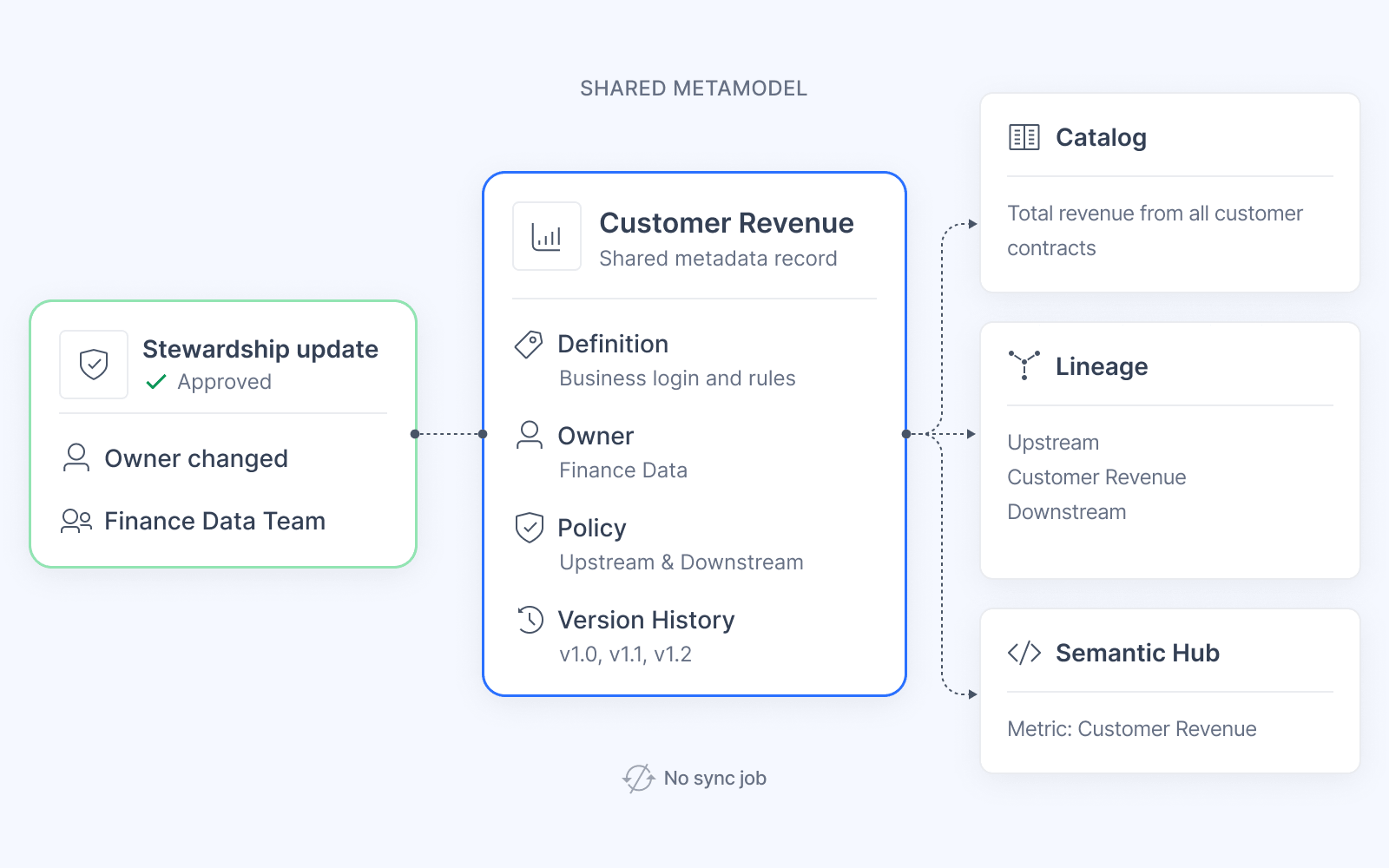
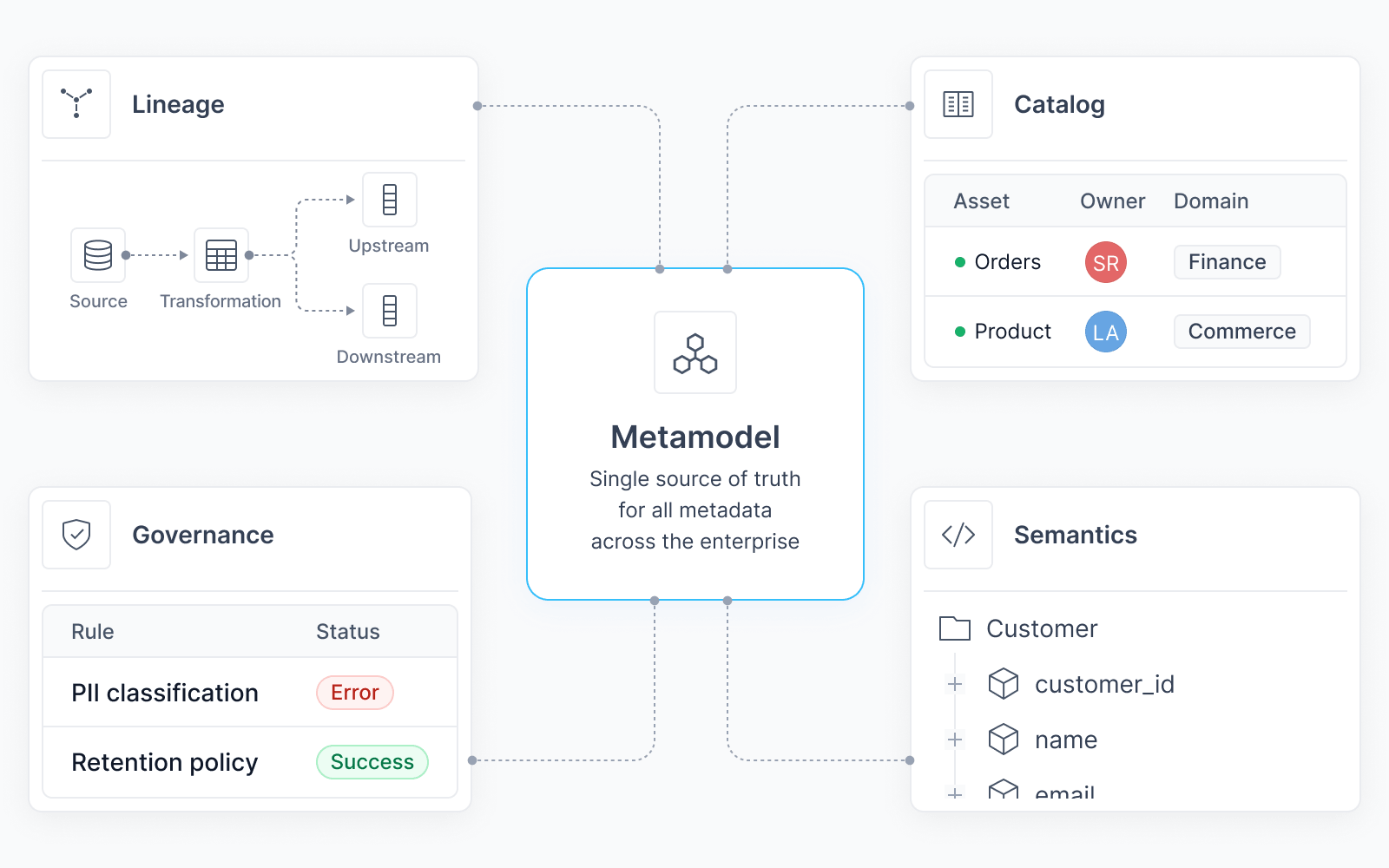
Lineage, catalog, governance, and semantics read from and write to the same metamodel. A stewardship decision shows up in lineage the moment it's made, with no integration job in between.

Key capabilities

One fully integrated platform built on a shared metamodel

400+ connectors across legacy, cloud, and hybrid sources

Version and configuration management across all four capabilities

Nearly 30 years of OEM metadata engineering

The Problem

The integration became its own product

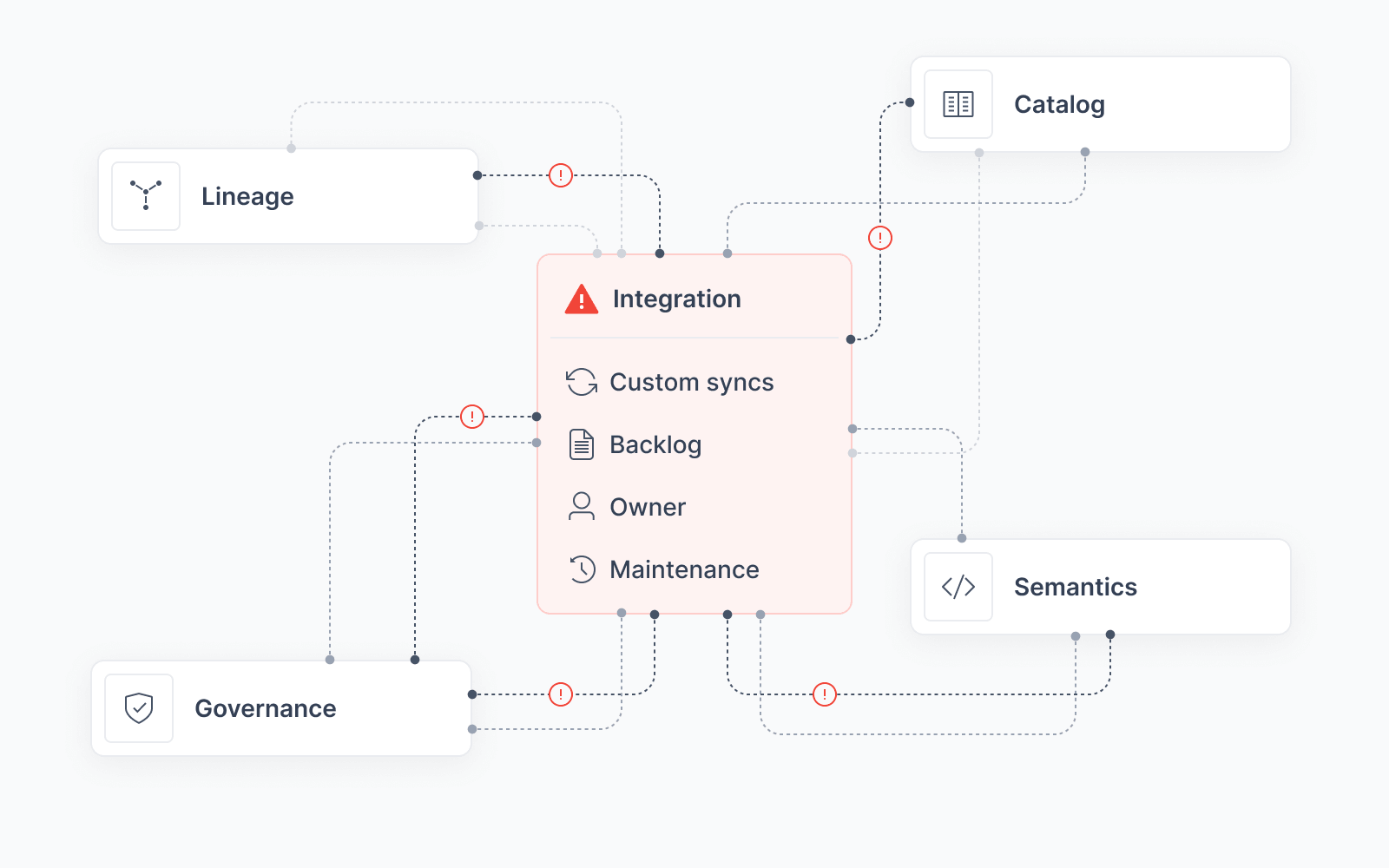
Most enterprises run separate tools for lineage, catalog, governance, and semantics. None of them share a metamodel.

So someone builds custom integration between them, and that integration acquires a backlog, an owner, and a maintenance cost of its own.

Every change in one system needs manual synchronization across the others. The team ends up maintaining plumbing while the estate drifts underneath it.

An assembled metadata solution carries this structurally. Tools that each own their own metadata will always need something in between them.
The Approach

One metamodel underneath all four capabilities

Data Lineage, Data Catalog, Data Governance, and Semantic Hub are built on a shared metadata foundation. Lineage edges, catalog entries, governance policies, and semantic definitions all read from and write to the same underlying model.

A stewardship decision is visible in lineage immediately. A catalog update is reflected in the definitions that reference it. Synchronization drops out of the picture, because there's one copy from the start.

Version and configuration management runs across all four, so the estate carries one change history that every capability writes to.

The catalog can't drift from the estate it describes.

What Changes

Fewer tools, one change history

Consolidating lineage, catalog, governance, and semantics removes the integration surface between them.

Coverage that reaches the legacy systems

400+ connectors span mainframe and legacy sources through modern cloud platforms, so no part of the estate sits outside the repository.

A platform you can leave

Remove us tomorrow. Your definitions stay.