
BI Metric Consistency

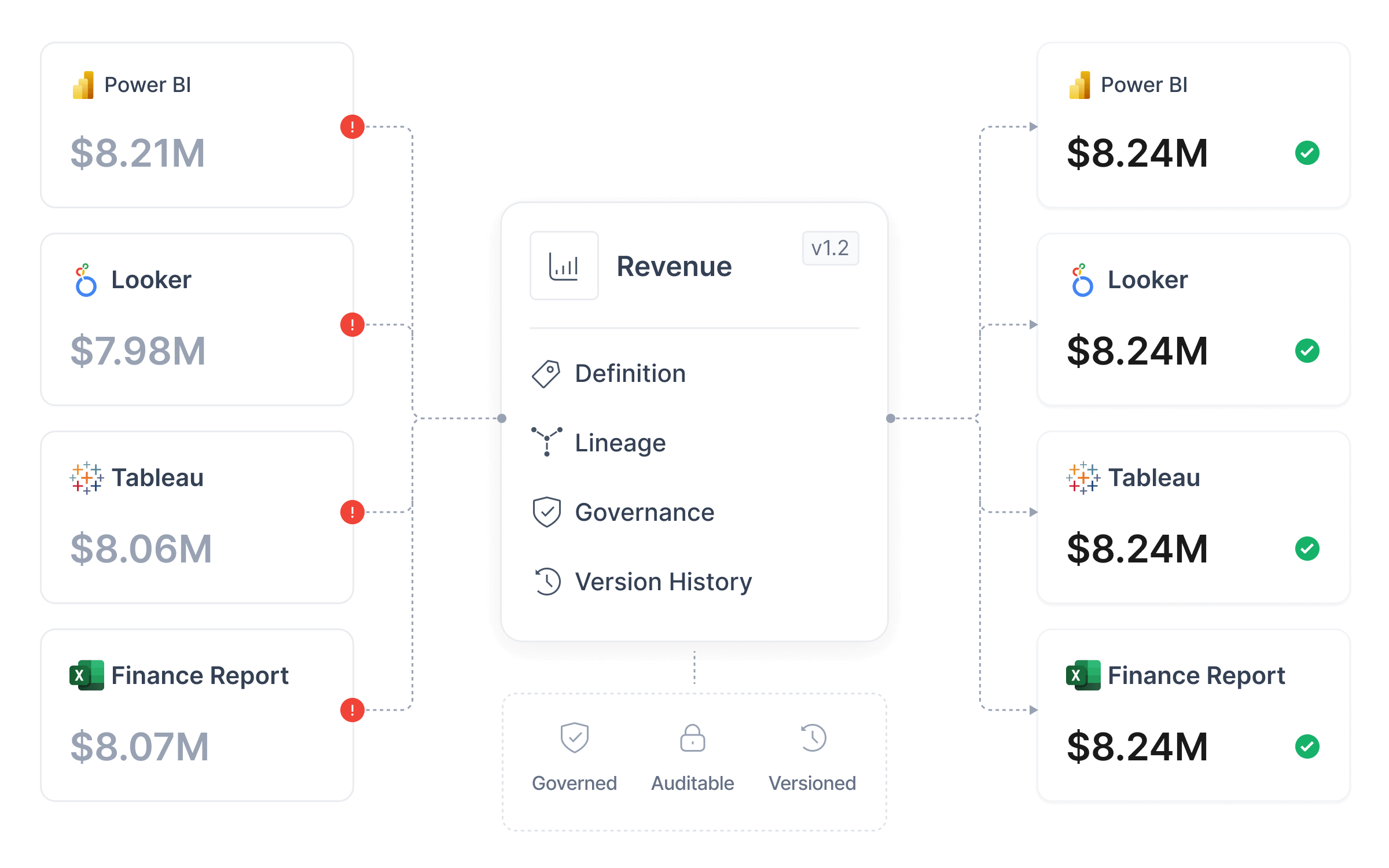
Get the same number in every BI tool

Define a metric once in MetaKarta, then compile it into the native format of every platform that reports on it. Finance and sales ops stop reconciling, because they're reading the same compiled artifact.

Key capabilities

400+ connectors across legacy, cloud, and hybrid sources

Compile into native formats of data and BI platforms, legacy and modern

Column-level lineage behind every published number

Version history on every definition change

The Problem

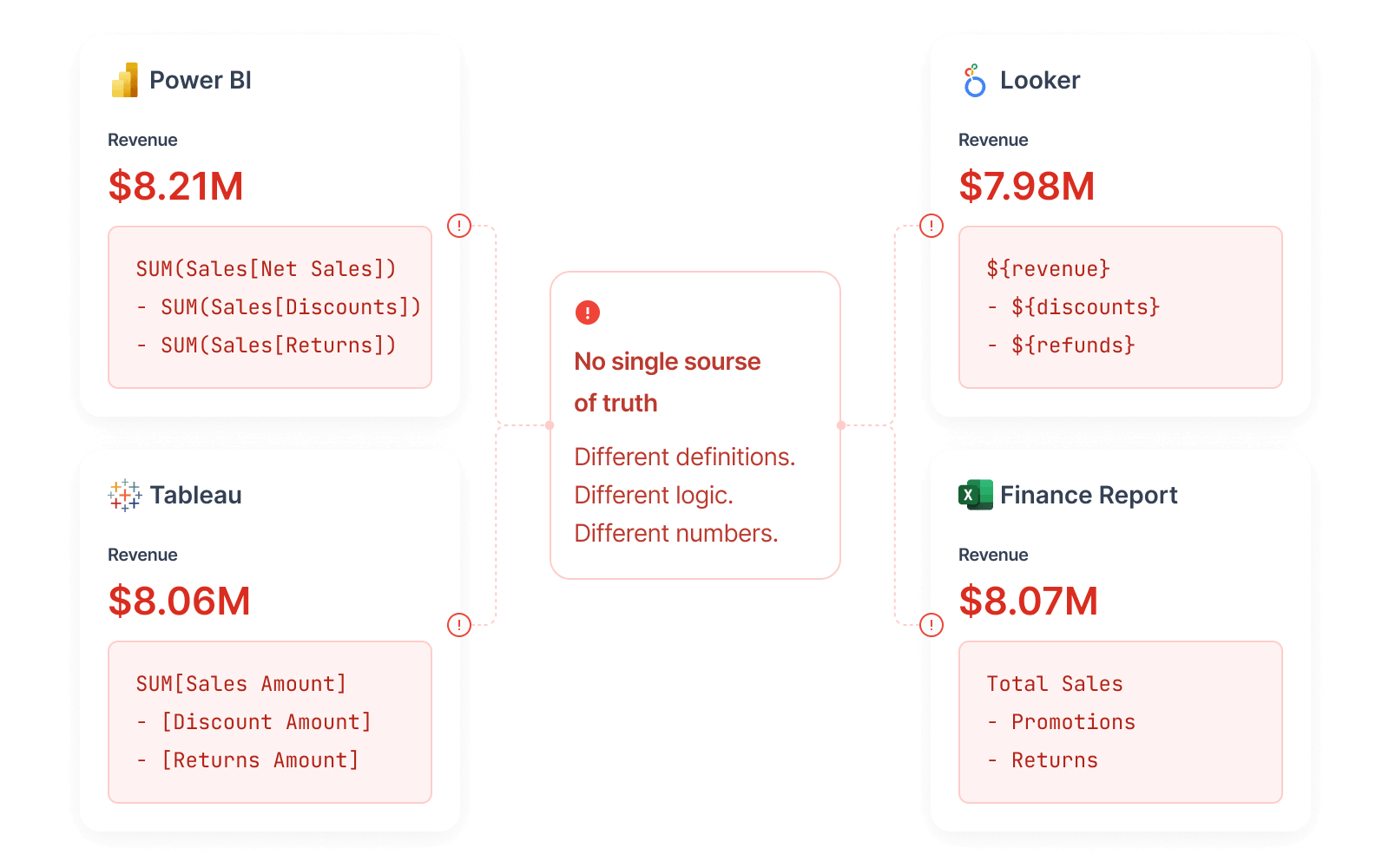
Every new BI tool gets its own version of revenue

"Revenue" means one thing in Power BI and another in Tableau. Finance's ARR and Sales' ARR come from calculations written years apart by people solving different problems.

Each new tool in the estate gets the metric coded again, usually by someone working without full context on what the original definition was supposed to enforce.

Teams spend roughly 20% of every sprint reconciling numbers instead of building. The executive complaint arrives in the same words every quarter: the numbers don't match.
The Approach

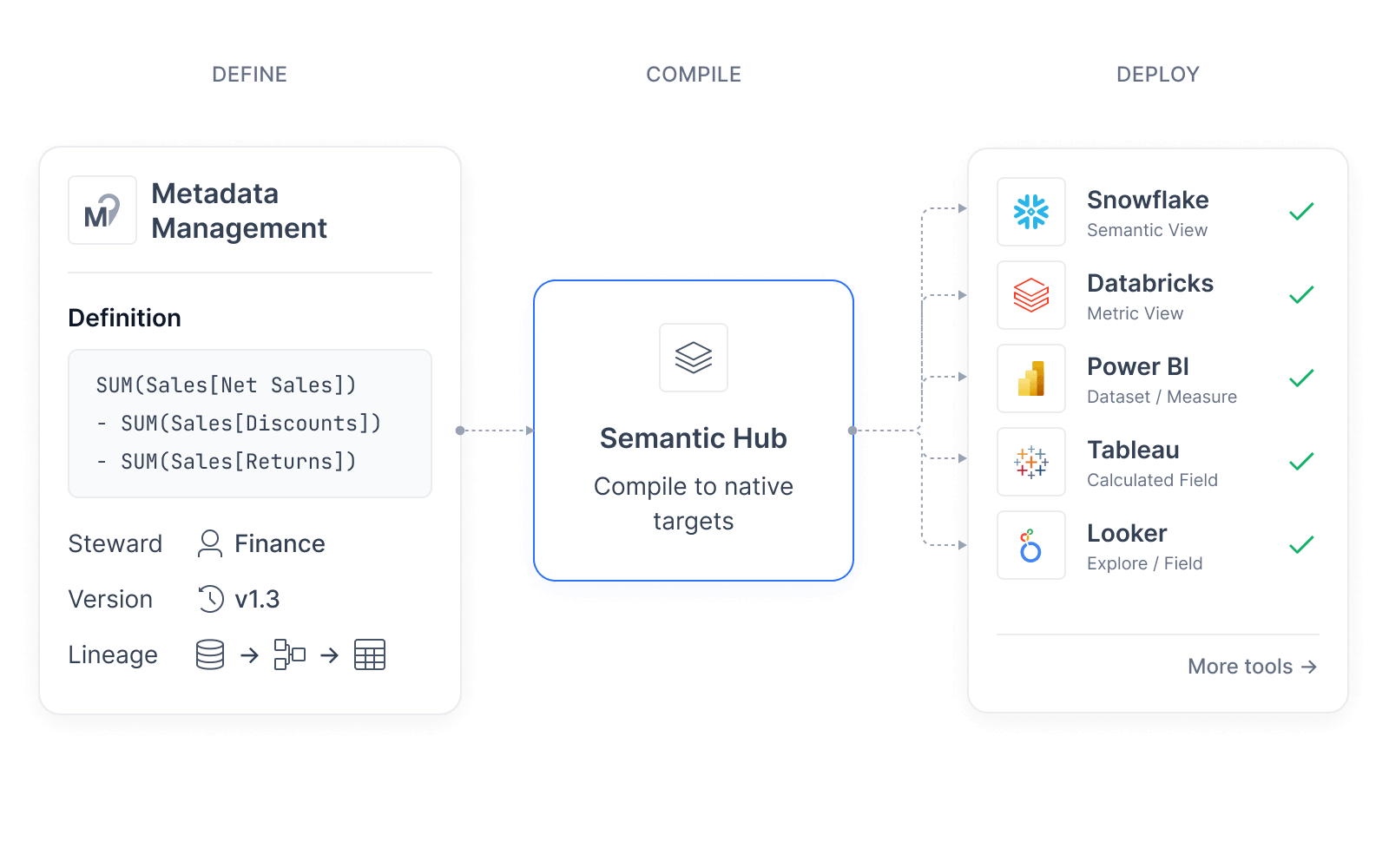
Define the definition once, then deploy it to every target

Definitions live in the shared metadata repository alongside the lineage that traces them and the stewardship records that document who changed them and when.

Semantic Hub compiles that governed definition into the native artifacts of every target platform. The same definition produces the same number everywhere it's consumed.

Change the definition and recompile it into every target. The reconciliation work goes away because the fragmentation underneath it is resolved in the systems and tools that report the number.

What Changes

One number in the board deck

Every tool reads the same compiled artifact, so the quarterly argument about whose figure is right has a factual answer.

Sprints spent building

Reconciliation work drops out of the sprint because the definitions stop diverging between releases.

Definitions that survive the next tool

Adding a BI platform means adding a compile target. The governed definition carries forward intact.

Frequently asked
questions

We have five versions of revenue. How do we decide which one is right?

Import all five first. MetaKarta reverse-engineers existing definitions from Power BI, Tableau, Looker, and legacy tools like MicroStrategy and SAP BusinessObjects, and column-level lineage shows which source columns and transformations each version reads. Semantic Reconciliation lines the versions up, surfaces where they diverge, and lets a steward merge them into one governed definition.

Which platforms can a governed metric compile into?

Snowflake Semantic Views, Databricks Metric Views, Oracle Analytic Views, Power BI semantic models, Tableau logical models, LookML, and more. Each target receives an artifact in its native format, so analysts keep working in the tool they already use. Adding a BI platform later means adding a new compile target.

Where do the compiled definitions run?

Inside your warehouse and BI tools. Semantic Hub compiles each definition into native artifacts before any query runs, so the database and the BI tool enforce the logic themselves and query traffic never routes through a MetaKarta engine.

What happens when a definition changes?

A steward approves the change, and Semantic Hub recompiles it into every target that reports the metric. The change is versioned and attributed, and Git and CI/CD integration lets your team put it through branching, code review, and automated deployment like any other code change.

Can we test a metric before it reaches a production dashboard?

Yes. Semantic Model Testing runs the metrics and dimensions you select against the live data source, so you can compare the result with the number you expect. Pre-Compilation Testing catches modeling errors, dependency issues, and platform compatibility problems before anything deploys.

Do access rules carry over to each tool?

Security policies are defined once and compile into native row-level and platform-specific access controls in each target. Each tool enforces the same rules without anyone re-coding them per platform.

What do we keep if we stop using MetaKarta?

The compiled artifacts. They're native objects in your target systems, so they keep working where they are, and the source definitions are written in Semantic Hub Language (SHL), a YAML-based language your team can read and version in Git.