
















Data Governance

Defend any definition on demand

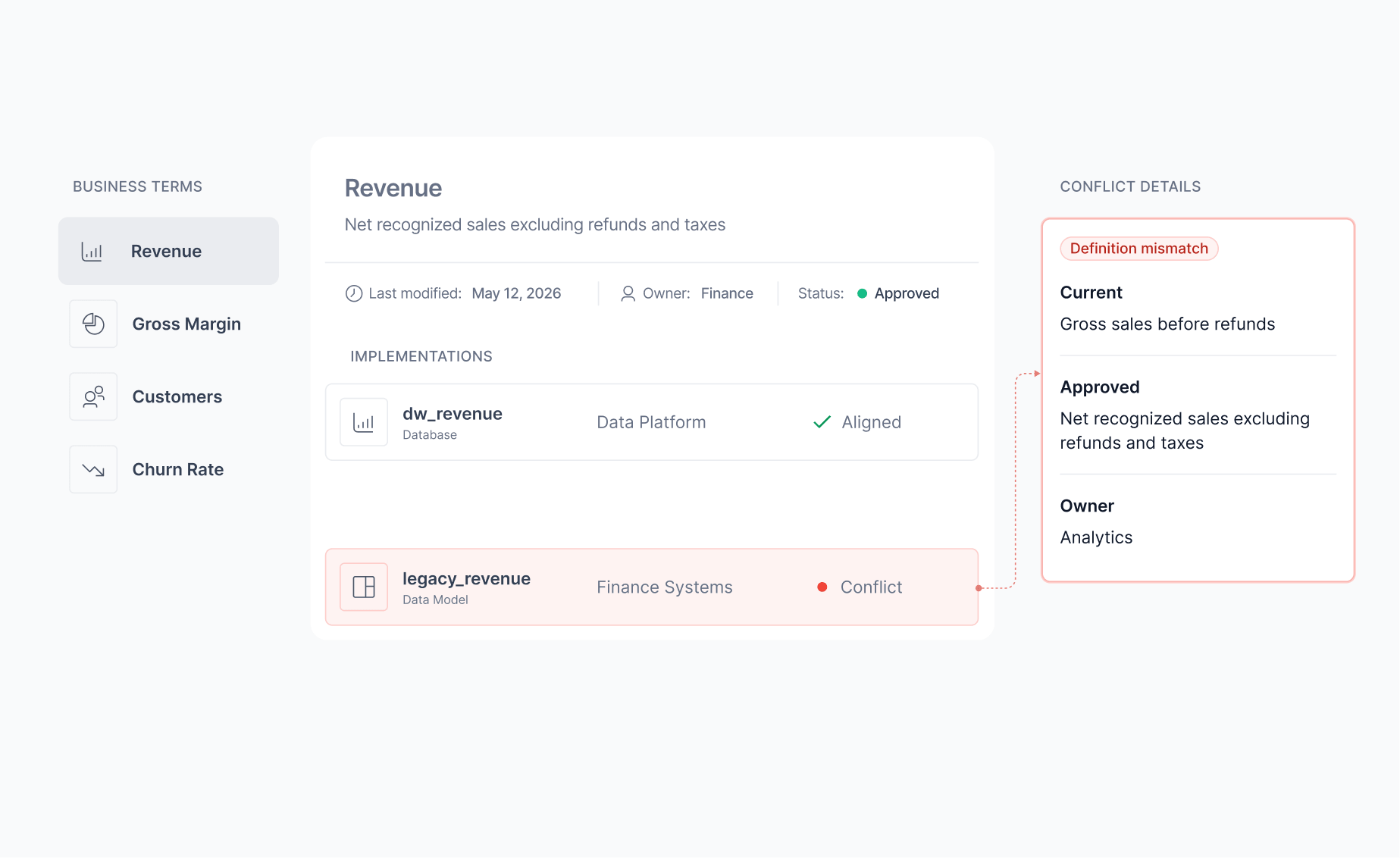
MetaKarta connects business meaning to technical reality. Business terms link directly to the fields that implement them. Stewardship workflows run automatically. Every governance decision is version-controlled, attributed, and auditable on demand.

Govern what your data means for every connection

Mechanism

Turn governance into a system behavior

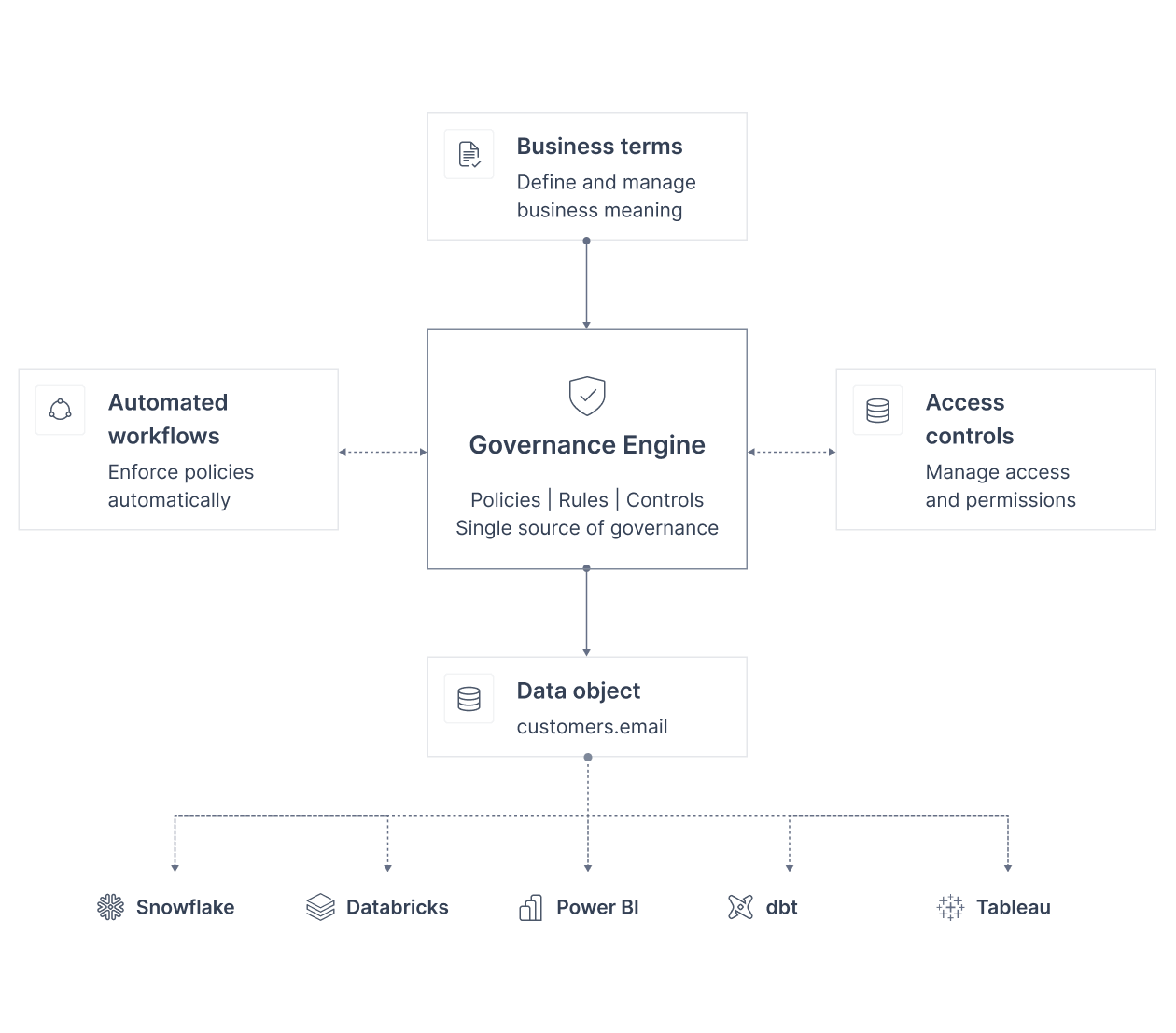
Most governance programs run on goodwill. Someone defines a term, someone else is supposed to apply it consistently, and everyone hopes the downstream systems comply. MetaKarta makes data stewardship a system behavior. Definitions connect to the data that implements them. Workflows trigger automatically. Policy changes propagate without manual coordination.
What each stage delivers

01

Define

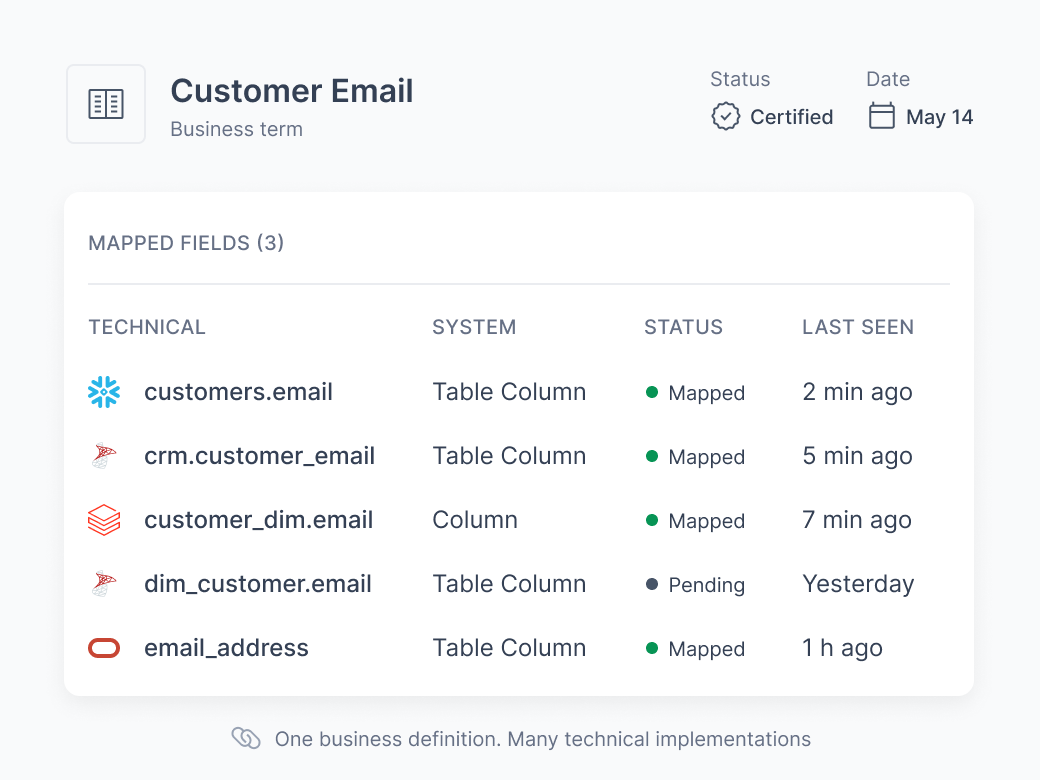
Author business terms in the business glossary and map them directly to the technical fields that implement them. Semantic lineage traces how definitions flow.

02

Classify

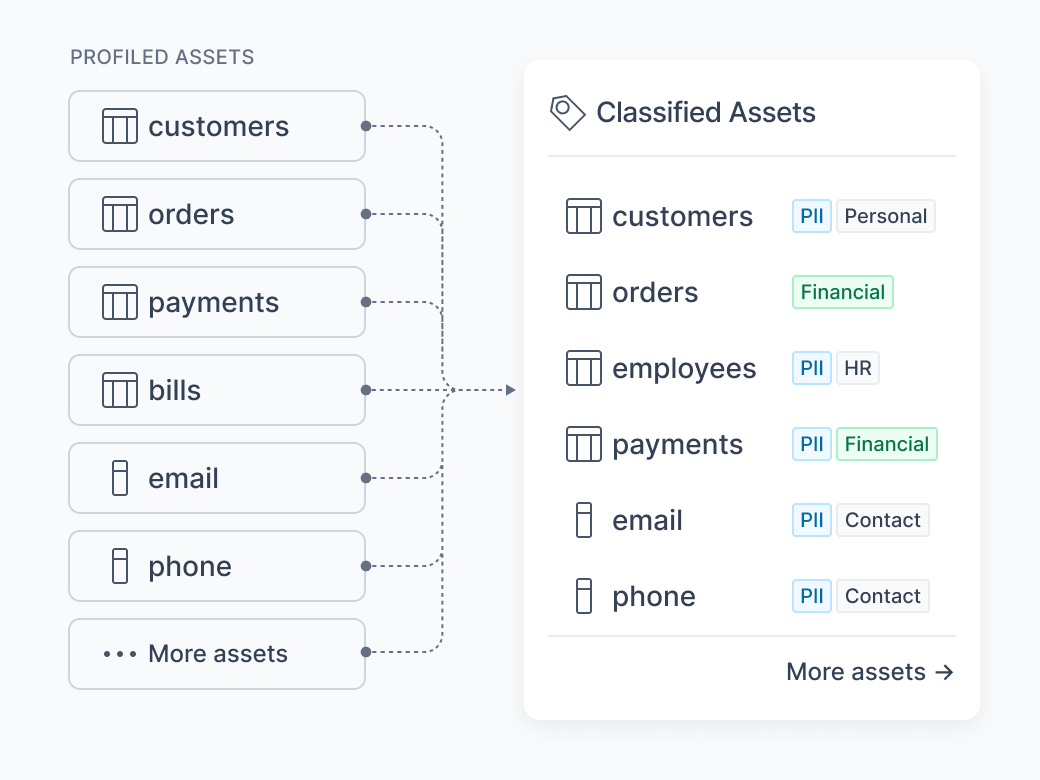
Automated data classification identifies PII and sensitive data across the full estate without manual tagging. Findings trigger stewardship workflows immediately.

03

Govern

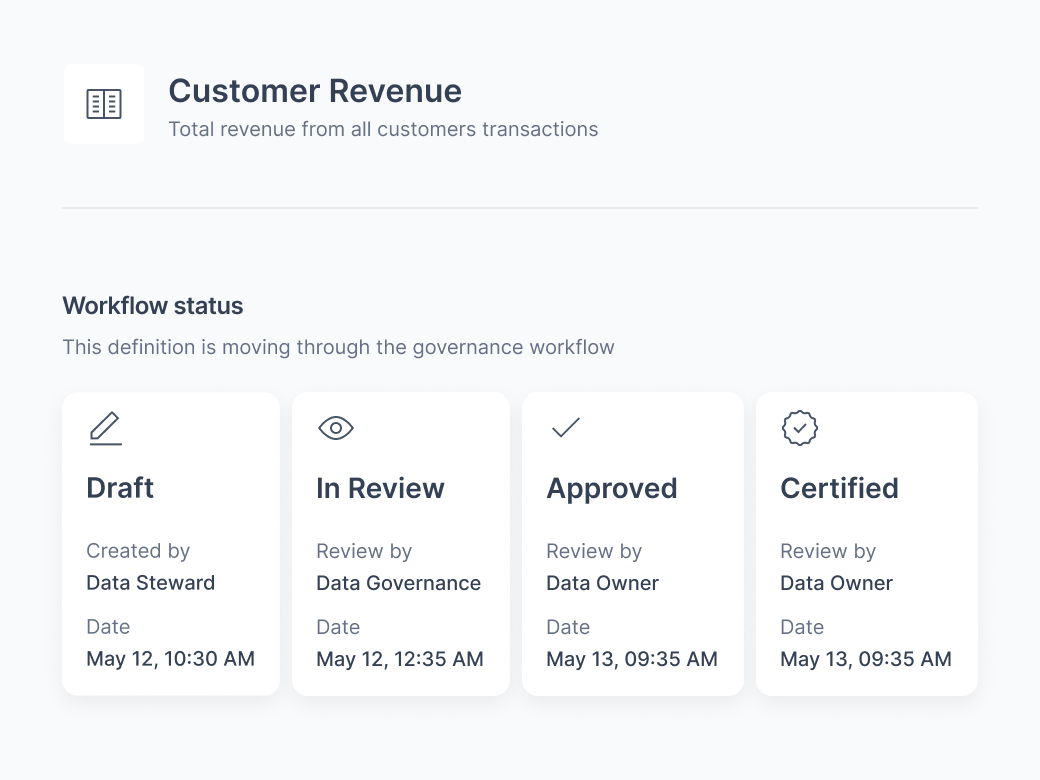
Customizable stewardship workflows route definitions through review, approval, and certification cycles without manual coordination.

04

Audit

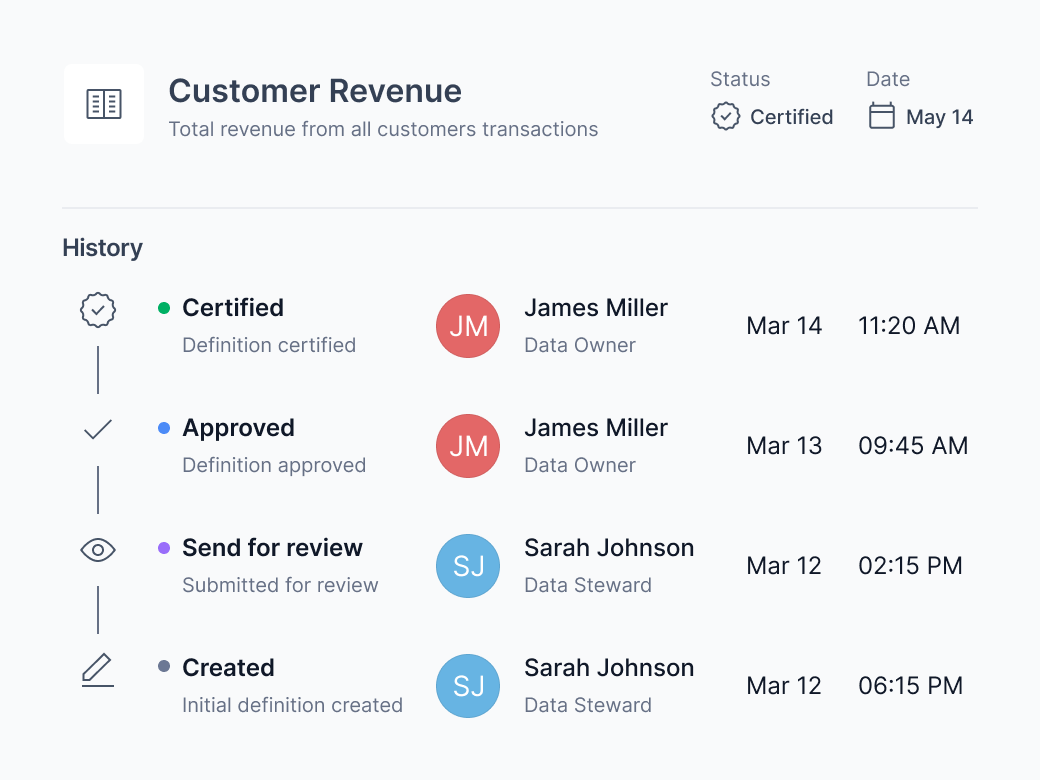
Every governance decision has an audit trail in the shared metadata repository. Answer "what did this metric mean on March 14th?" in seconds.

Features

Business meaning connected to the data that delivers it

Business glossary and semantic mapping

Business terms link directly to the technical fields that implement them. Semantic lineage traces how definitions flow from source through transformation to every consumer.

Automated stewardship workflows

Customizable review, approval, and certification cycles run without manual coordination. Ownership is assigned. Accountability is tracked in the system.

Automated data classification

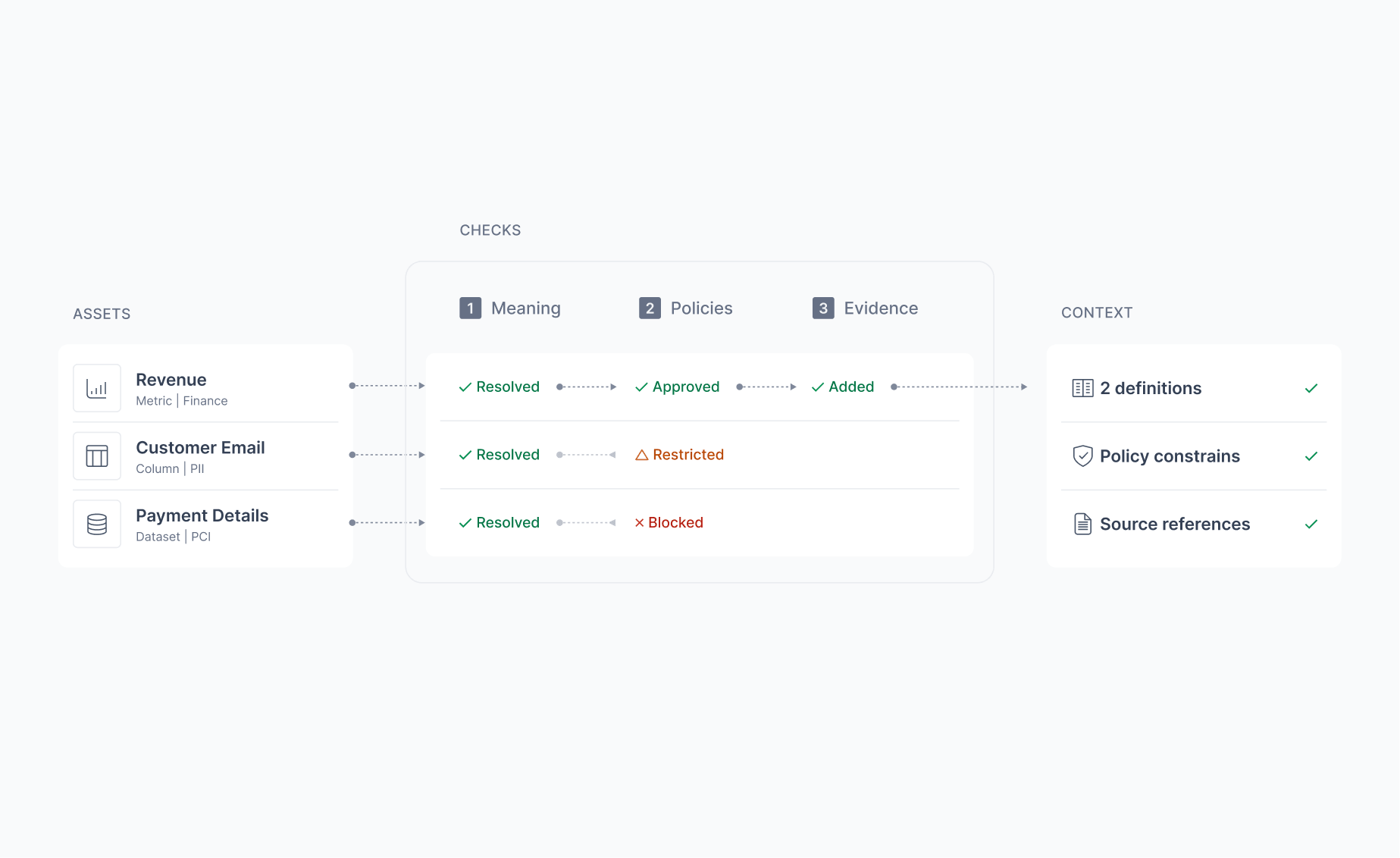
Identifies PII and sensitive data at scale across the full estate. Findings trigger stewardship workflows and masking enforcement without manual review.

Full version and configuration management

Every governance decision is logged, attributed, timestamped, and reversible. Reconstruct the exact state of any definition at any point in history.

Data and process modeling (IDEF1X, BPMN, UML)

Formal blueprints connect IT infrastructure to business operations. Enterprise architecture documentation that reflects how data actually flows.

Governance on live metadata

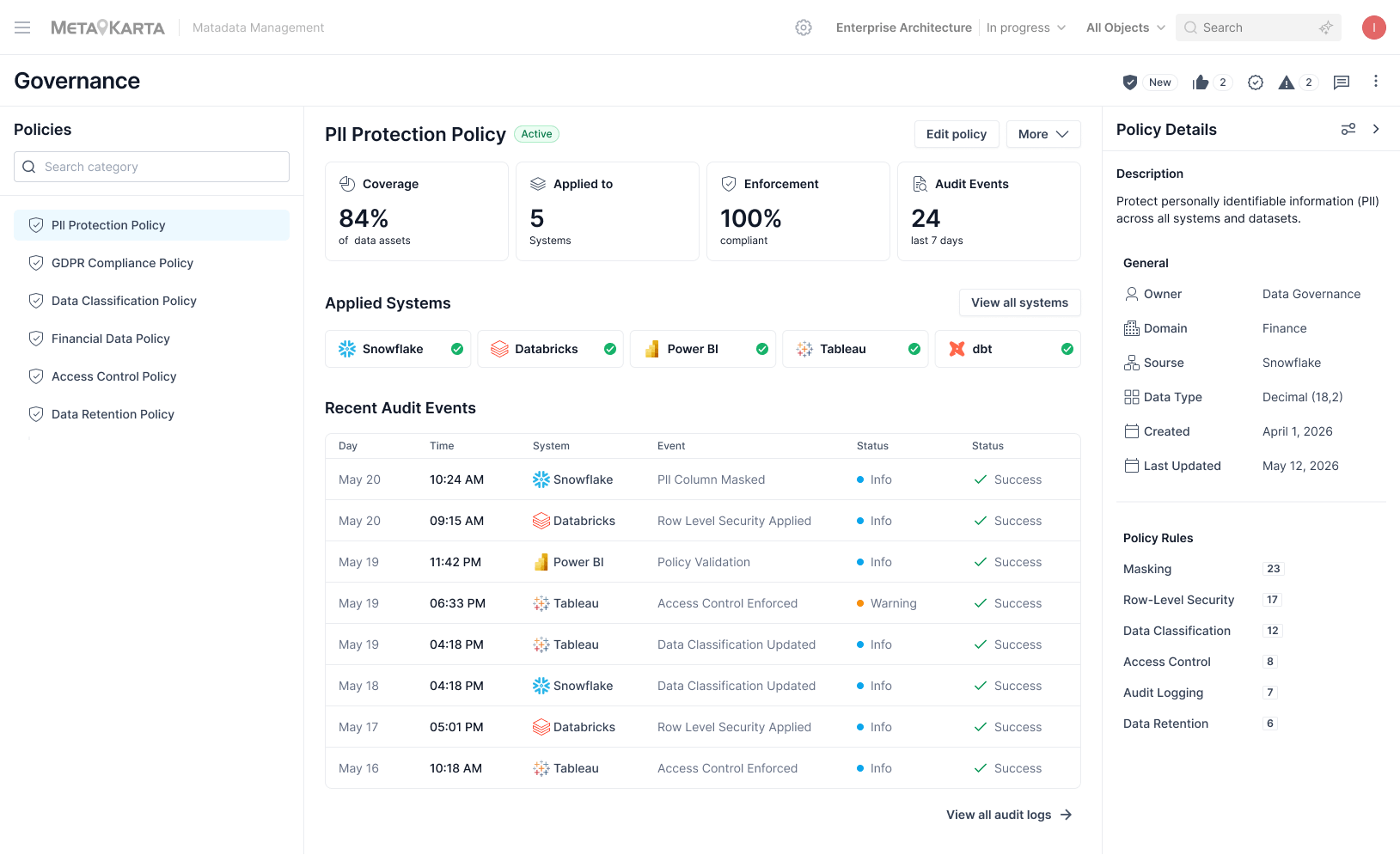
All governance capabilities run on the shared metadata repository. Policy changes propagate across catalog, lineage, and semantic definitions without synchronization.

The Architectural Difference

Documented intent vs. connected enforcement

Documentation-first

Describes what governance should be

Documentation-first governance tools define policies, assign ownership, and record stewardship decisions in a purpose-built UI. When the underlying data changes, someone has to notice, update it, and hope that downstream systems eventually reflect the intent.

Drawbacks

Business glossary definitions don't connect to the technical fields that implement them: the term exists in the tool, the data does whatever it was already doing

Policy compliance depends on humans to notice and act: the tool documents the gap between intent and reality without closing it

Audit readiness is a reconstruction project: lineage documentation is assembled manually when an auditor asks for it

Governance program strength is proportional to team capacity, not to system architecture

MetaKarta Data Governance

Stewardship automated in the system

MetaKarta connects business terms directly to the technical fields that implement them, with semantic lineage tracing how each definition flows from source through transformation to every consumer. Stewardship workflows run automatically. Every governance decision is version-controlled and auditable on demand, built on the same shared metadata repository that lineage and catalog run on.

Advantages

Business terms connect to the technical fields that implement them, with semantic lineage proving the path from definition to data

Automated stewardship workflows close the gap between governance intent and governance action, without relying on manual coordination

Audit readiness is a query, not a project: every governance decision is version-controlled, attributed, and retrievable in seconds

No integration needed between lineage, catalog, governance, and semantics

How It's Used

Governance that changes what systems do

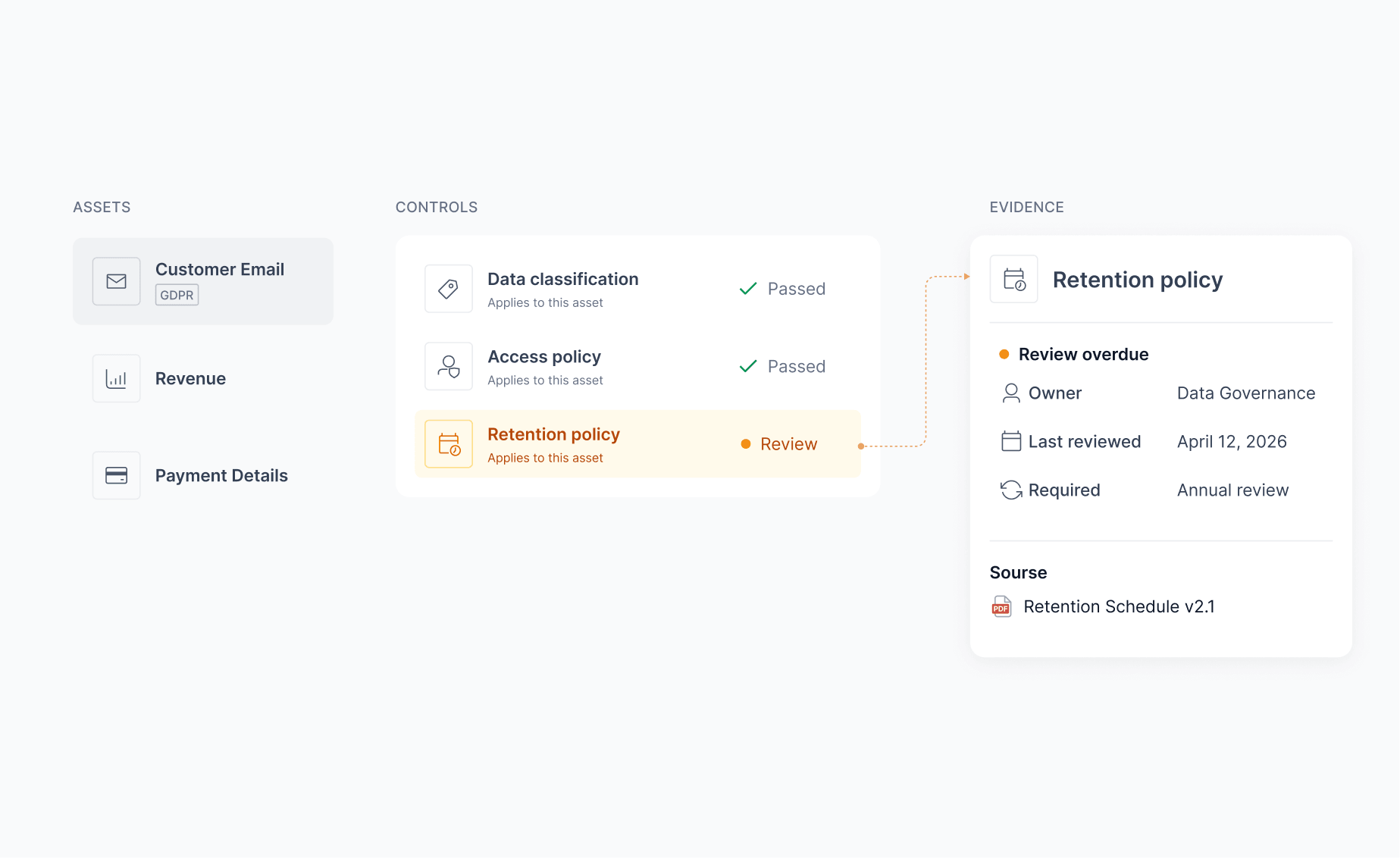
Answer the auditor's question in seconds, not weeks.

SOX 302 and financial data lineage

Trace any number in a financial report back to its source, with a complete version-controlled audit trail. The answer is immediate.

GDPR, CCPA, and HIPAA sensitive data management

Automated PII and sensitive data classification scales compliance without manual tagging.

BCBS 239 and CSRD data lineage documentation

Column-level lineage for regulatory output is always current and versioned. Produce documentation on demand.

One definition of revenue everywhere

Resolving BI metric discrepancies

Business glossary terms connect directly to the technical fields that implement them, with semantic lineage tracing how definitions flow into every BI tool and report.

Board and executive reporting confidence

Every number in every board deck traces back to a governed definition with full lineage. When the CFO asks where a number came from, the answer is immediate and auditable.

Data domain ownership and stewardship

Customizable workflows assign ownership, route definitions through review cycles, and track accountability in the system. Stewardship runs by architecture, not by asking people to comply.

Deploy AI on data you can actually vouch for

Governed context for AI agents

AI agents and text-to-SQL tools reason against governed definitions, not raw schema. Every AI output traces back to a definition with full lineage from source through transformation.

AI audit trail and provenance

Every governed definition carries a complete version history. When a regulator or audit committee asks whether AI outputs are trustworthy, the answer is traceable to specific governed definitions, not a strategy deck.

Governance-ready AI deployment

Delivers governed semantic context, lineage provenance, and governance status to AI consumers via MCP across the full shared metadata foundation.  

Frequently asked questions

How is this different from a standalone business glossary tool?

MetaKarta's glossary terms map directly to the technical fields that implement them, with semantic lineage proving the path from definition to data. A definition in MetaKarta is connected to the estate, so a change to the term or the field is visible, versioned, and routed through stewardship.

Which compliance frameworks does MetaKarta support?

Teams use MetaKarta for SOX 302 financial traceability, GDPR, CCPA, and HIPAA sensitive data management, and BCBS 239 and CSRD lineage documentation. The common thread: the evidence is version-controlled and produced on demand.

Can we prove what a metric meant on a specific date?

Yes. Every governance decision is logged, attributed, timestamped, and reversible. "What did this metric mean on March 3rd" is answered with a query against the version history, in seconds.

How do stewardship workflows actually run?

You configure review, approval, and certification cycles once; MetaKarta routes definitions through them automatically, assigns ownership, and tracks accountability. Classification findings (a newly detected PII field, for example) trigger the right workflow without anyone filing a ticket.

Does governance here actually change what downstream systems do?

Yes, and that's the architectural point. MetaKarta compiles governed definitions into the native formats of the databases and BI tools that consume data, so what governance defines is what systems run. Documentation describes what should be true. Compilation makes it true.

How does MetaKarta govern AI use of data?

AI agents reason against governed definitions, and every output traces back through those definitions with full lineage. When someone asks whether the AI's answer is trustworthy, the provenance chain is the answer.