For Data Architects & Data Engineers

Know what breaks before it ships

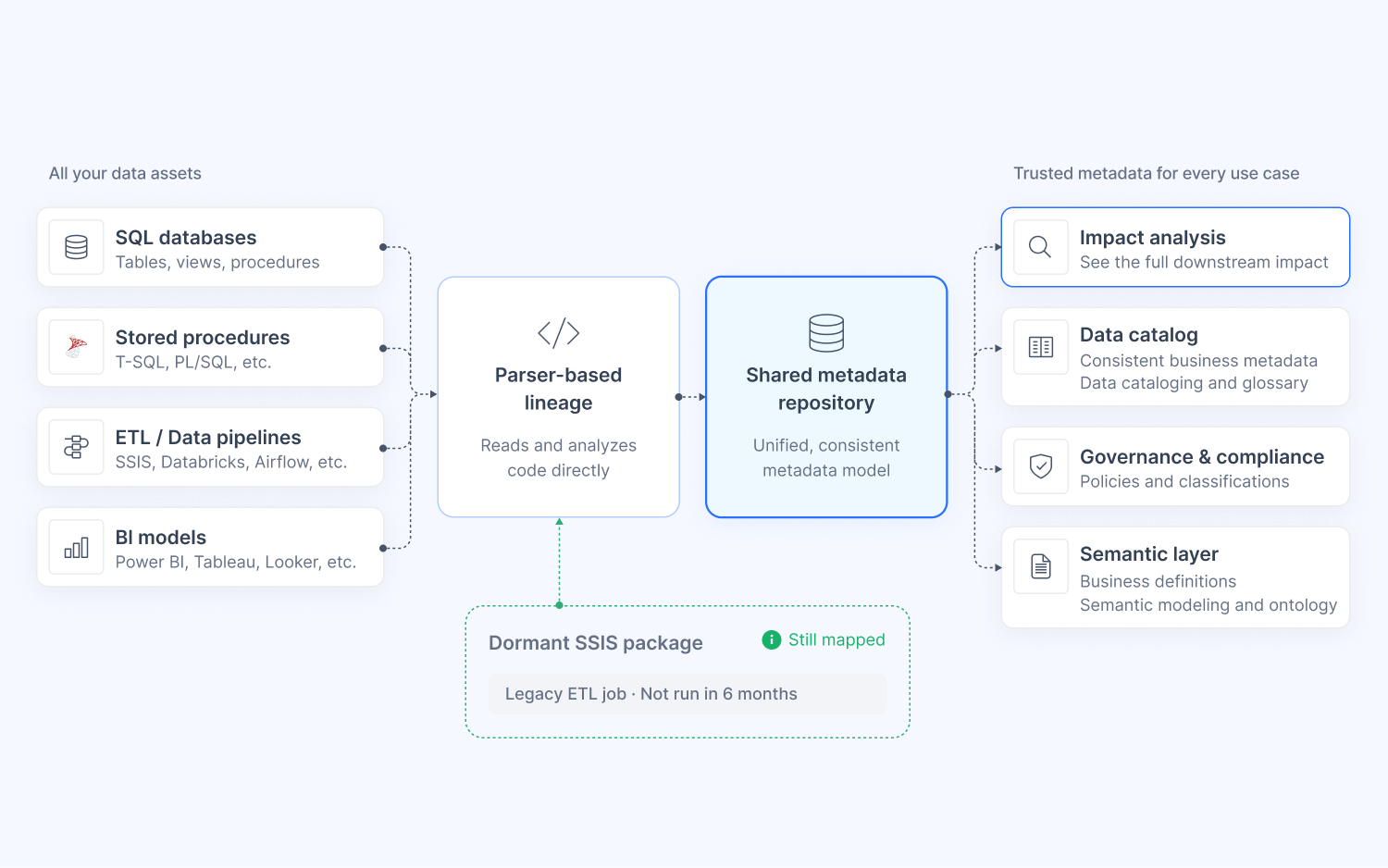
MetaKarta computes column-level lineage from your code across 400+ connectors and keeps it in one shared metadata repository. Impact analysis runs before the deploy, and the map of your estate lives in a system you can query.

Key capabilities

Parser-based, column-level lineage computed from SQL, ETL, and BI code

400+ connectors across legacy, cloud, and hybrid sources

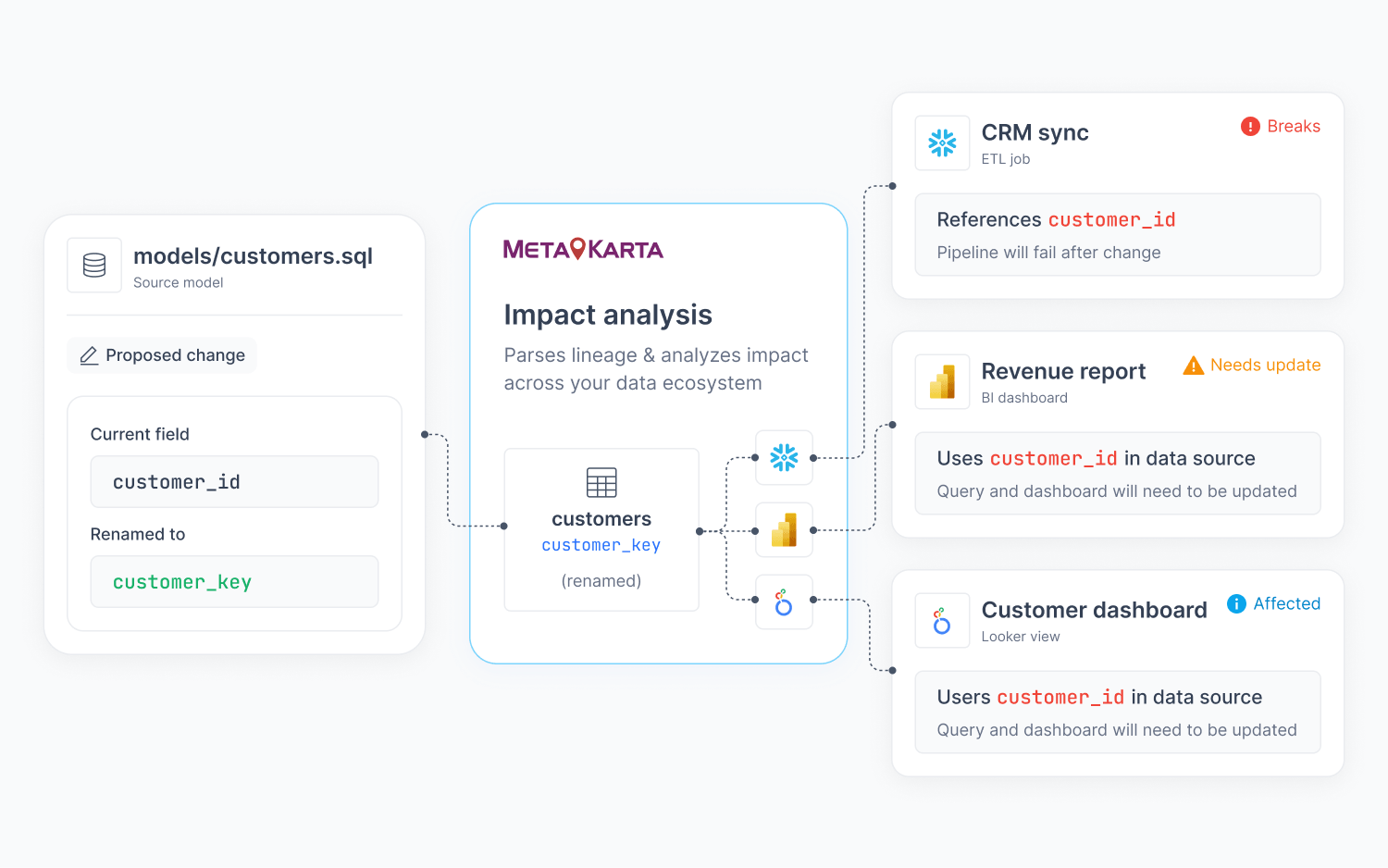
Impact analysis before a change deploys

One shared metadata repository under lineage, catalog, governance, and semantics

The Problem

You're the integration layer between four metadata tools

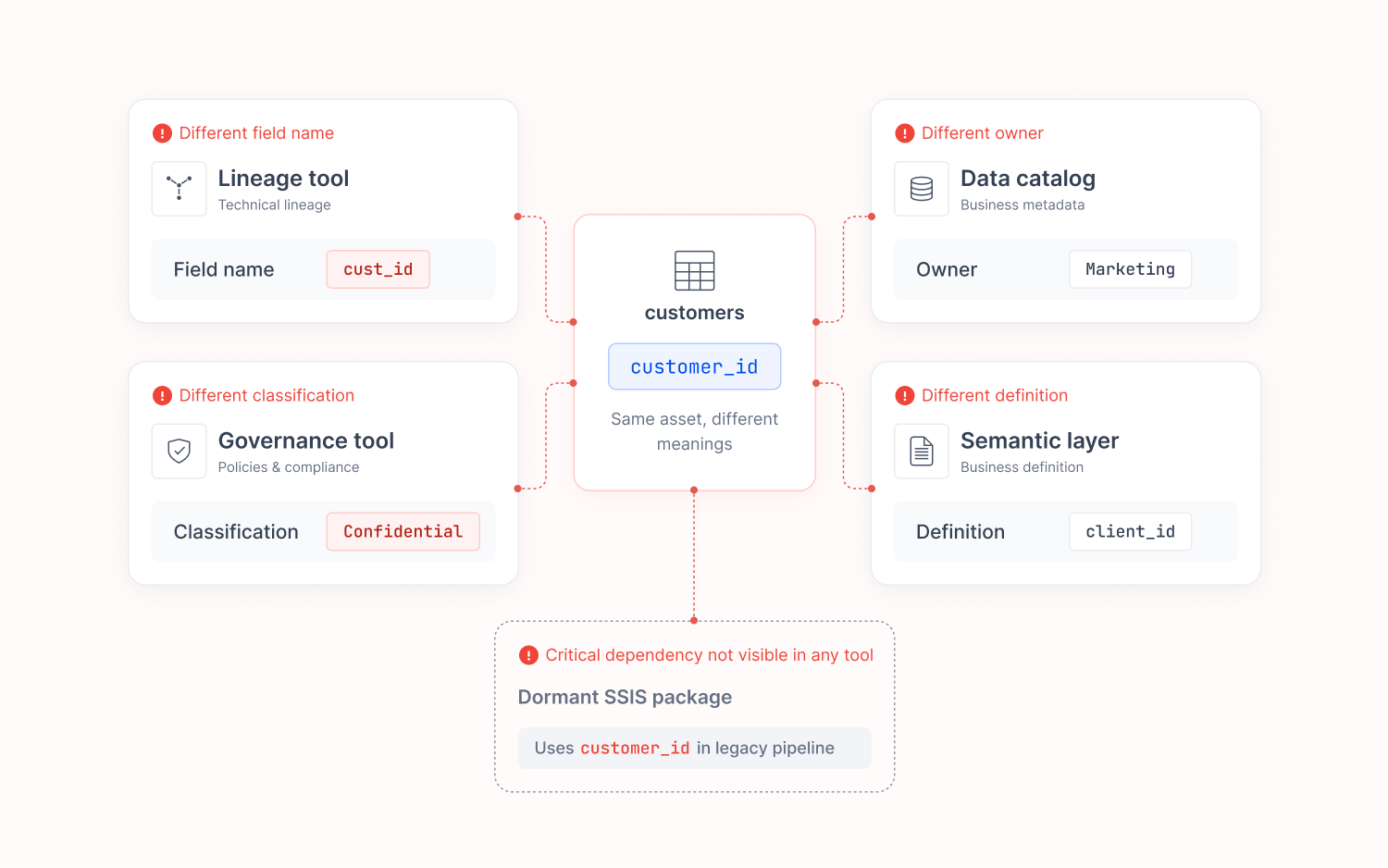
Lineage, catalog, governance, and semantics each run in their own tool, joined by integration code your team wrote and still maintains. The tools disagree, so the reconciled view of the estate lives in your head.

Log-based lineage sees only the jobs that ran. A quarter-end stored procedure or a dormant SSIS package stays invisible until a change breaks it.

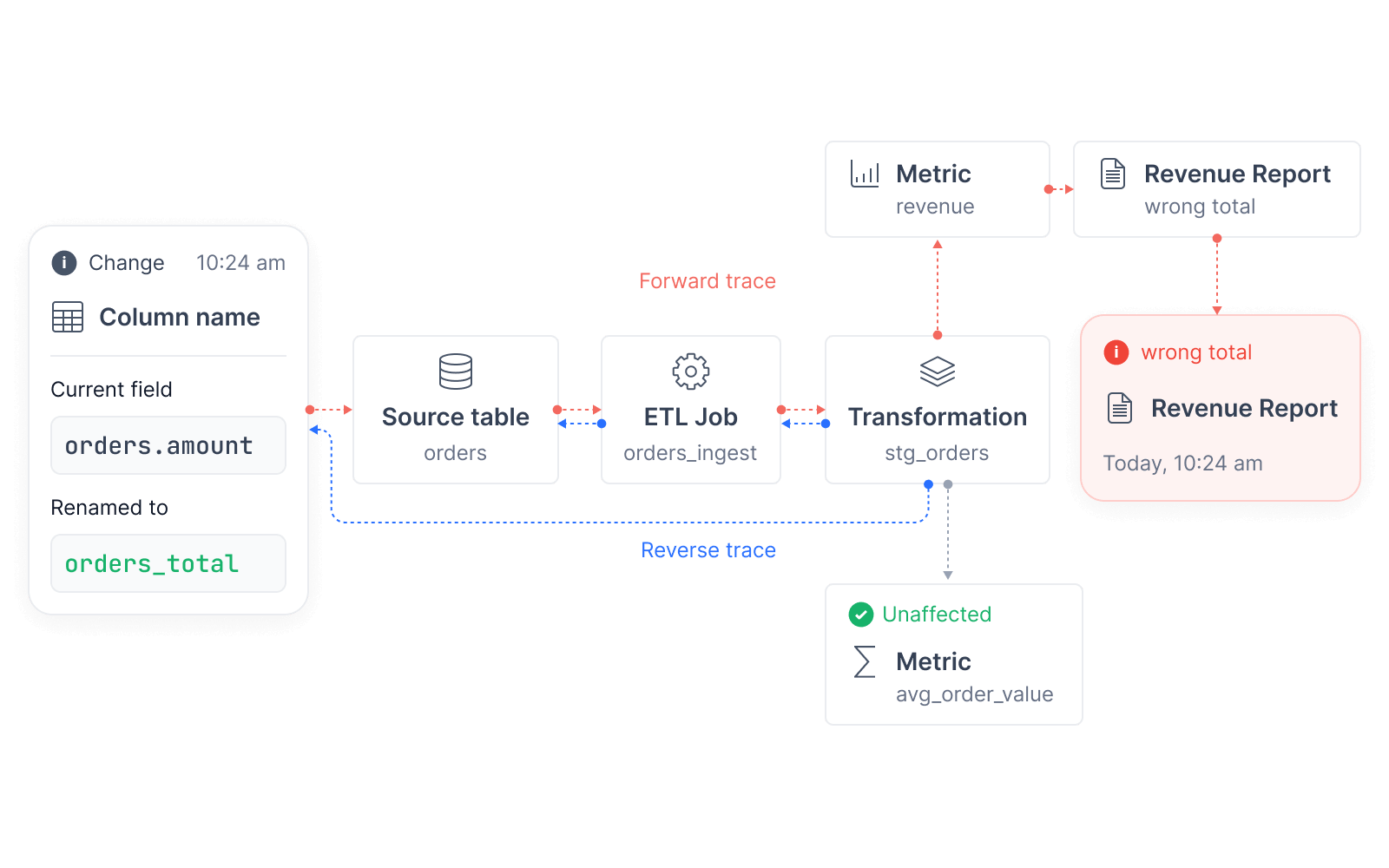
So impact analysis starts after the incident. A renamed column reaches a dozen downstream consumers, and finding them takes weeks of cross-referencing by hand.
The Approach

Compute lineage from the code and keep it in one repository

MetaKarta parses SQL, stored procedures, ETL mappings, and BI models directly. Lineage by design, not by observation: a job that hasn't run in six months is mapped the same way as one that ran last night.

Lineage, catalog entries, policies, and semantic definitions read from and write to one shared metadata repository. The catalog entry and the lineage graph describe the same column because they're the same record.

Propose a change and MetaKarta traces every downstream column, view, mapping, and report it reaches. Ask MetaKarta takes the same question in plain language ("What breaks if I rename this column?") through the LLM provider you already use.

What Changes

Know the blast radius before the first ticket lands.

mpact analysis runs before the deploy, so the list of affected consumers arrives before the incident does.

Lineage you can act on

Lineage computed from code covers dormant and infrequent jobs, so you stop verifying the gaps by hand.

The map of the estate in a system

The model you've been carrying lives in the repository, where it survives a reorg, a role change, and your next vacation.

Use cases for data architecture leads

What breaks if we change this?

Show every dependency before a change deploys, and trace any broken number back to the exact code that caused it with parser-based, column-level lineage. Know the blast radius before the first ticket lands.

How many tools are we paying to keep in sync?

Replace an assembled solution of metadata tools with one platform. Lineage, catalog, governance, and compiled semantics operate on a shared foundation. The integration work disappears along with the licenses.

Can we migrate without rebuilding everything?

Reverse-engineer semantic models from legacy and modern BI, import them as governed starting points, and compile into your target platforms. Years of semantic investment become the foundation of the new stack.

Frequently asked
questions

How is parser-based lineage different from lineage built from query logs?

Query-log lineage records what ran during the observation window. Parser-based lineage reads the code itself (SQL, stored procedures, ETL mappings, and BI models), so it covers dormant and infrequent jobs and shows lineage before anything executes.

Which systems does MetaKarta read?

400+ native connectors span databases, data warehouses, ETL and data integration tools, and BI platforms, legacy and cloud, on-prem and hybrid. The Connector Explorer lists every supported tool.

How does the catalog stay current?

Active harvesting through the same connectors keeps catalog assets tied to the live estate. Descriptions, ownership, and policies attach to those harvested assets in the shared repository.

Can we see what something looked like last quarter?

Yes. The full metadata estate sits under version and configuration management, so every change is logged, attributed, and reversible. You can ask what a column fed, or what a definition meant, on any past date.

Can agents and LLM tools use the lineage?

MetaKarta MCP's Metadata Management Tools serve governed lineage, catalog, and governance metadata to agents, with per-user access tokens. Ask MetaKarta answers lineage questions through Anthropic, Google, Ollama, OpenAI, or Azure OpenAI, and it's permission-aware.

Where do semantic definitions run?

Semantic Hub compiles governed definitions into native Snowflake Semantic Views, Databricks Metric Views, Power BI semantic models, and other targets before any query runs. We don't sit in your query path. We've already compiled into your database and tools.

Where does MetaKarta's technology come from?

Nearly 30 years of metadata engineering. MetaKarta's technology runs inside the products of Microsoft Purview, Informatica from Salesforce, IBM, Oracle, and Qlik Talend.