






Semantic Compiler

Write once. Compile anywhere.

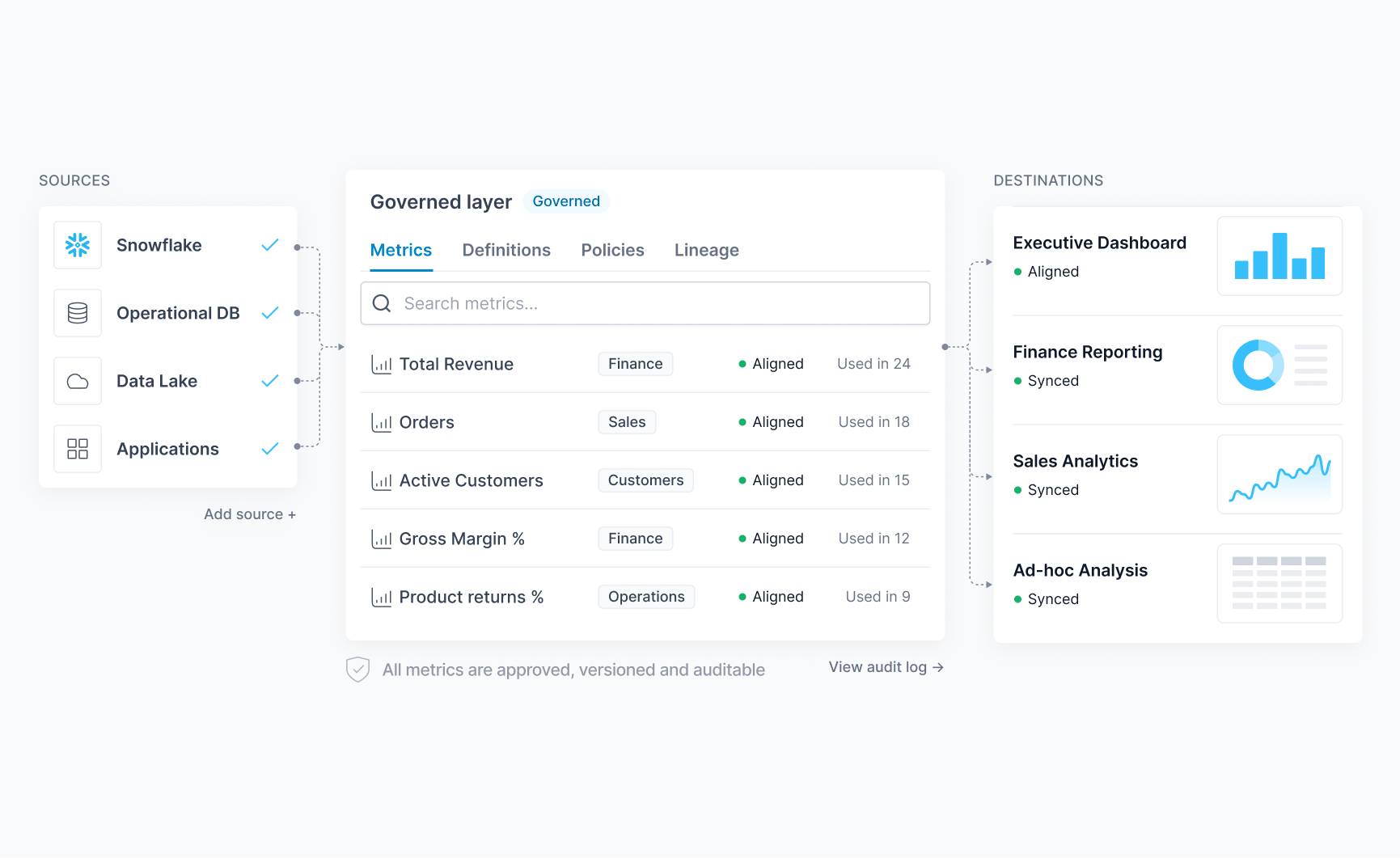
Most metadata platforms help organizations understand and govern their data. MetaKarta enforces it with Semantic Hub. The compiler writes governed business logic into the native formats of every database and BI tool before any query runs.

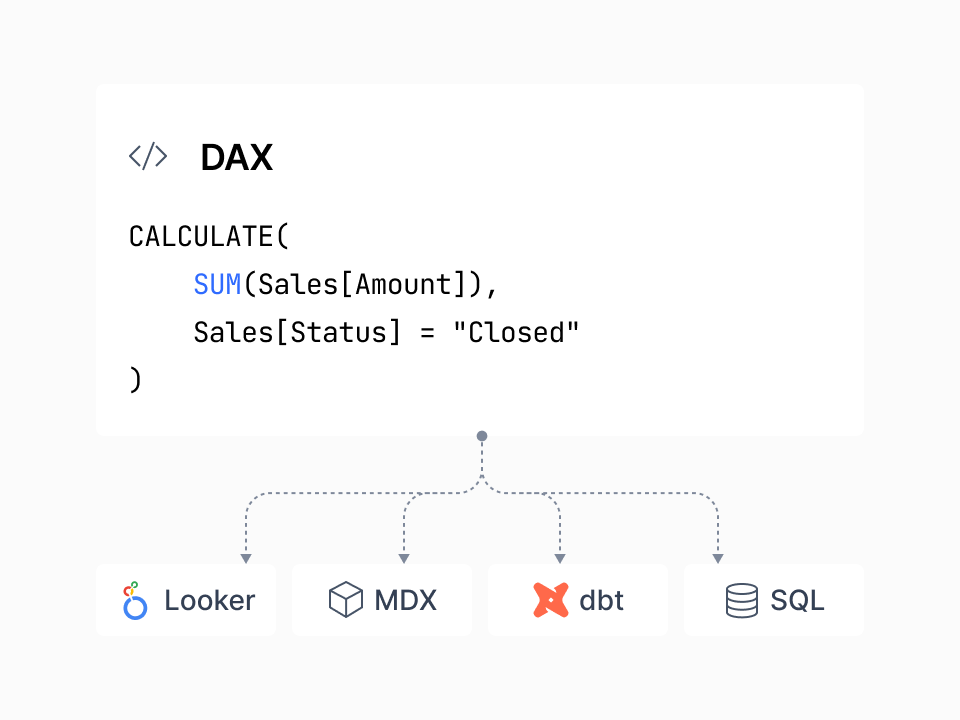
Deploy models and meaning to every system and tool

Mechanism

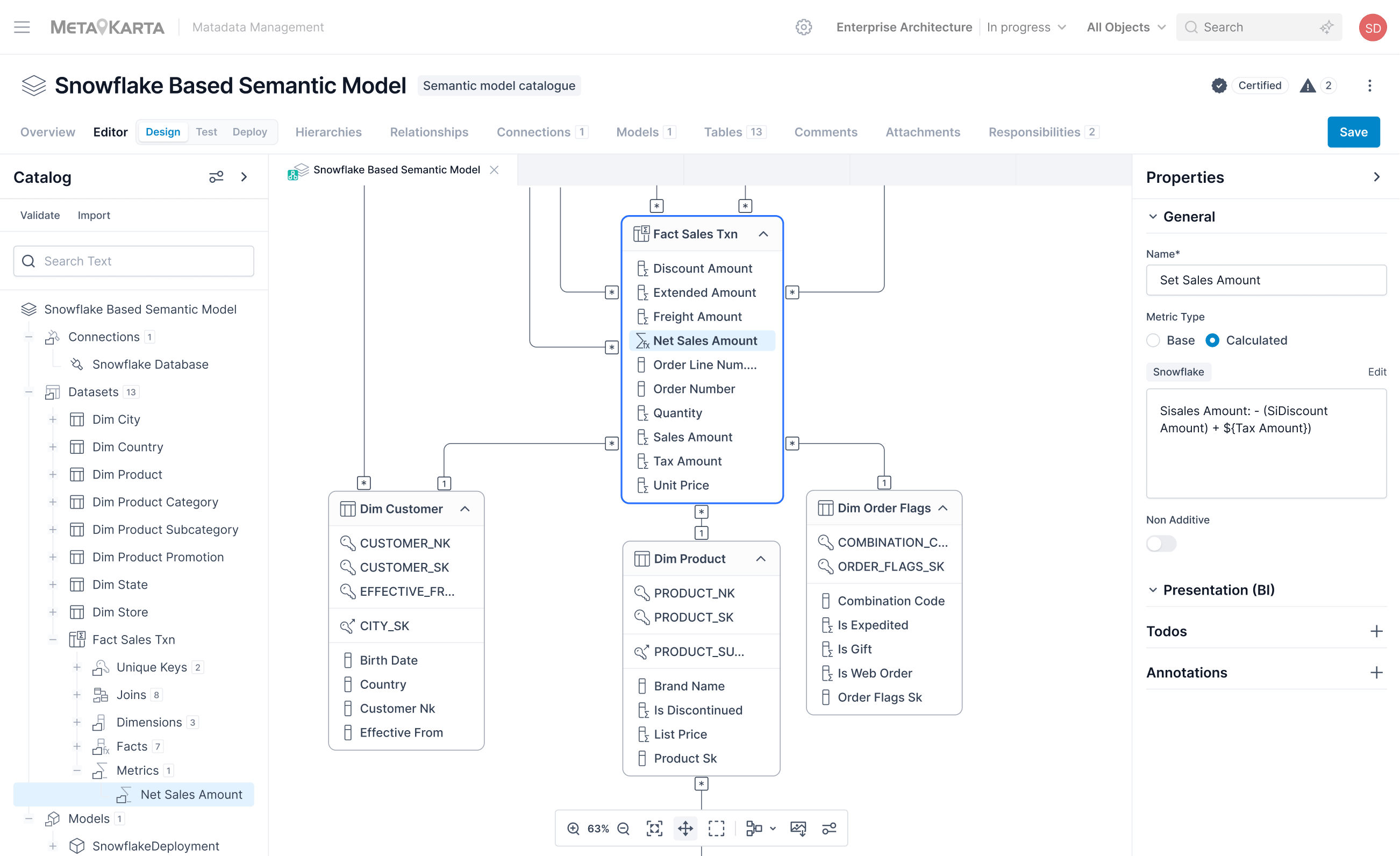
Prove it with the compiled artifact

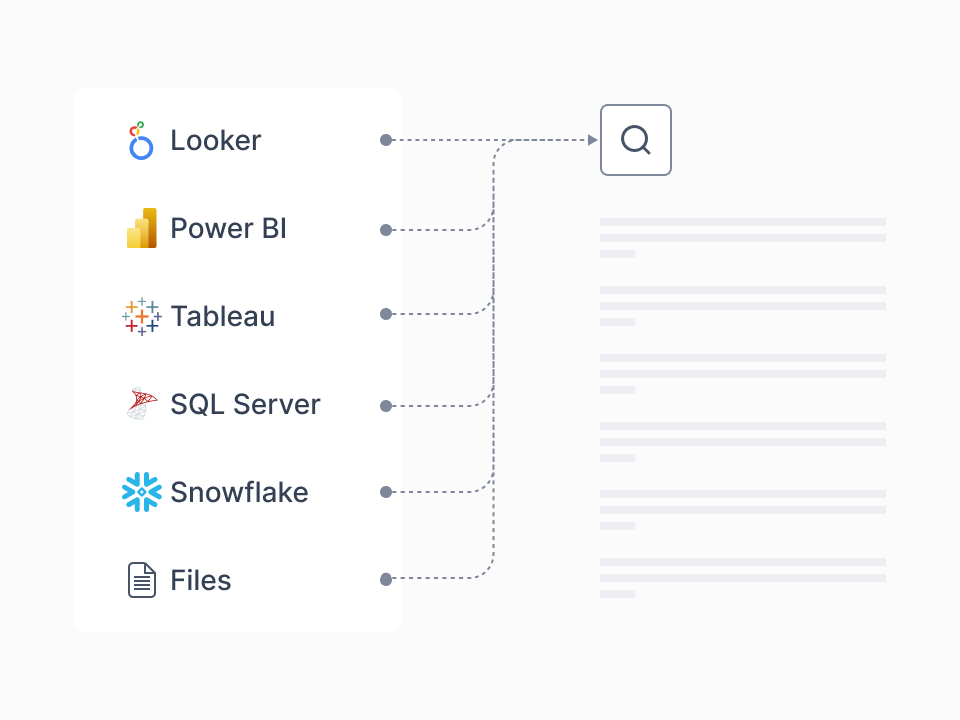
Semantic Hub parses your existing BI estate and reconstructs its business logic into consistent, governed definitions. Your existing BI investment becomes the starting point, instead of a risky greenfield build.
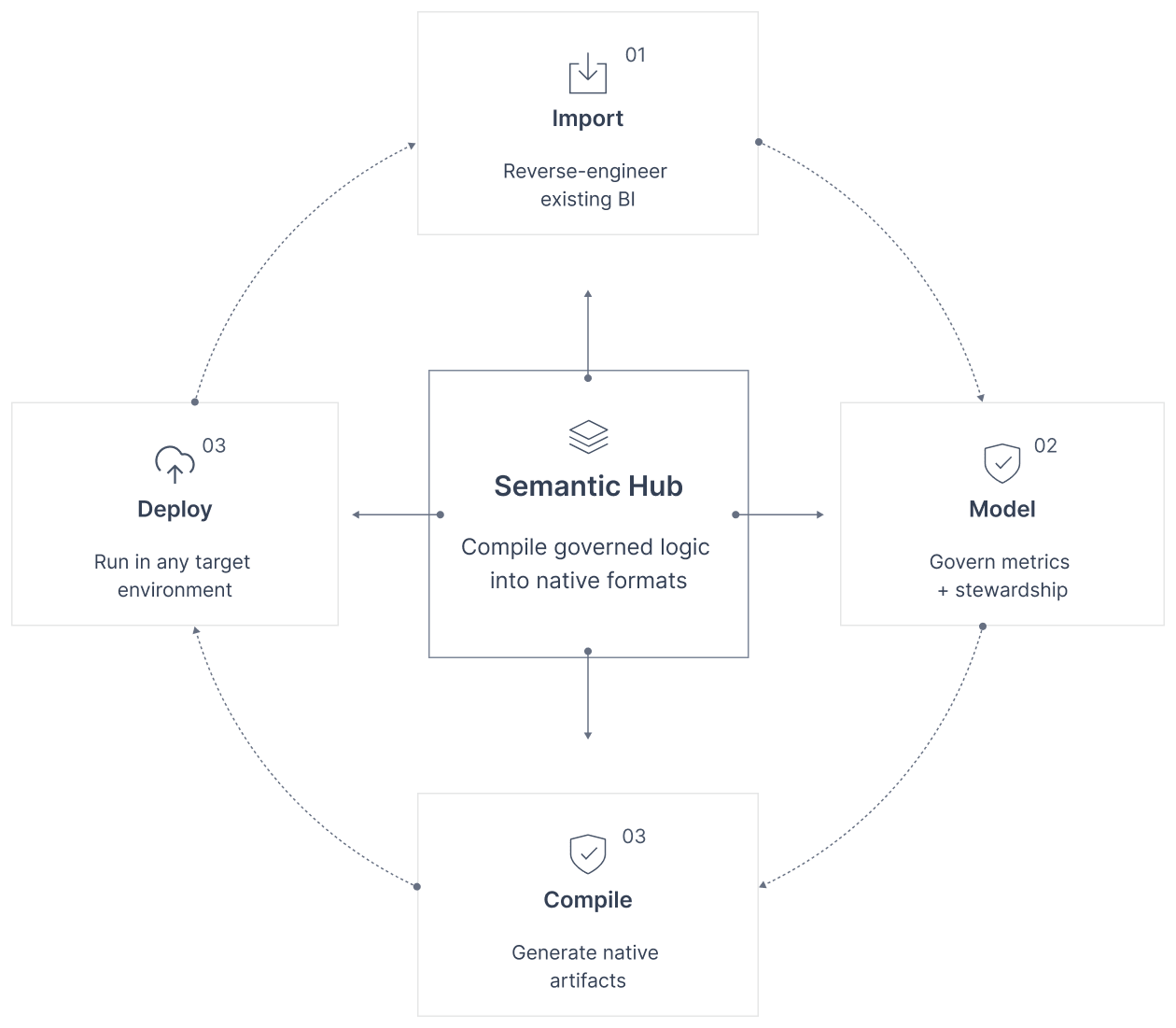
What each stage delivers

01

Import

Reverse-engineer existing BI semantic assets to capture institutional knowledge without starting from scratch.

02

Model

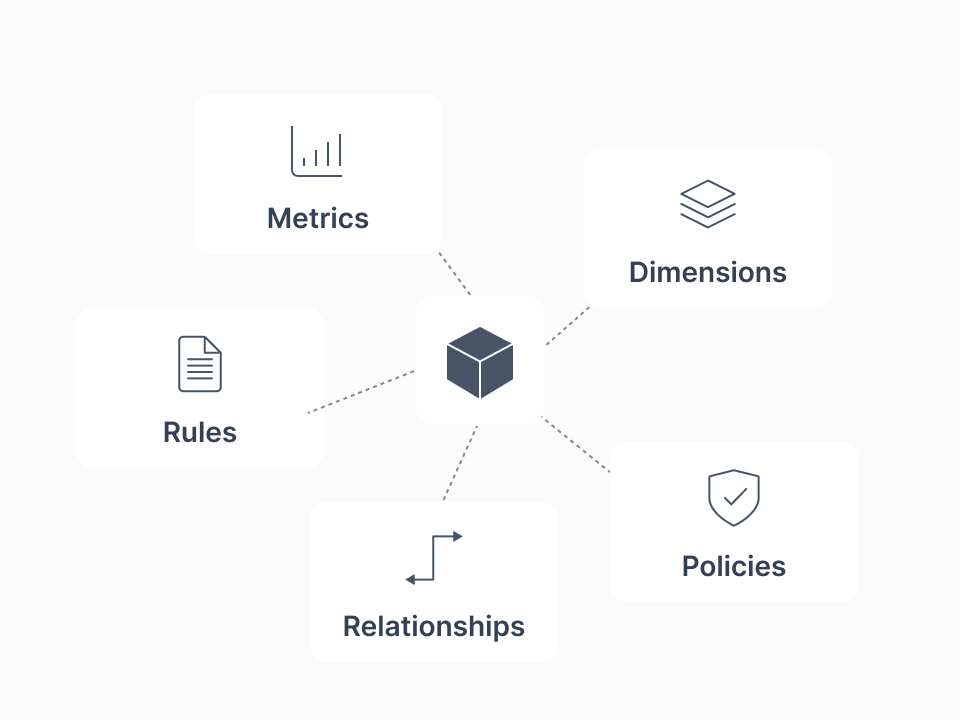
Standardize definitions, author new metrics, and establish consistent data stewardship across a canonical model.

03

Compile

Translate governed logic into the native artifacts and code formats required by each target platform.

04

Deploy

Publish optimized, platform-specific models to any target data or analytics environment.

Features

One metadata foundation, delivered across the estate

Metrics as code

Apply software engineering best practices: version control, branch management, and CI/CD.

Portable, enterprise-owned definitions

Consistent across every tool in the estate. No vendor lock-in to a runtime layer.

Query efficiency, compute cost optimization

Definitions compiled natively, instead of resolved at query time, reducing redundant compute.

Zero-copy architecture

No more stale data marts, extracts, or snapshots. Query live data without data movement.

BI migration risk mitigated

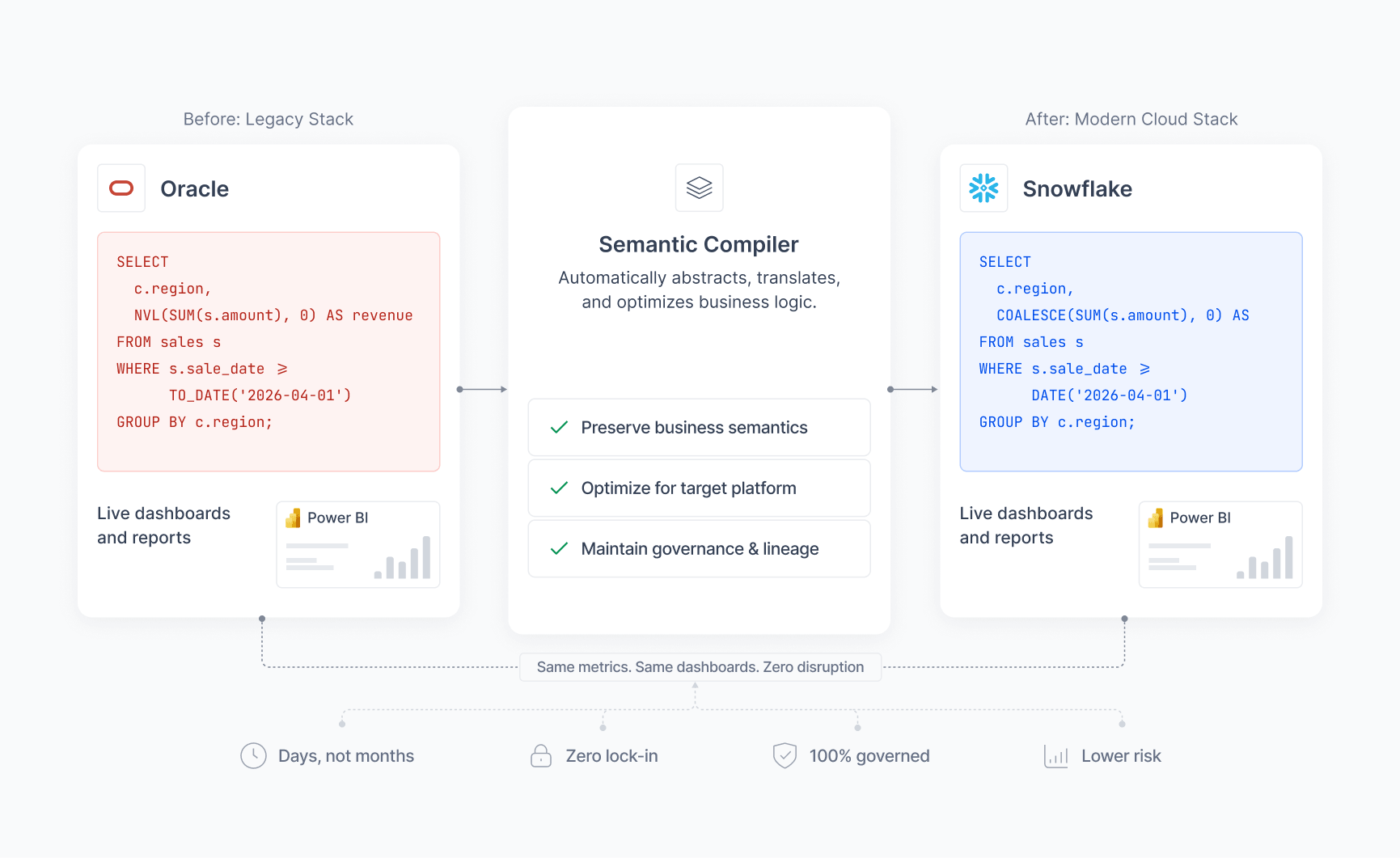
Definitions travel with the migration. Legacy to modern. On-premises to cloud.

Semantic grounding for Al

Provide compiled context to LLMs to improve AI accuracy.

The Architectural Difference

Run-time vs. compile-time: What’s next is not a layer

Semantic Middleware

Definitions live in the vendor's runtime

Semantic layers intercept queries at runtime, routing them through the vendor's engine. Your definitions exist only inside their product. Remove it and you lose everything.

Drawbacks

Definitions disappear when you switch tools or remove the middleware

Switching vendors means rewriting your entire semantic model

Lock-in is the business model

MetaKarta Semantic Hub

Definitions live in your systems and tools

Semantic Hub compiles metric and calculation logic directly into database-native objects. No middleware. No query routing. The portable definitions are yours.

Advantages

Compiled metrics live in your warehouse, nothing to route through at runtime

Definitions survive a tool change. They exist in the data layer, not in a vendor product

Switch BI tools without redefining your semantics

Open standard Semantic Hub Language (SHL)

How It's Used

Governed data everywhere it goes

Eliminate vendor lock-in and modernize your stack with zero downtime

Database Migration Without BI Disruption

Migrate to a modern database in days, not months, without re-wiring a single BI dashboard.

BI Platform
Modernization

Move to a new BI platform without rebuilding years of business logic from scratch.

Portable Semantics Across Database Platforms

Deploy semantic definitions across databases without re-engineering, avoiding lock-in.

Break down data silos, reduce cloud costs, and rebuild trust in your data

Single Source of Truth for Metrics & KPIs

Every team pulls from the same governed definitions, so boardroom numbers match and audits close faster.

Lower Overhead & Faster Dashboards

Eliminate redundant extracts, cut cloud computecosts, and speed up dashboards with centralized metric definitions.

Cross-Data Store Joins Without ETL

Join data across warehouses, operational databases, and data lakes on demand, without building pipelines or moving data.

Deliver governed definitions to every consumer

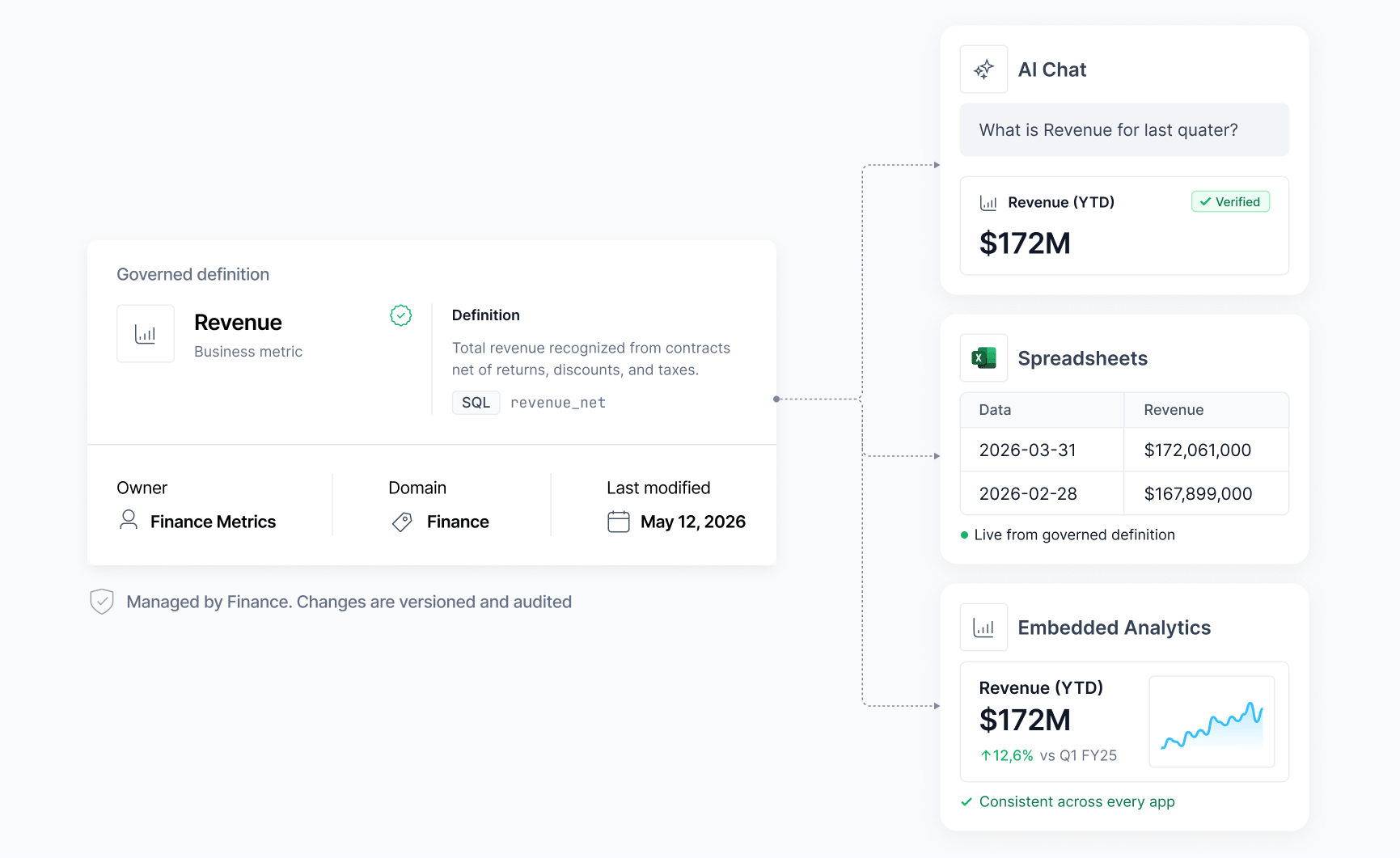
Trusted & Auditable AI

Trace every AI answer back to a governed metric definition your team can verify and audit.

Spreadsheets Without the Export

Query live data from governed definitions in the tool your finance team already uses.

Embedded Analytics Without Rewrites

Return the same answer from the same governed definition, without rewriting logic in every app.

Frequently asked questions

What is Semantic Hub?

Semantic Hub is MetaKarta's semantic compiler capability. It imports your existing BI semantic assets, lets you model and govern them as one canonical set of definitions, and compiles them into the native artifacts of each target platform: Import, Model, Compile, Deploy.

How is compile-time different from a semantic layer?

Semantic layer products sit in the query path at runtime, routing every query through the vendor's engine. We don't sit in your query path. We've already compiled into your database and tools. Each target system enforces the definitions with its own engine, at its own speed.

What happens to our definitions if we stop using MetaKarta?

Remove us tomorrow. Your definitions stay. Compiled artifacts are native objects in your warehouse and BI tools, and the source models are written in SHL, an open-source, YAML-based language you keep.

Which targets can Semantic Hub compile to?

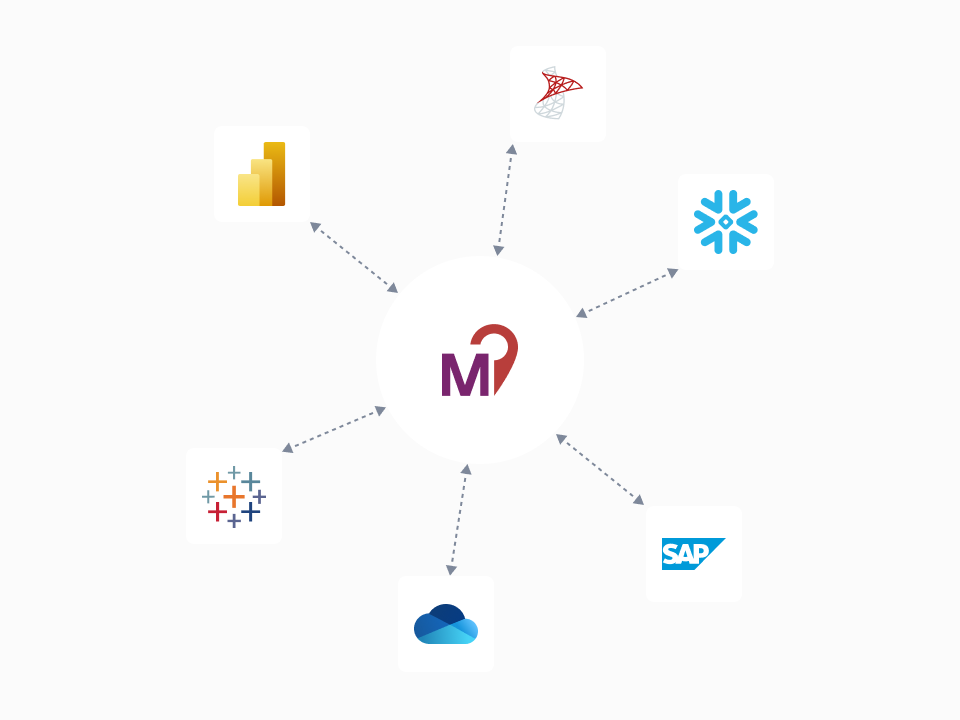
Native artifacts including Snowflake Semantic Views, Databricks Metric Views, Power BI semantic models, and Tableau data sources, across a platform with 400+ native connectors.

Can we import the BI semantic models we already have?

Yes, and that's the recommended starting point. The reverse-engineering engine parses your existing Power BI, Tableau, and other BI semantic assets into governed definitions. Import what you have. Model what you need. Compile it everywhere.

How does Semantic Hub help our AI initiatives?

Compiled, governed definitions become the curated context AI agents reason against, so an agent's answer and a dashboard's number come from the same definition, with the provenance chain attached.