For AI Leads

Give every agent the definition your dashboard uses

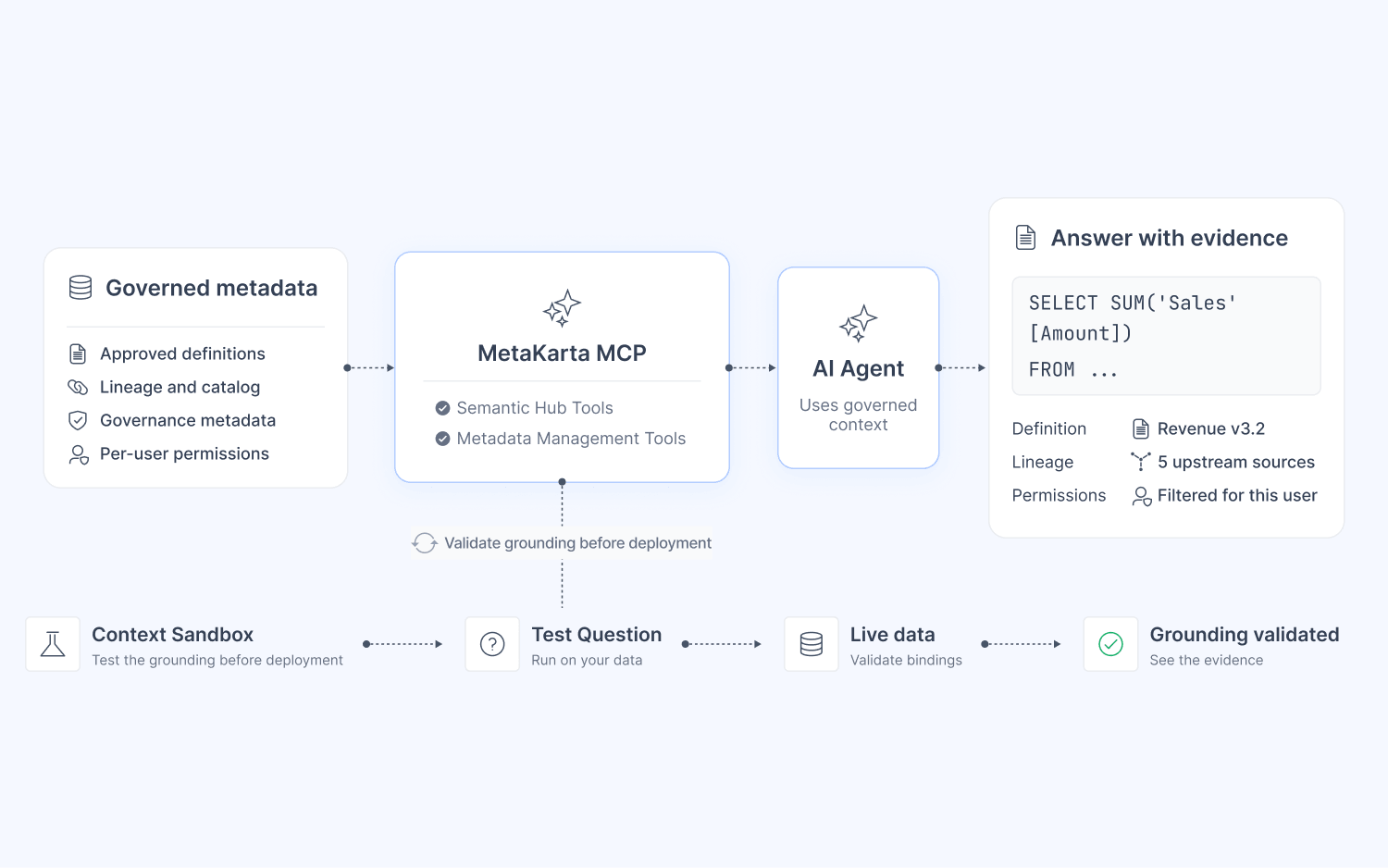
MetaKarta serves agents compiled, governed definitions and deterministic SQL through MetaKarta MCP. You test the grounding on your own data in Context Sandbox, and every answer returns the metadata evidence behind it.

Key capabilities

MetaKarta MCP: governed metadata and compiled context from one server

Context Sandbox: grounding tested on live data before deployment

Metadata evidence and per-user permissions on every response

Compiled artifacts for Snowflake Cortex Analyst and Databricks Genie

The Problem

Agents guess what your columns mean

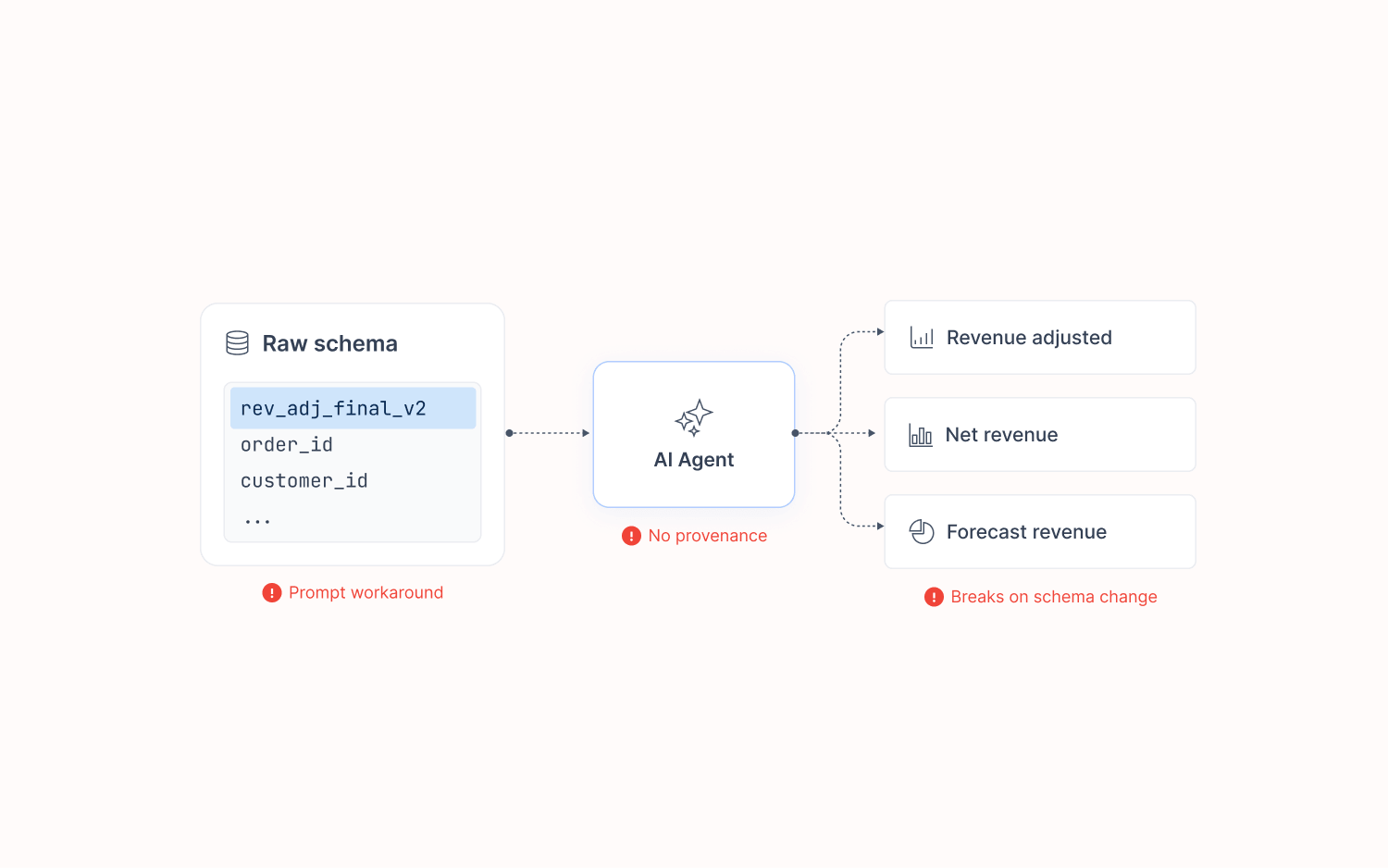
Agents answer business questions at machine speed, with no analyst between the query and the decision. Reading raw schema, an agent infers what rev_adj_final_v2 means, and each application infers it a little differently.

So business logic lives in schema hints and system prompts, one application at a time, and breaks on the next schema change. When an answer is questioned, you can't show which definition the agent used.

Agents that assemble context at runtime also pay twice: compute to traverse the metadata graph, then tokens to generate SQL that may need retries.
The Approach

Serve agents the definitions your BI already runs

Compiled context, deterministic SQL. No compute tax, no token tax. MetaKarta MCP's Semantic Hub Tools return human-approved, compiled definitions and deterministic SQL, so the agent's answer matches BI because it's the same definition.

The Metadata Management Tools serve governed lineage, catalog, and governance metadata from the same server. Per-user access tokens mean an agent sees exactly what the person behind it is authorized to see, and every response returns the metadata evidence that produced it.

Test the claim yourself, on your data, with the grounding visible. Context Sandbox runs test questions against live data, evaluates the answers, validates bindings, and shows the grounding before an agent ever sees it.

What Changes

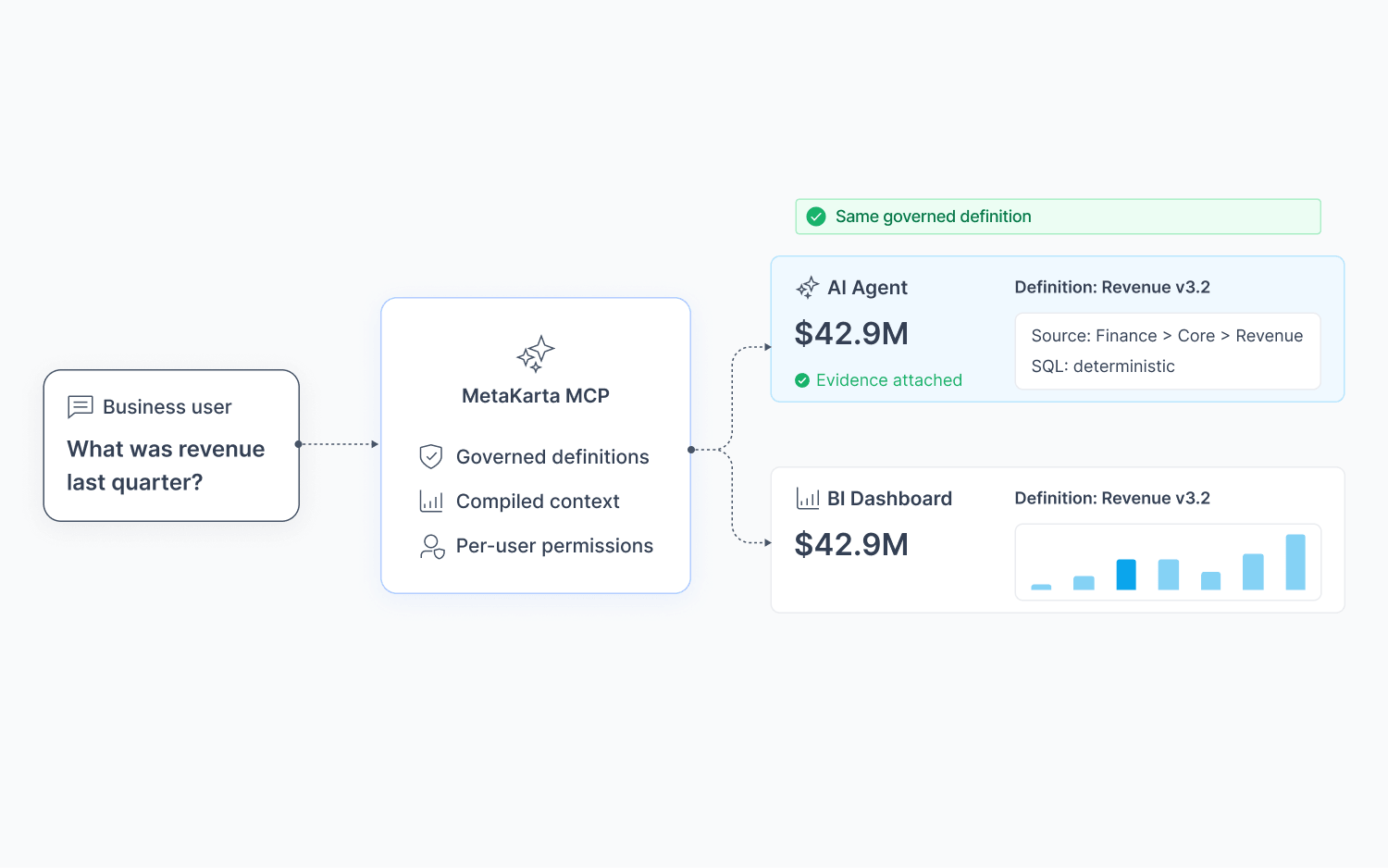
Same answer, AI and BI. Proven accuracy. Deterministic.

Agents and dashboards read the same compiled definition.

Fewer prompt workarounds

Governed definitions replace the schema hints each application used to carry on its own.

Answers you can explain

Each response carries the definition and the metadata evidence behind it, ready when someone asks why.

Use cases for AI platform leads

What context did the AI agent use?

Deliver curated definitions, relationships, policies, and provenance to agents via MCP. Every response returns the metadata evidence that produced it, so the answer and its grounding arrive together.

Why don't the numbers match?

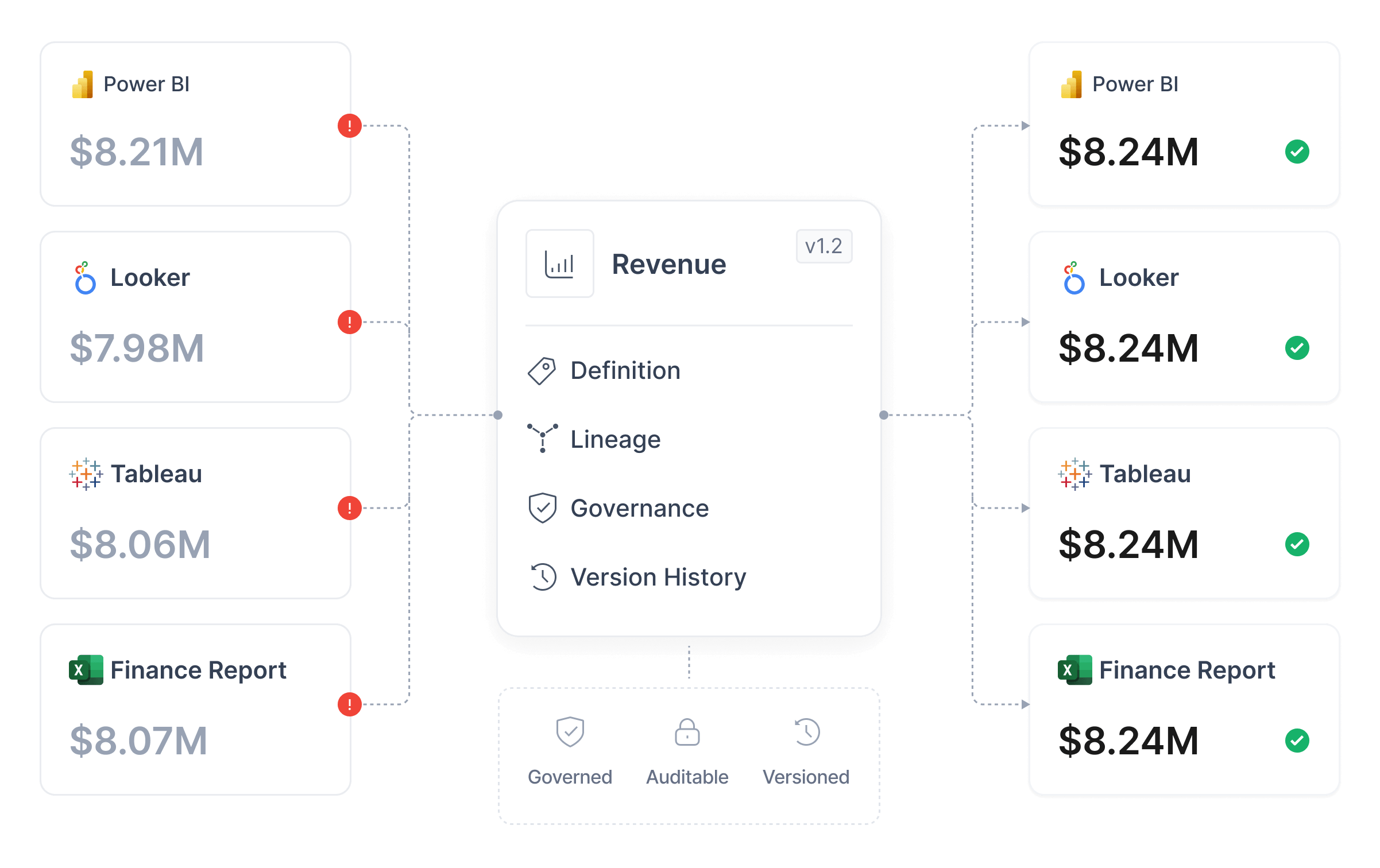
Define each metric once and compile it natively into every BI tool. Power BI and Tableau return the same revenue number because both read the same governed definition. There's nothing left to reconcile.

What breaks if we change this?

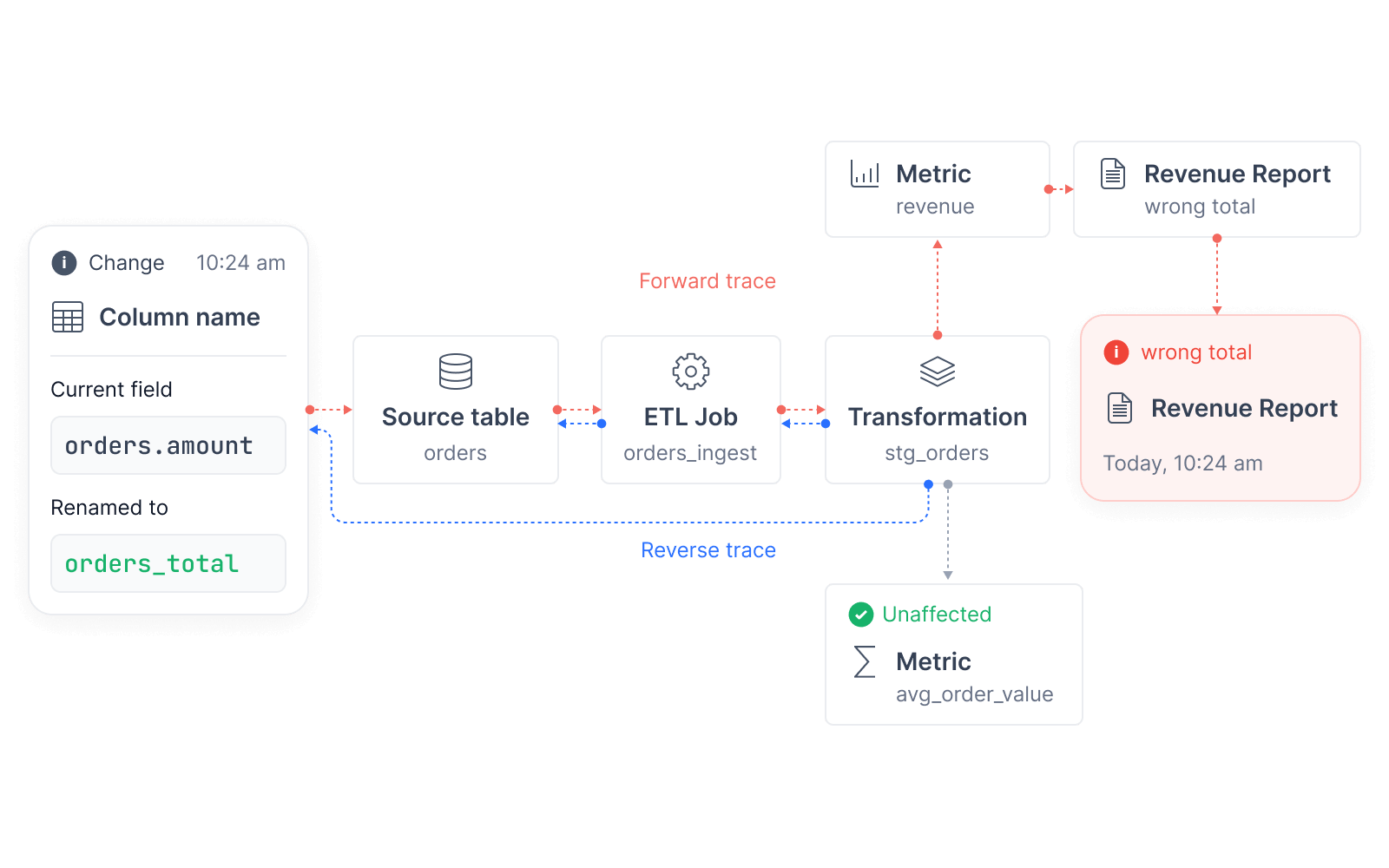
Show every dependency before a change deploys, and trace any broken number back to the exact code that caused it with parser-based, column-level lineage. Know the blast radius before the first ticket lands.

Frequently asked
questions

Our catalog vendor added an MCP server. What's different here?

An MCP server exposes what the platform behind it already holds. Look at what comes back: descriptions, or a compiled definition plus the metadata evidence that produced it, filtered by the caller's permissions. MetaKarta MCP returns the second.

Does this work with Snowflake Cortex Analyst and Databricks Genie?

Yes. Semantic Hub compiles governed definitions into Snowflake Semantic Views and Databricks Metric Views, which Cortex Analyst and Genie read natively.

Which LLMs can we use?

MetaKarta MCP serves any agent that speaks MCP. Ask MetaKarta runs natural-language questions over the metadata estate through Anthropic, Google, Ollama, OpenAI, or Azure OpenAI.

Can we trace where an AI answer came from?

Lineage runs from the source through every transformation to the governed definition the agent consumed, and each MetaKarta MCP response returns the metadata evidence behind it.

What does Ontology Modeling add for agents?

Entities, relationships, and hierarchies built from parsed lineage give agents business meaning tied to real data. Every concept is bound to a real asset from day 1.

What happens when a schema changes?

Parser-based, column-level lineage shows which governed definitions depend on a column before the change deploys. Ask MetaKarta answers "What breaks if I rename this column?" in plain language.