Data & BI Platform Migration

Migrate the platform and the semantics

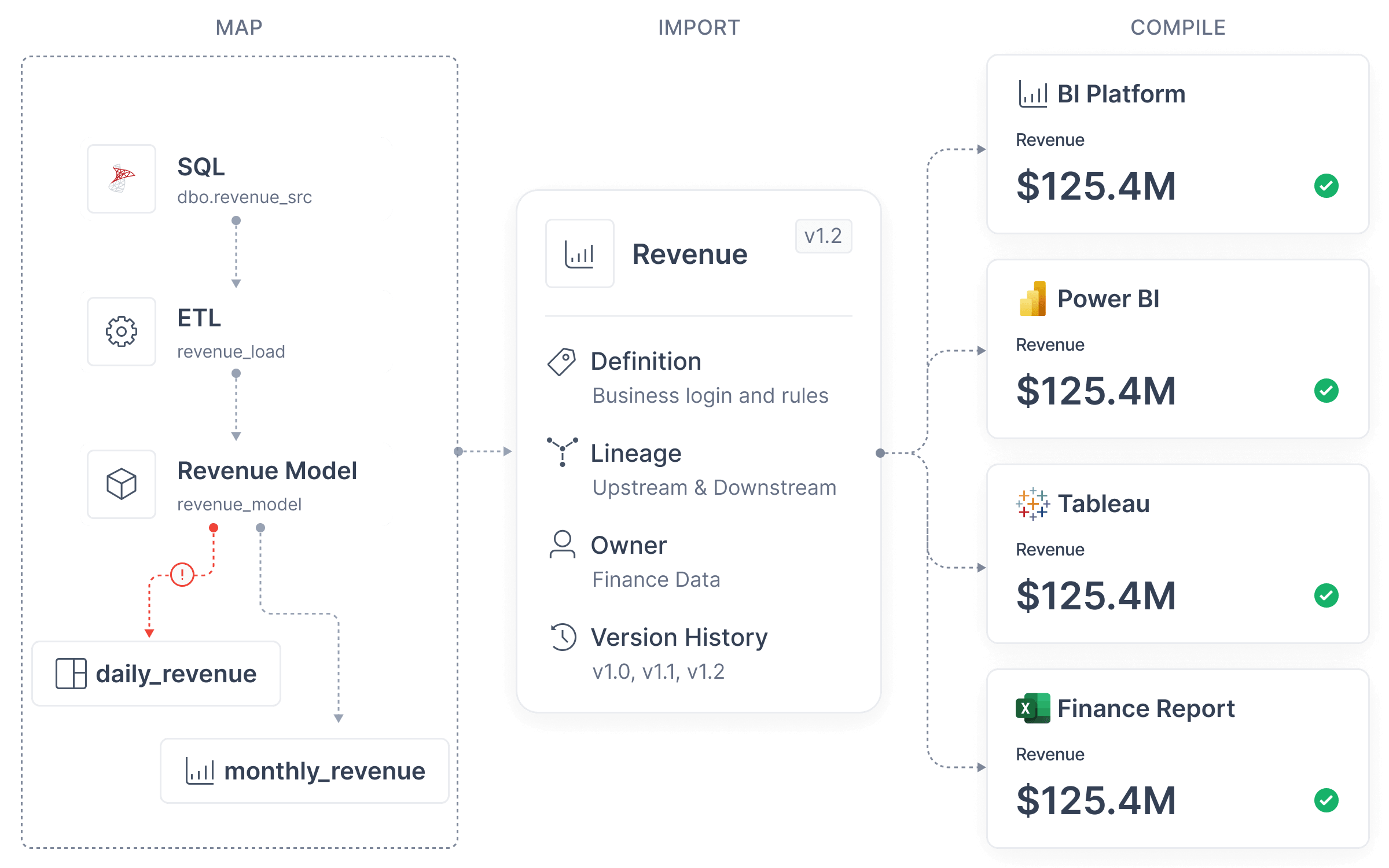
Map every dependency before anything moves, then import your existing BI definitions as governed starting points for the new environment. Years of semantic work become the foundation the migration runs on.

Key capabilities

Parser-based, column-level impact analysis across the full estate

Reverse-engineer Power BI, Tableau, Looker, and more

400+ connectors across legacy, cloud, and hybrid sources

Version history through every phase of the cutover

The Problem

Migrations fail in two predictable ways

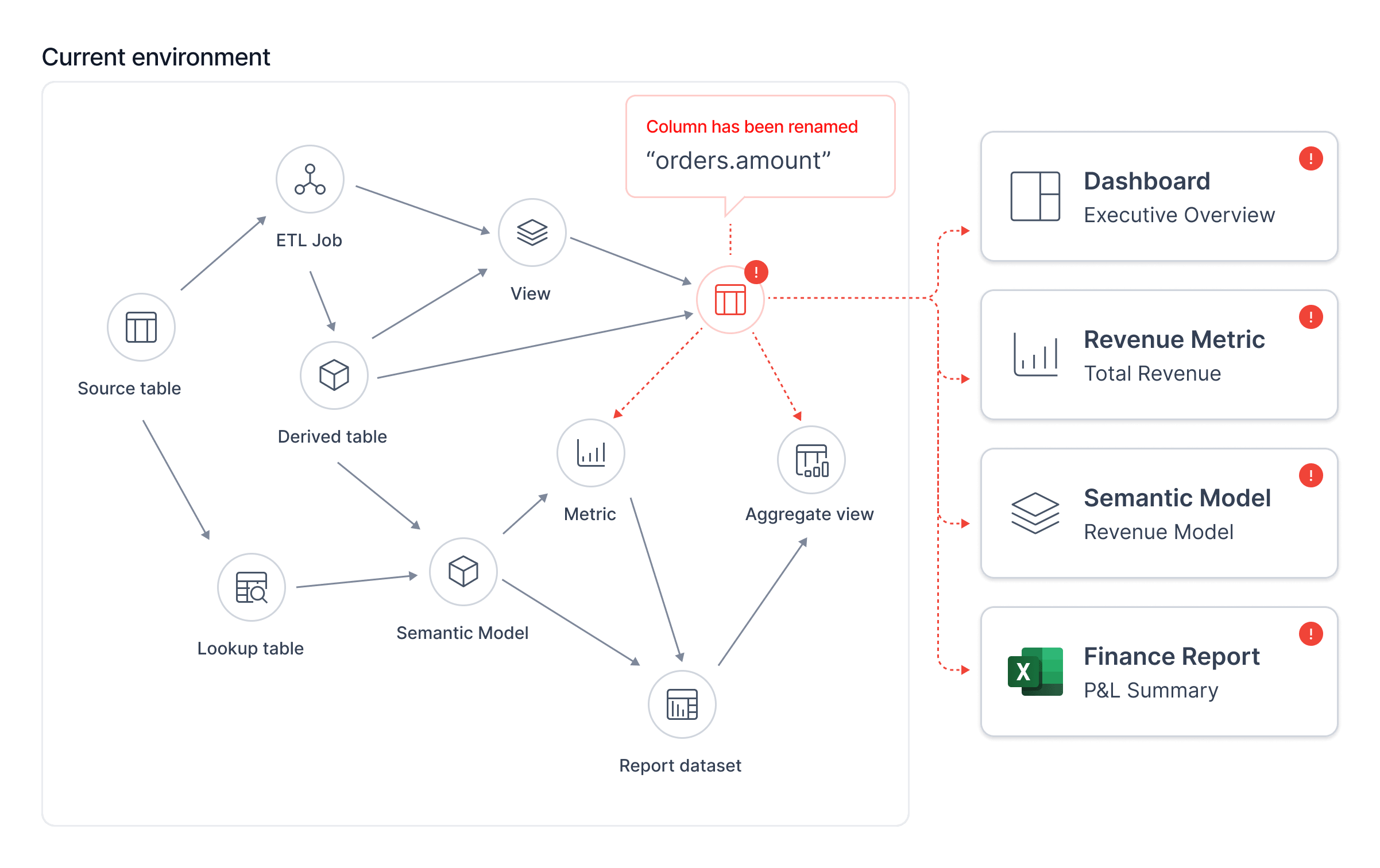
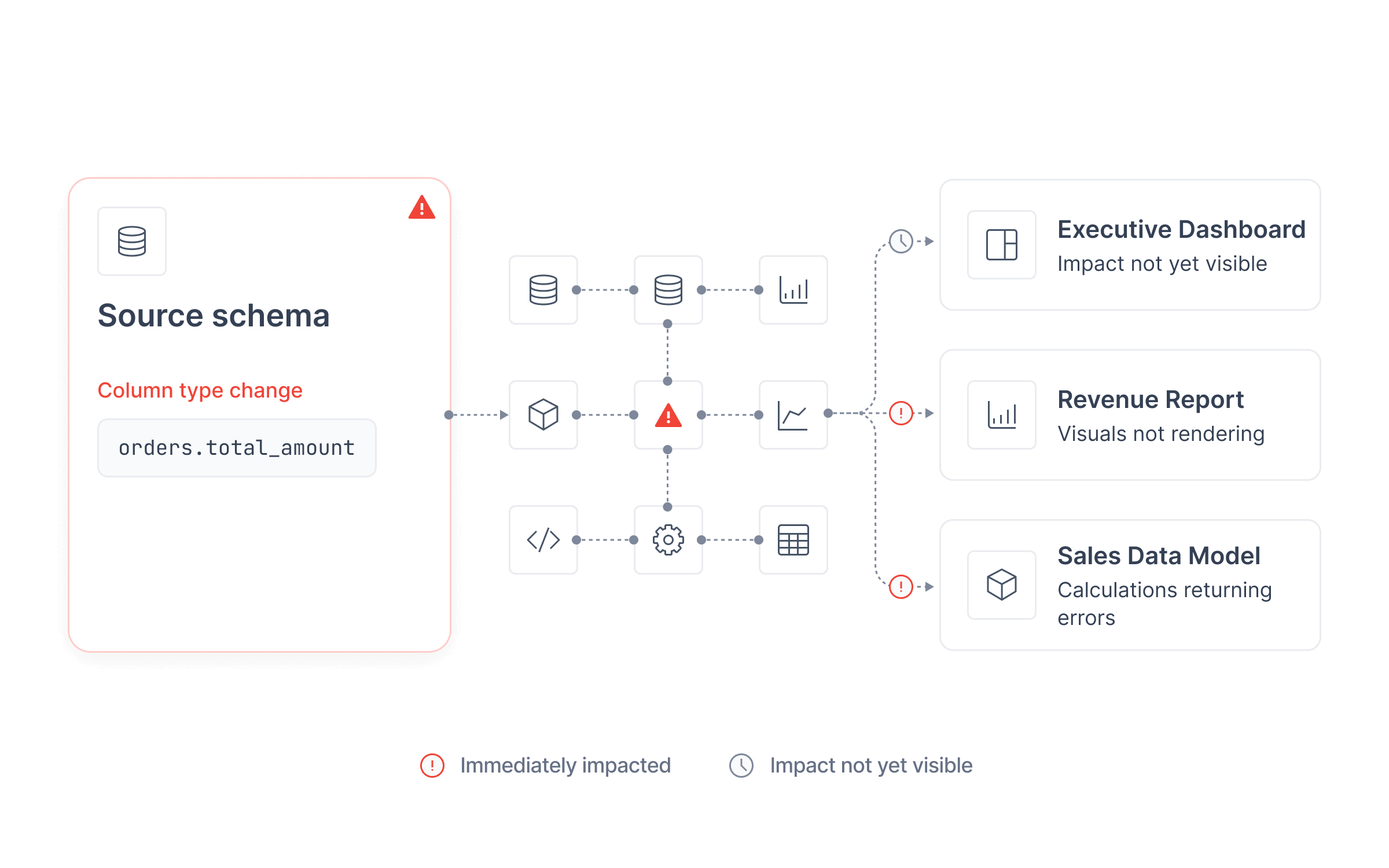
The team doesn't know what depends on what, so a schema change cascades silently into production and surfaces as a broken dashboard weeks later.

Or the team rebuilds years of BI semantic models from scratch in the new platform's native format. Expensive, slow, and usually slightly wrong in ways that only show up during UAT.

Both failure modes are avoidable. The tools most organizations already own address neither one.
The Approach

Map the dependencies, then bring the definitions with you

Parser-based lineage computes every downstream dependency from the actual code, so automated impact analysis runs before the first query touches the new environment.

The reverse-engineering engine reads existing BI tool definitions and imports them into the shared repository as governed starting points, with owners and version history attached.

From there, Semantic Hub compiles those definitions into the new platform's native format, and into every other target that reports the same metric.

Import what you have. Model what you need. Compile and deploy anywhere.

What Changes

A dependency map before day one

Impact analysis covers the full estate, including the systems whose jobs haven't run recently.

Semantic investment carried forward

Existing BI models enter the new platform as governed definitions, with owners and version history already attached.

One definition across old and new

Through the cutover window, both environments compile from the same governed source.

Frequently asked
questions

What should we know before a migration starts?

Every downstream dependency of what's moving. Parser-based lineage computes those dependencies from SQL, ETL logic, stored procedures, and BI definitions across 400+ connectors, so impact analysis includes systems whose jobs haven't run recently (the quarter-end job a log-based tool would miss, for one).

Which BI tools can we import existing definitions from?

Power BI, Tableau, Looker, and more on the modern side; MicroStrategy, SAP BusinessObjects, IBM Cognos, Oracle OBIEE, and more on the legacy side. Imported models land in the shared metadata repository as governed definitions, with owners and version history attached.

How well does the import handle complex metrics?

Expression Conversion rewrites calculations between platform languages using MetaKarta's own conversion technology, with AI assistance only where it's needed. Filtered, level of detail, time offset, window, and ratio metrics map to the calculation types in the tools you're leaving, and inferred joins are flagged for review before anything is finalized.

What if the old tool and the new platform define the same metric differently?

Semantic Reconciliation compares the imported models, removes duplicates, and surfaces conflicts before anything is governed. Incremental Catalog Merge shows the base catalog, the incoming import, and the merged result side by side, with a YAML diff and a problems list to clear first.

Can both environments run in parallel during cutover?

Yes, when both are compile targets (Tableau to Power BI, or Oracle to Snowflake). Both environments compile from the same governed definition, so they report the same number through the cutover window, and version history records every change made along the way.

Do we have to finish the migration before it pays off?

The dependency map pays off before the first object moves, and imported definitions are governed from the day they land. You can start with impact analysis and bring definitions across in whatever order your migration plan calls for.

What happens at the next migration?

It gets smaller. The definitions live in SHL in the shared metadata repository, so moving to another supported platform means adding a compile target and recompiling, with no metric rebuilt by hand.