















Data Lineage

Prove where every number comes from

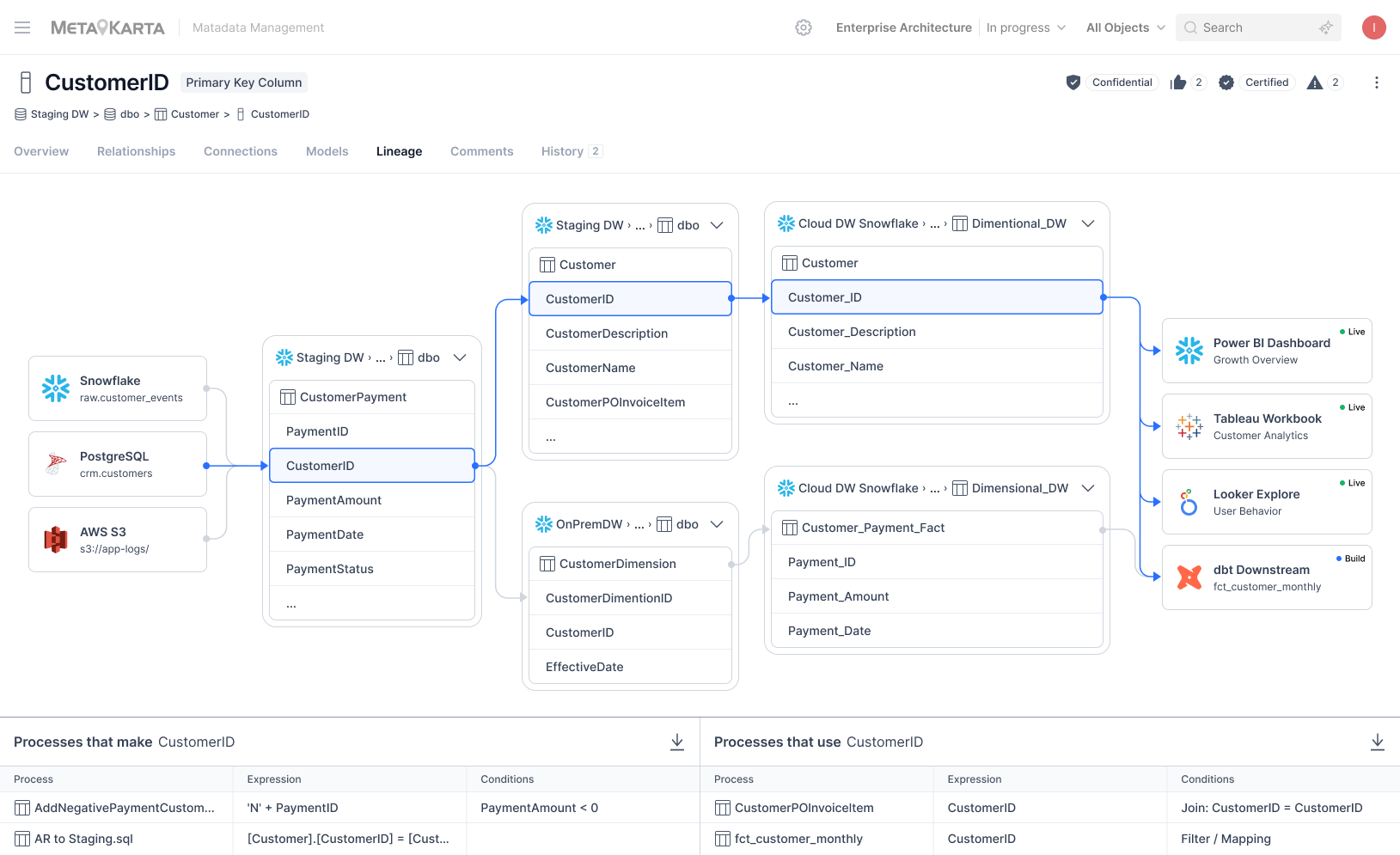
MetaKarta computes end-to-end, column-level lineage by parsing your actual code artifacts. SQL scripts, ETL mappings, stored procedures, BI models. It doesn't wait for jobs to run. It doesn't rely on logs. It reads what's there. Your lineage is always complete.

Gain complete visibility across your entire data estate

Mechanism

Lineage by design

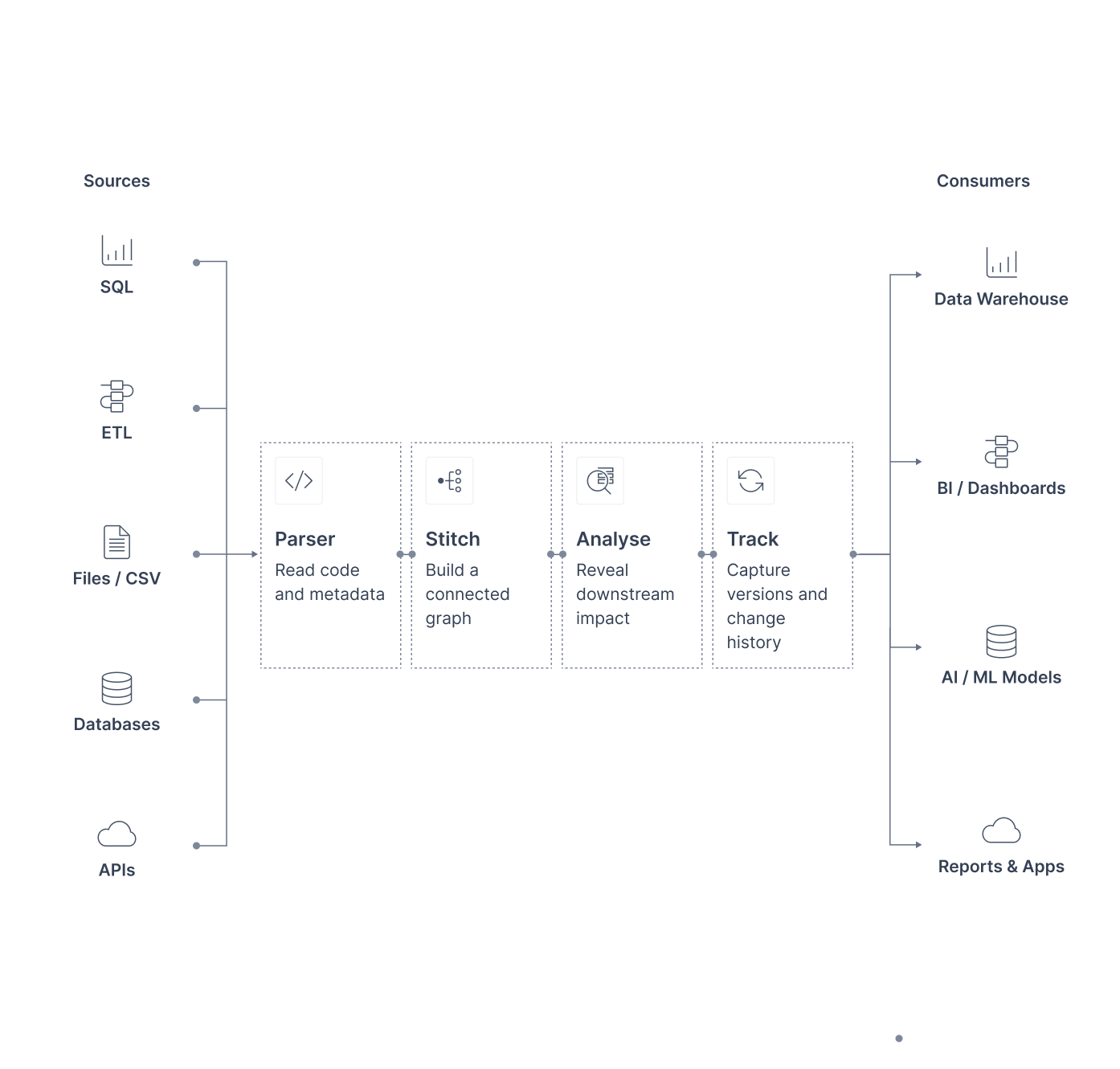
Log-based lineage only shows you what ran. MetaKarta shows you what's designed to run. The parser reads SQL scripts, Python, Informatica mappings, SSIS packages, stored procedures, and COBOL copybooks directly. It stitches the full chain together: source through ETL, through the warehouse, into BI models, out to reports, dashboards, AI models, and embedded applications.

What each stage delivers

01

Parse

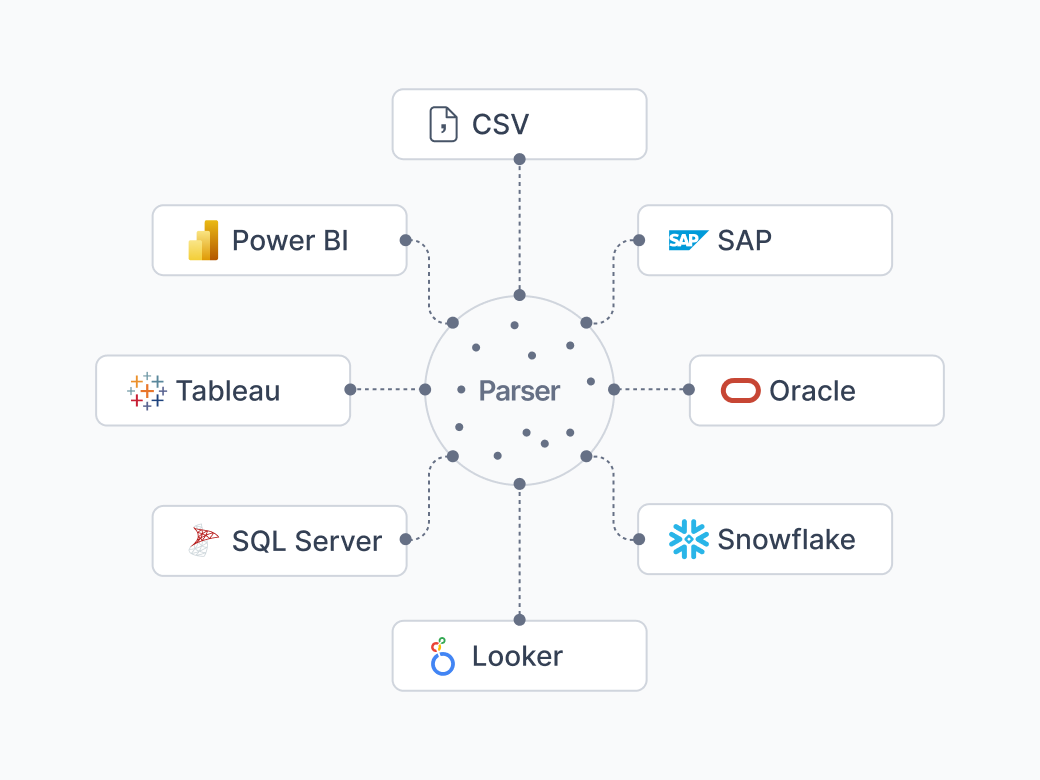
The lineage engine reads your code artifacts directly. No instrumentation, no waiting for jobs to run.

02

Stitch

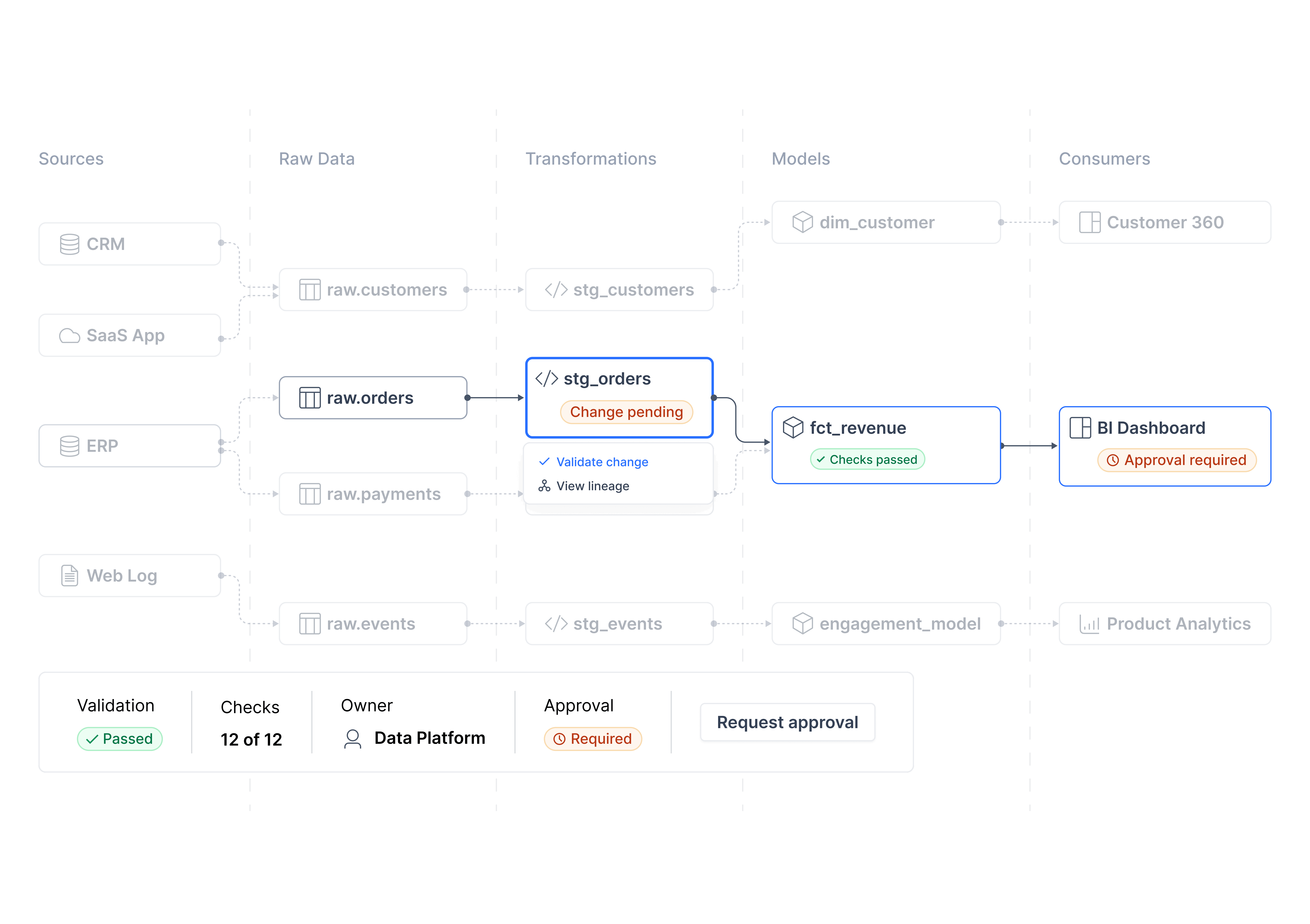
Metadata is automatically stitched into an end-to-end lineage graph, column by column, across every system in your estate.

03

Analyze

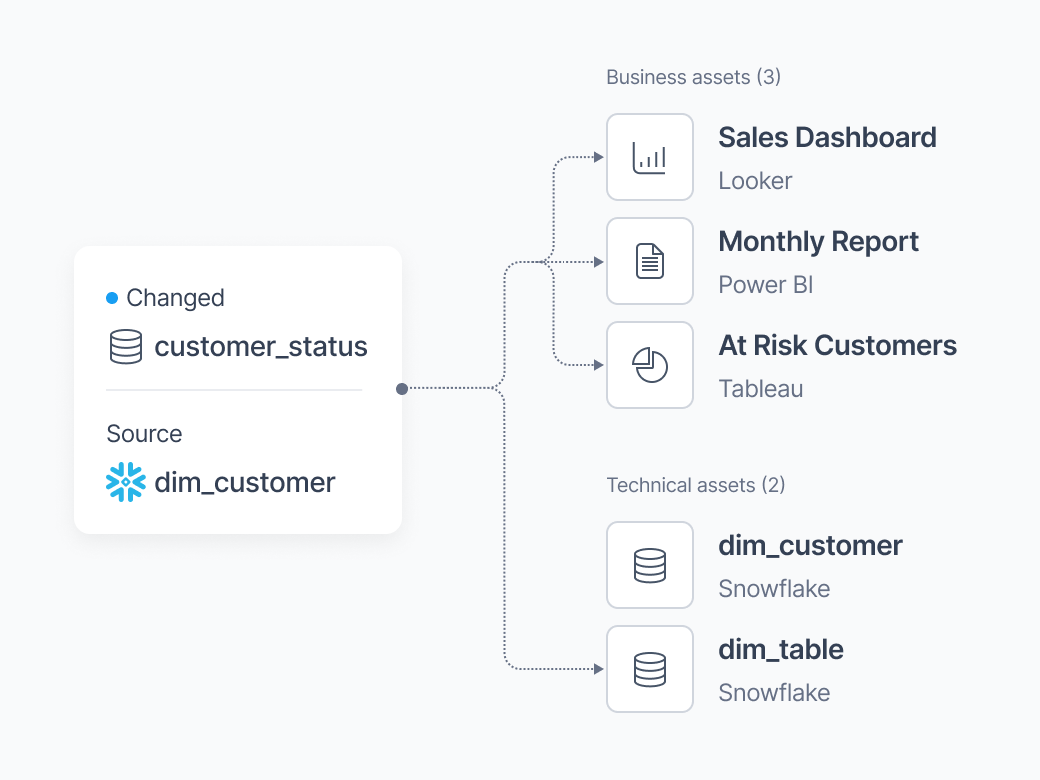
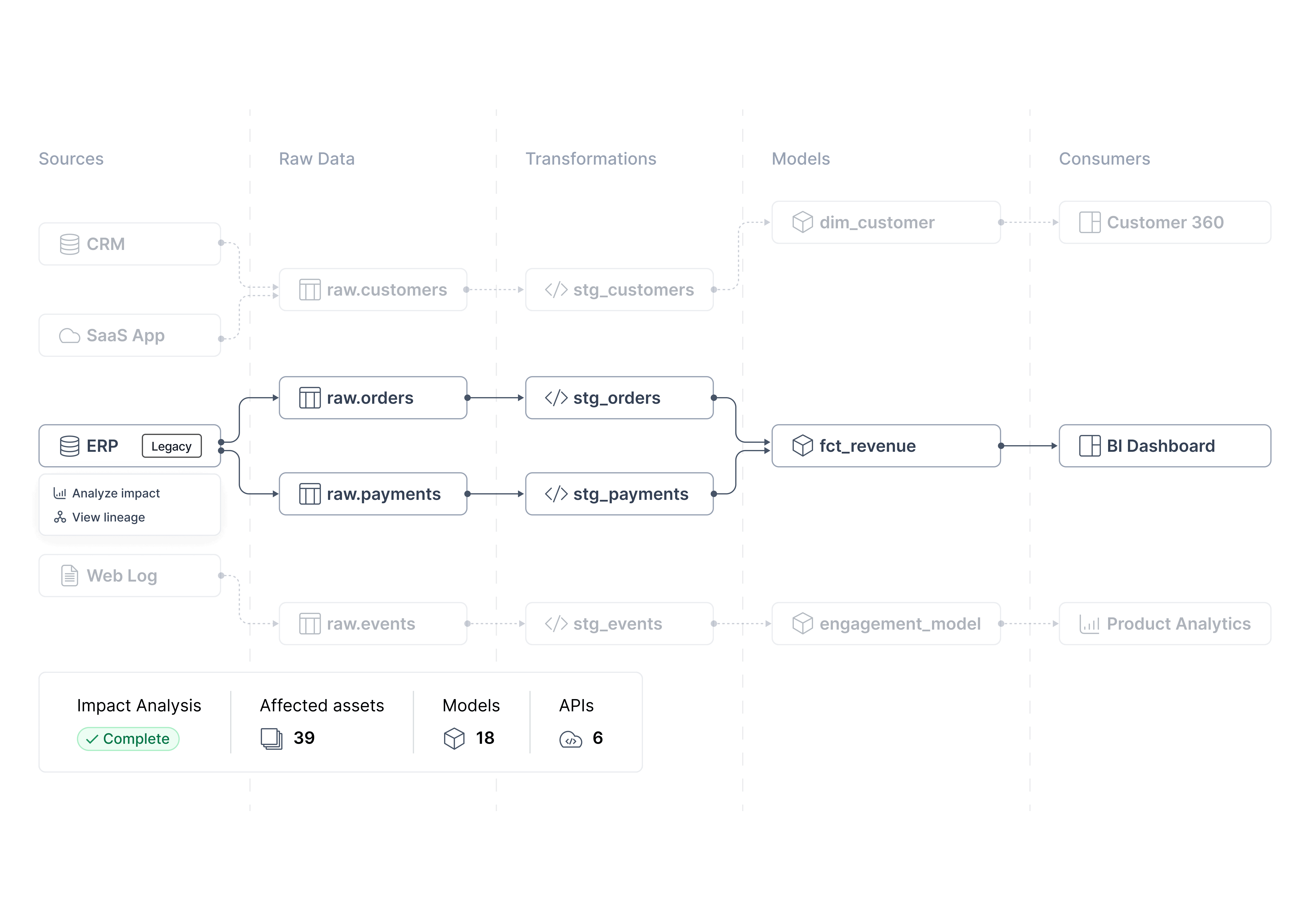
Run impact analysis on any column before a schema change deploys. See every downstream consumer. Know what breaks.
04

Track

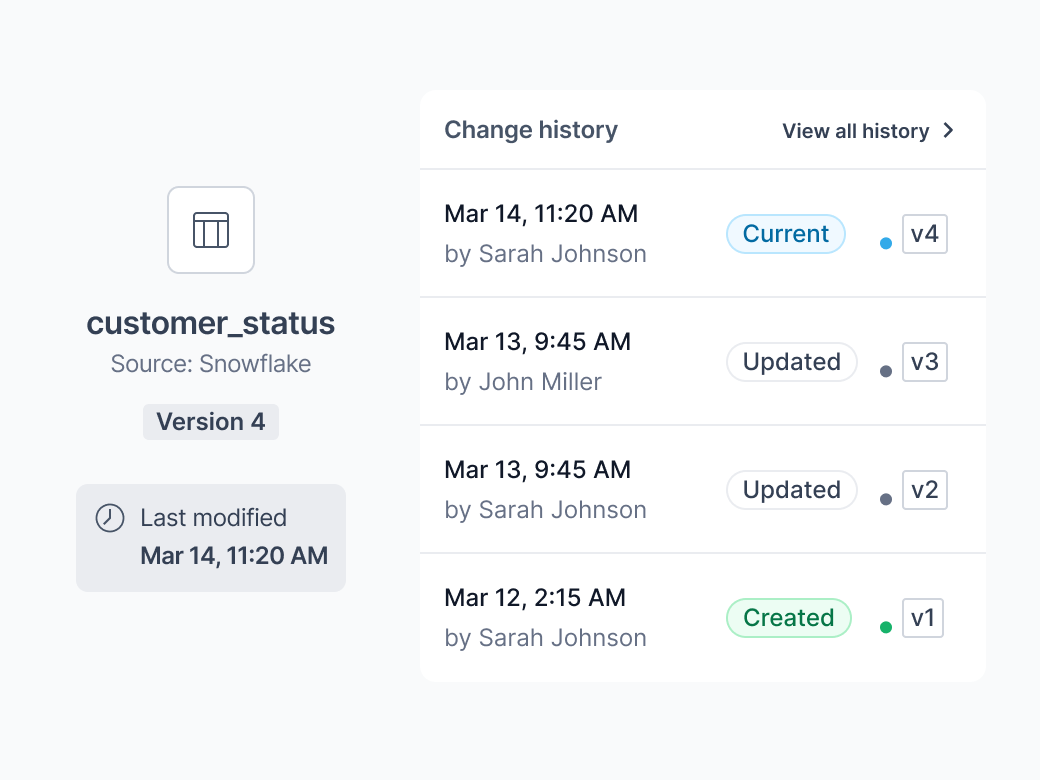
Every change is version-controlled, attributed, and timestamped. Answer "what did this look like on March 14th?" in seconds.

Features

Know the blast radius before the ticket lands

Column-level impact analysis

Trace every downstream consumer of any column before a schema change deploys. Always complete, never probabilistic.

400+ native connectors

From Legacy on-prem to modern cloud. Oracle, Snowflake, Databricks, Informatica, SAP BusinessObjects, Tableau, and more.

Cross-system lineage stitching

End-to-end lineage from source through ETL/ELT, through the warehouse, into BI models, and out to every consumer.

Full version and configuration management

Every change logged, attributed, timestamped, and reversible. Reconstruct your estate's state at any point in history.

Multi-architecture support

Data Warehouse, Data Lake, Data Vault, on-premises, cloud, and hybrid. Covers the estate you have, not an idealized one.

AI provenance and audit readiness

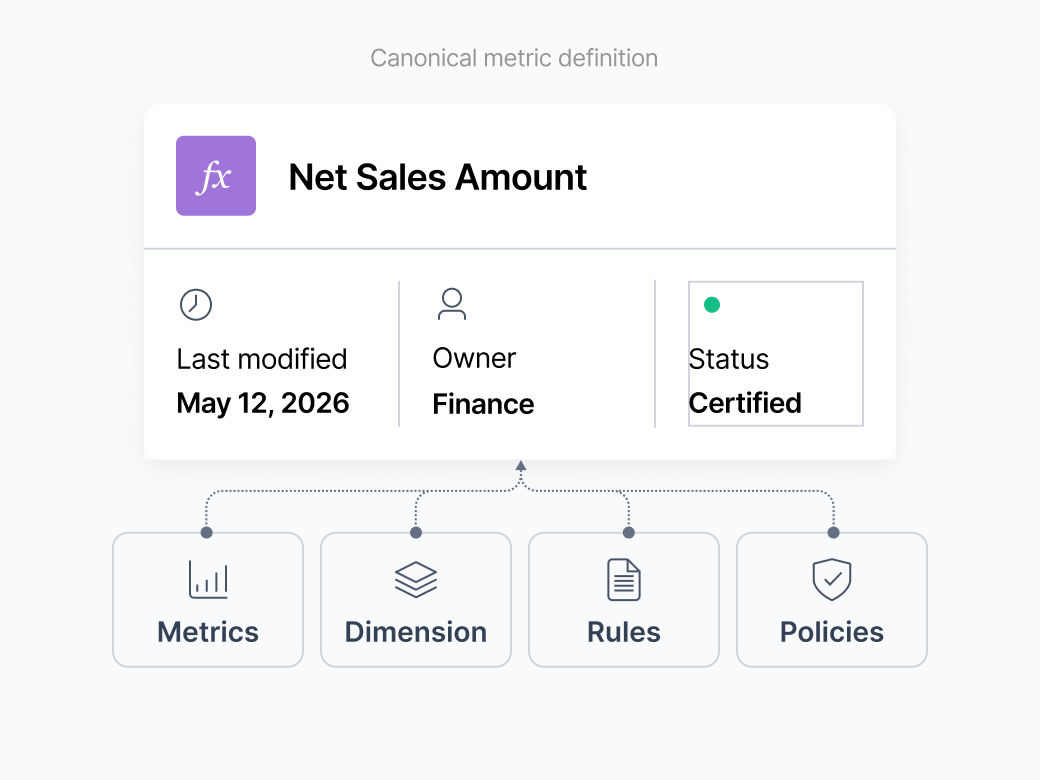
Trace every AI model output back through governed definitions to the source data that produced it.

The Architectural Difference

Log-based vs. parser-based lineage

Log-based lineage

Only shows you what ran

Log-based systems reconstruct lineage from runtime telemetry: job execution logs, query histories, runtime events. If a job didn't run, it's invisible. If a system doesn't emit logs, it's a gap.

Drawbacks

Dormant jobs, unscheduled pipelines, and non-logging systems disappear from your lineage map

It covers what ran recently, not what exists

Impact analysis starts after a schema change touches production, not before

False positives from log artifacts create noise that requires manual verification

MetaKarta Data Lineage

Reads what's designed to run

MetaKarta's parser reads source code artifacts directly. SQL scripts, ETL configs, stored procedures, BI semantic models. It doesn't depend on execution history. The estate is fully mapped whether a job ran last night or hasn't run in six months.

Advantages

Complete lineage, with no blind spots from dormant or non-logging systems

Impact analysis shows what breaks before any change deploys in production

Version control lets you answer "what did it look like on this date"

No integration needed between lineage, catalog, governance, and semantic definitions

How It's Used

Trace your data from source to consumer

Know exactly what's impacted before you move anything

Cloud migration impact analysis

Identify every downstream consumer of every column before a schema change deploys. No surprises after go-live.

BI platform migration

Trace the full lineage of every report and dashboard before you decommission a source system, so nothing breaks in the move.

Legacy system decommissioning

Map every dependency on aging on-prem infrastructure before you pull the plug.

Produce evidence on demand, not reconstruct on a deadline

Regulatory traceability (GDPR, SOX, BCBS 239)

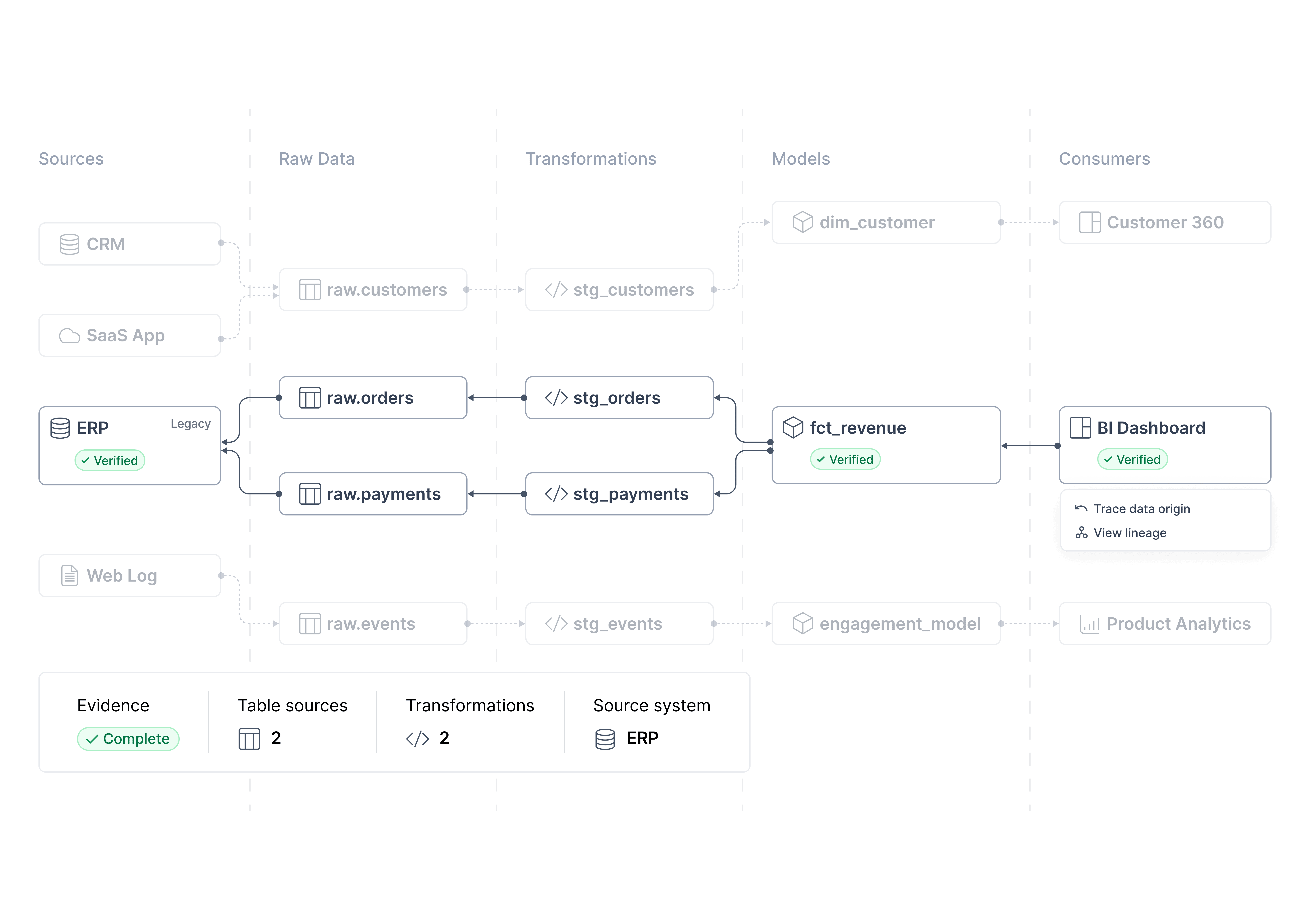
Trace any reported number back to its source with a complete version-controlled audit trail.

AI audit & provenance

Prove AI outputs from the source data, transformations, and governed metadata that produced it. Audit-ready on demand.

Root cause analysis

When a dashboard number is wrong, find the broken transformation in minutes, not days of manual reconstruction across disconnected tools.

Lineage as an operational control, not a compliance artifact

Schema change governance

Run automated impact analysis before any schema change deploys. See every affected downstream consumer.

Estate documentation for architecture teams

Maintain a version-controlled picture of your architecture, without manual documentation every time something changes.

Semantic grounding for AI

Feed lineage-traced data context to LLMs so every AI response is grounded with verifiable provenance from source to output.

Frequently asked questions

How is parser-based lineage different from log-based lineage?

Log-based tools infer lineage from runtime telemetry, so coverage depends on what happened to run while they watched. MetaKarta parses the source code itself: SQL, ETL configurations, stored procedures, BI models. The result is complete by construction, including dormant jobs and systems that emit no logs.

Which sources can the parser read?

SQL scripts, Python, Informatica mappings, SSIS packages, stored procedures, COBOL copybooks, and BI semantic models, across 400+ native connectors spanning legacy on-prem and modern cloud.

Can we run impact analysis before a change deploys?

Yes. Pick any column and see every downstream consumer, across systems, at column level, before the change ships. Computing lineage from the code itself is what makes the pre-deploy answer complete.

Can we see what lineage looked like on a past date?

Yes. Every change to the metadata estate is versioned, attributed, and timestamped. Reconstructing the state of any pipeline, column, or definition is a query, and it takes seconds.

Does lineage cover AI model outputs?

Yes. AI provenance traces a model's output back through the governed definitions it consumed to the source data underneath, which is what an audit committee asks for when it asks whether an AI answer can be trusted.