Audit & Compliance

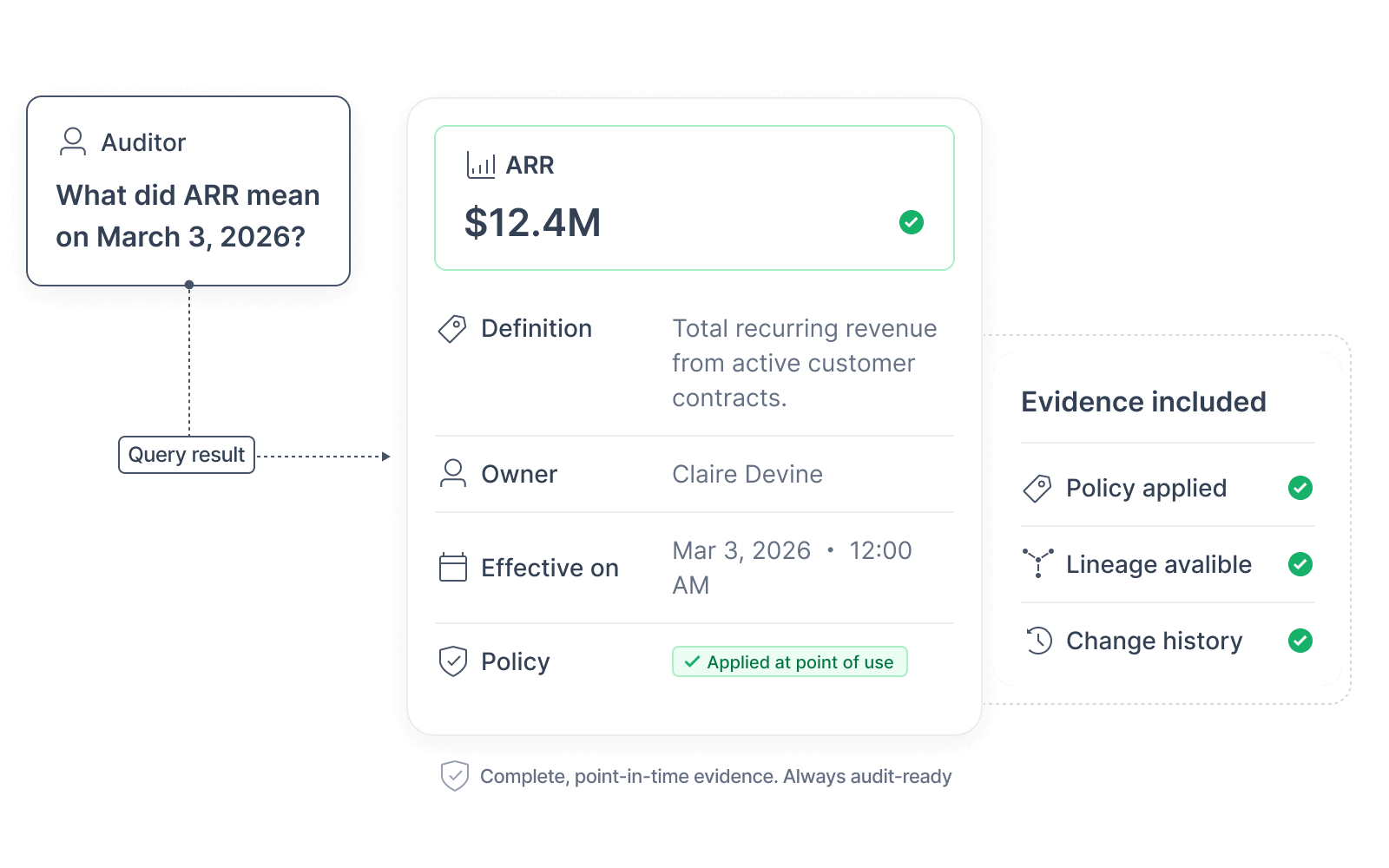
Answer the auditor with a query

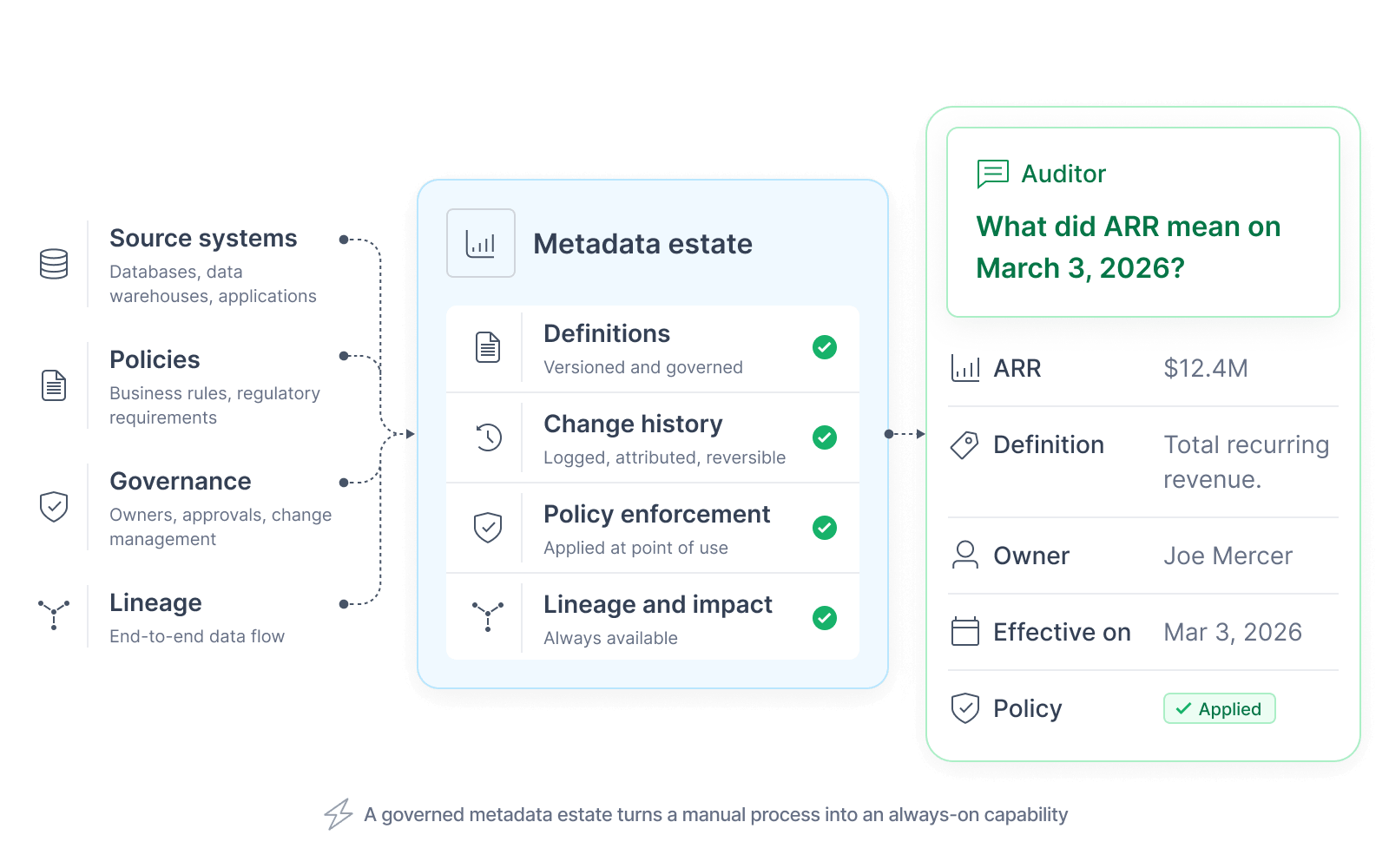
Every definition in the estate carries an owner, a version history, and a policy applied where the data is used. What a metric meant on a given date is a question the system answers directly.

End-to-end, column-level lineage graph spanning databases, pipelines, and BI tools in a single view.

Key capabilities

Built for SOX, GDPR, BCBS 239, CSRD, and emerging AI governance mandates

Every change logged, attributed, timestamped, and reversible

Policy applied at the point of use, across the estate

Nearly 30 years of OEM metadata engineering

The Problem

Every audit cycle turns into a project

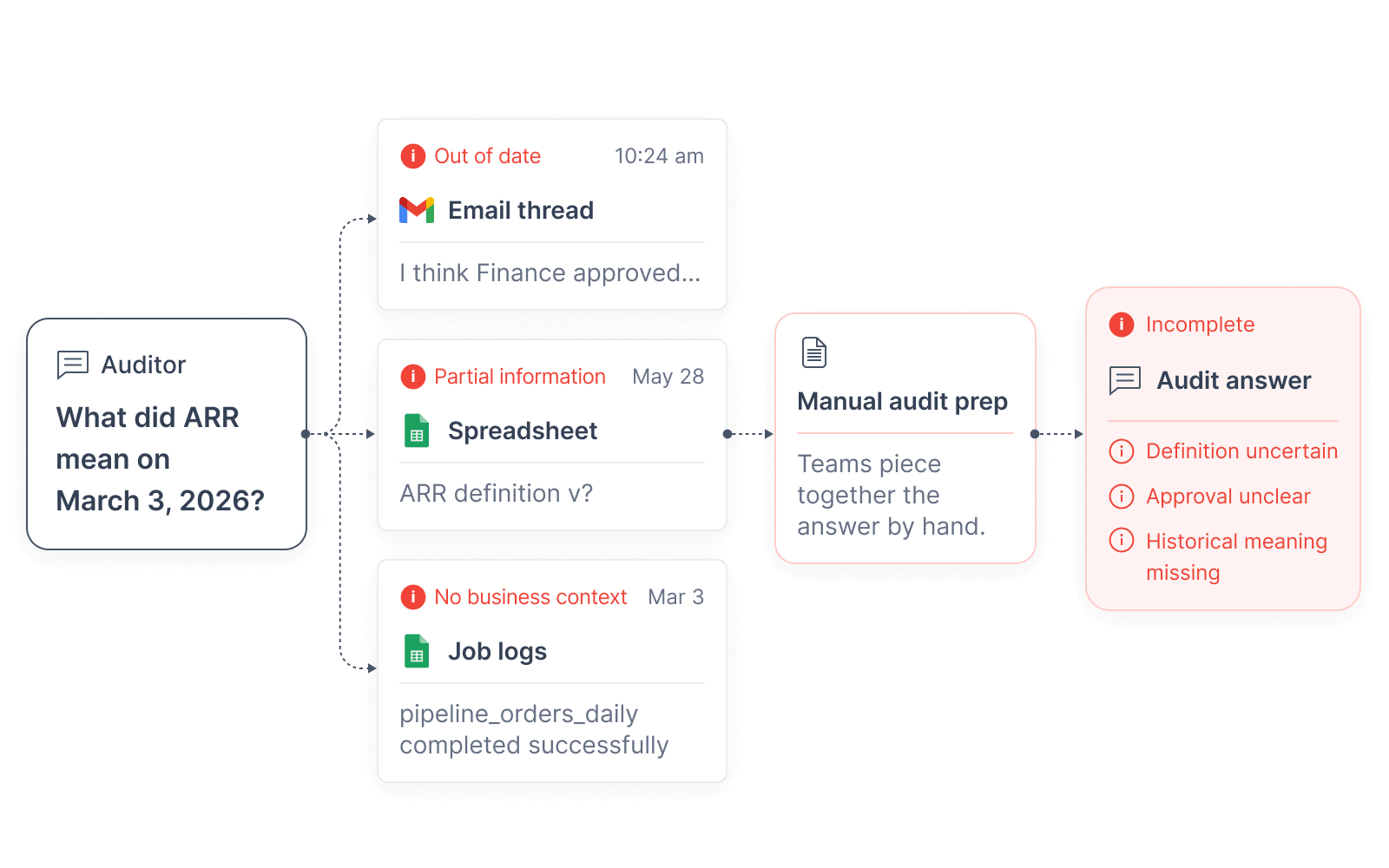
Metric definitions get reconstructed from tribal knowledge, job logs, and email threads. The regulator asks when a field changed, who approved it, and what it meant at the time of a specific transaction.

Answering that means pulling threads across systems that don't share a data model, so teams assemble the documentation by hand before every audit window.

SOX, GDPR, BCBS 239, CSRD, and the AI governance mandates now arriving all ask for evidence the estate can't produce on demand.
The Approach

Put the whole metadata estate under version control

Lineage, catalog entries, governance policies, and semantic definitions all sit under version and configuration management. Every change is logged, attributed, timestamped, and reversible.

Policy applied where the data is used, versioned where it changed. The record of enforcement and the enforcement itself are one system.

Audit readiness shifts from a sprint before the auditor arrives to a permanent state of the estate.

The audit answer is a query.

What Changes

The answer on any date

What a metric meant, who changed it, and where it flowed, at any point in the history.

Enforcement with a record

Every definition can defend itself.

One answer for the board

The number in the board deck and the number in the financial system come from the same governed definition.