
















Data Catalog

Find, understand, and trust your data assets

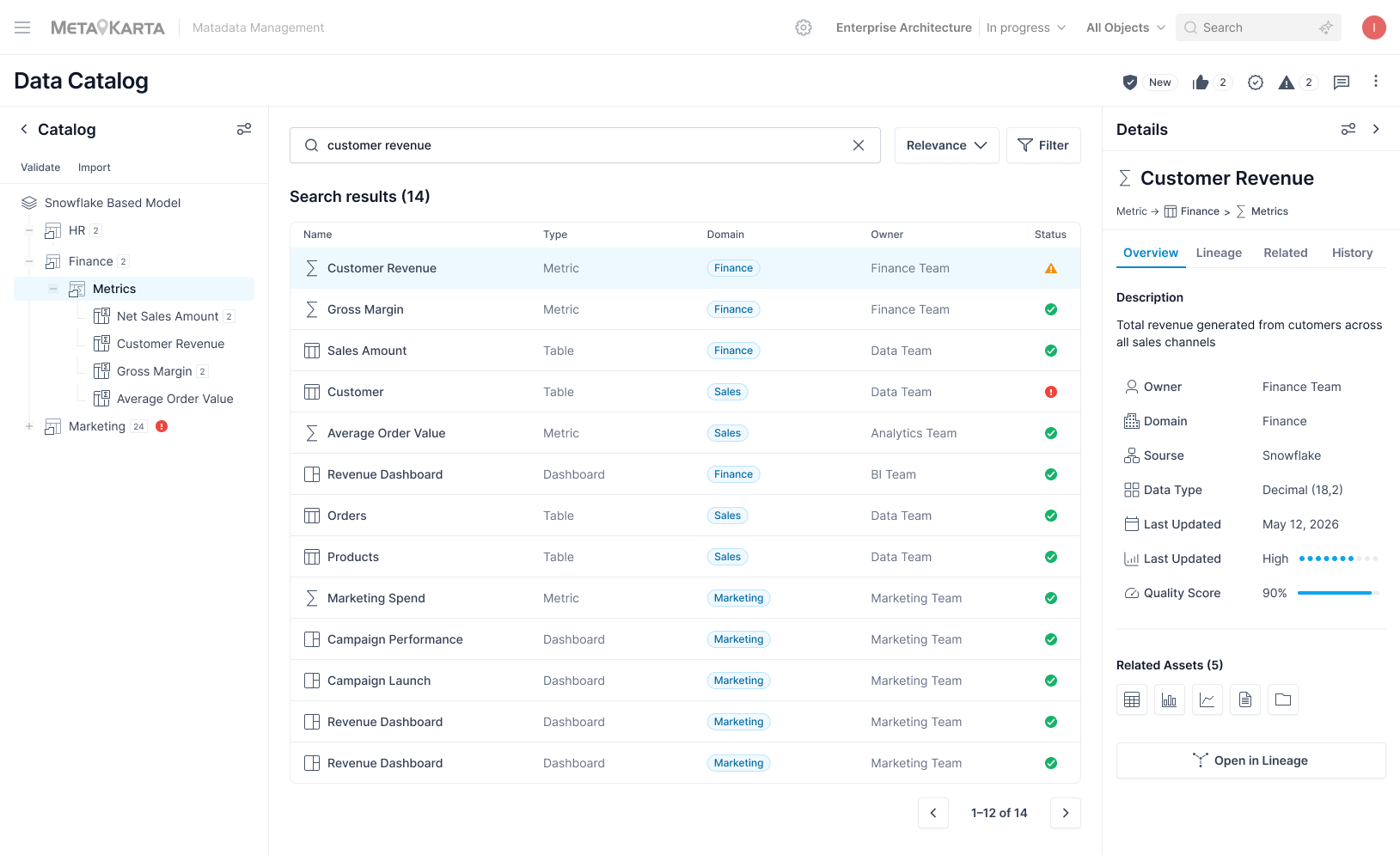
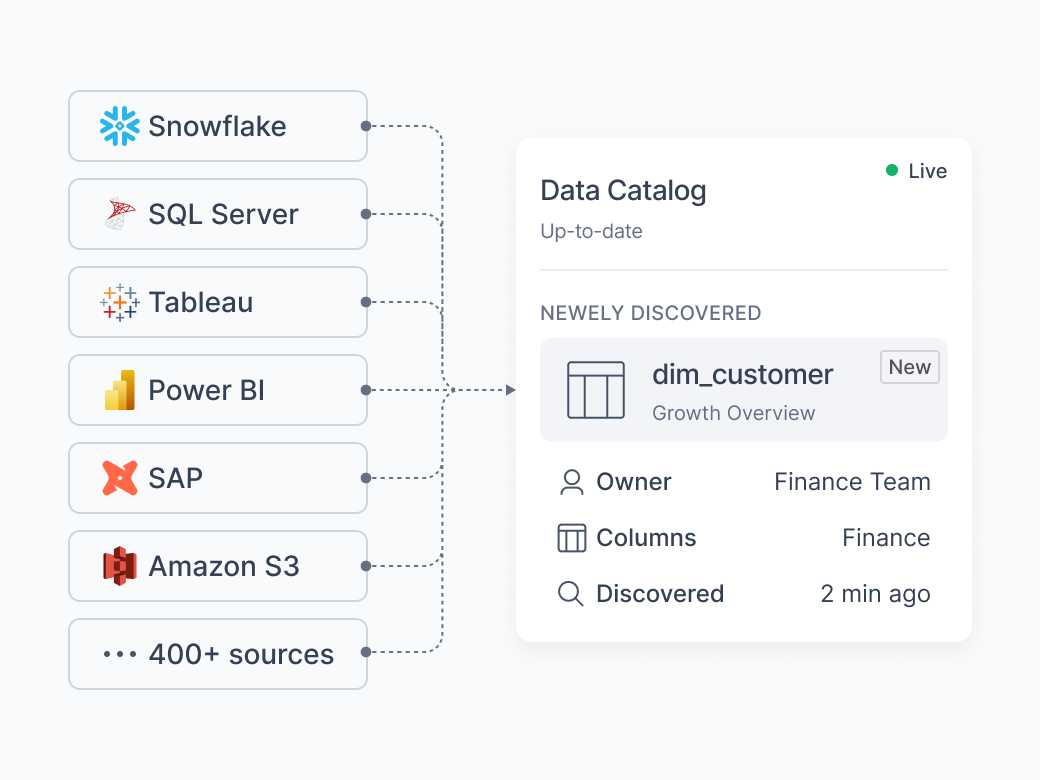
MetaKarta's Data Catalog harvests metadata automatically from 400+ sources. The catalog reflects your actual, live data estate. New sources appear without manual intervention. Changes apply across the metamodel when they happen.

Discover data from a complete catalog

Mechanism

Active harvesting is always current

Passive catalog tools wait for humans to document data. MetaKarta actively harvests metadata from every connected source, stitches it into a unified picture of your estate, and keeps it current. No manual tagging campaigns. No quarterly cleanup sprints. The catalog reflects what's actually there.
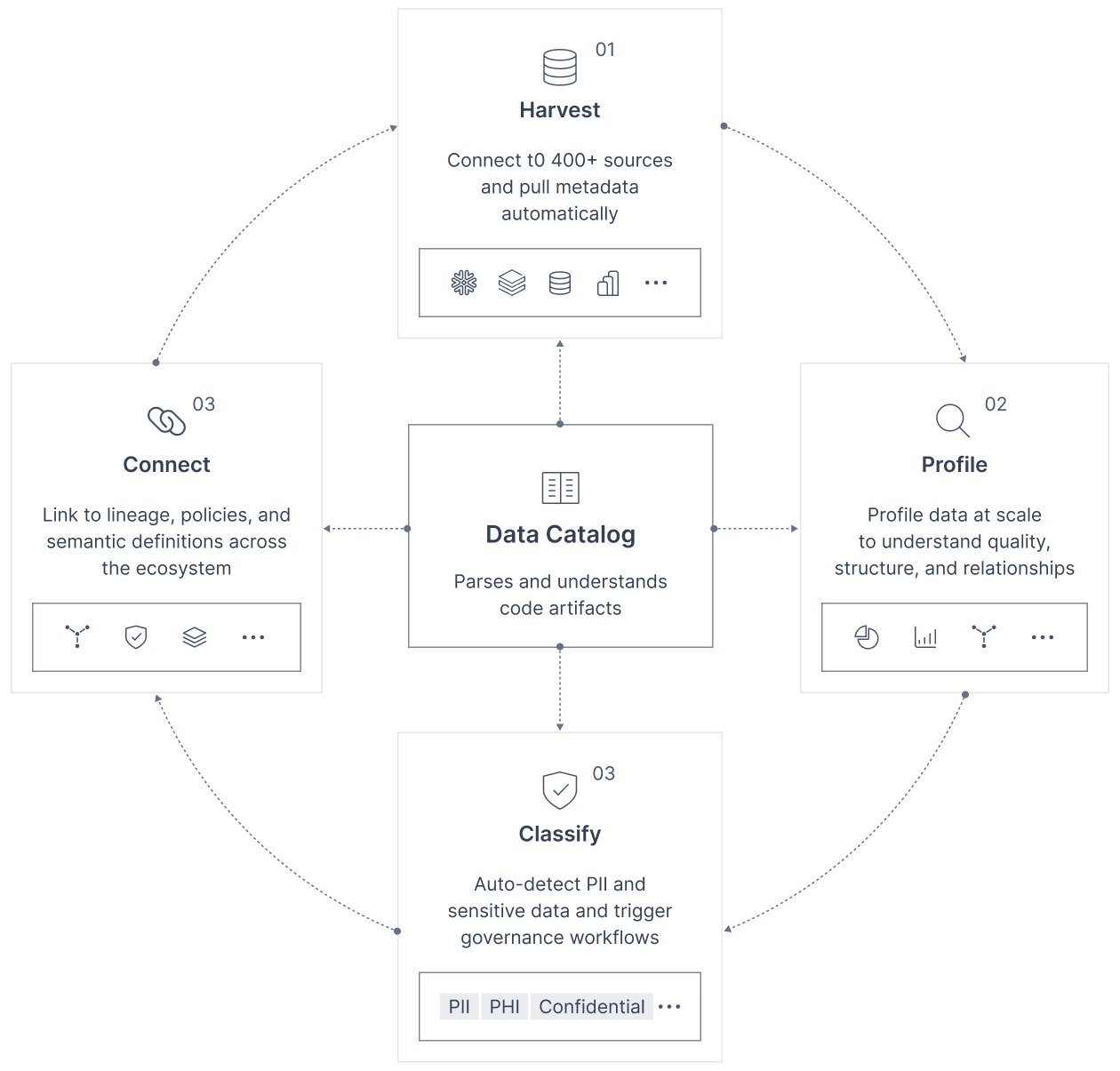
What each stage delivers

01

Harvest

MetaKarta connects to 400+ source systems and pulls metadata automatically. Databases, ETL pipelines, BI tools, cloud platforms. If it's in your estate, it's in the catalog.

02

Profile

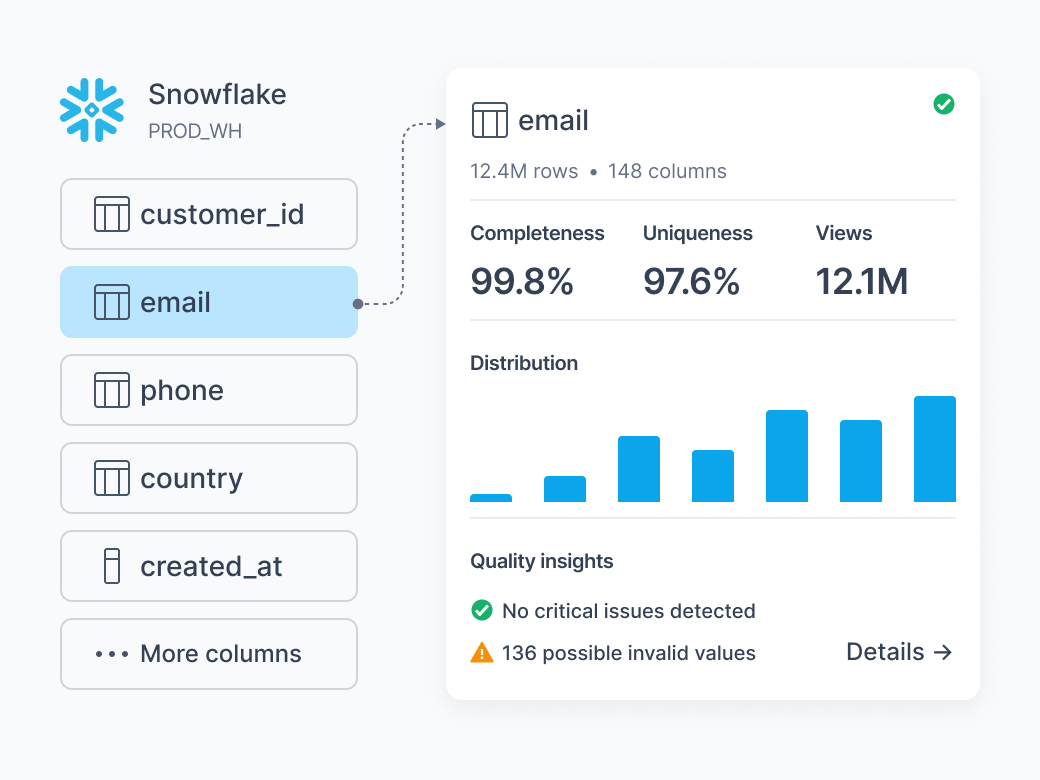
Data sampling and profiling runs at scale. Column statistics, data quality indicators, relationship discovery, and semantic classification surface automatically.

03

Classify

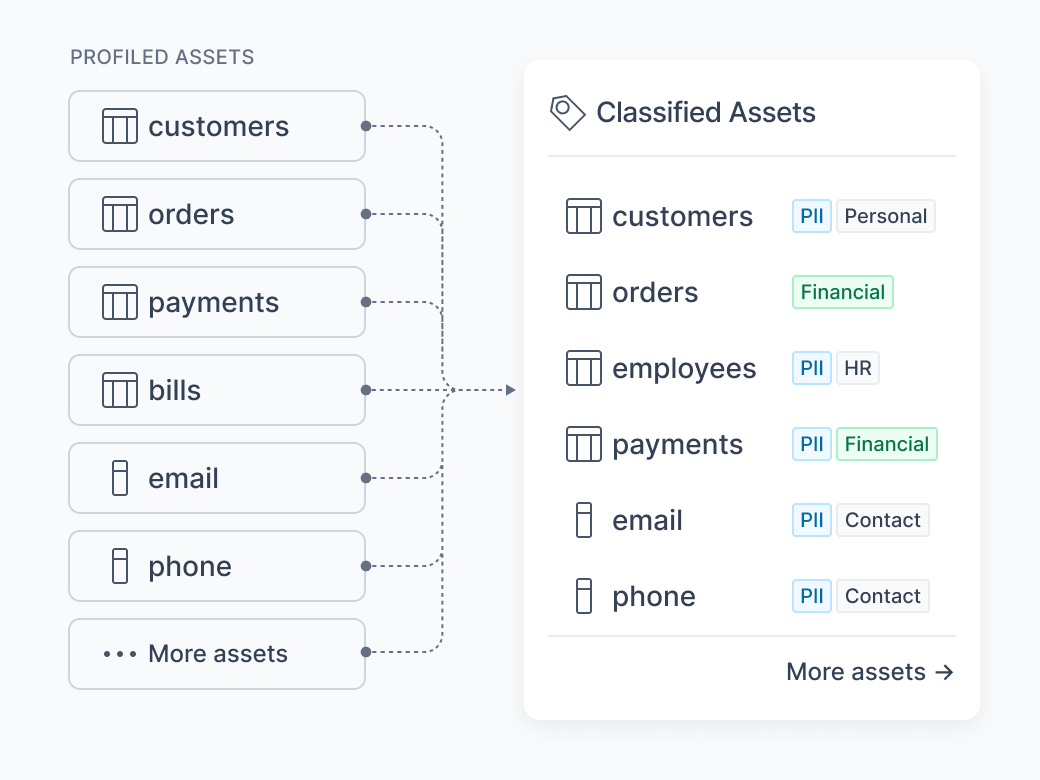
PII detection and sensitive data tagging run without manual review. Findings trigger governance workflows and policy enforcement immediately.

04

Connect

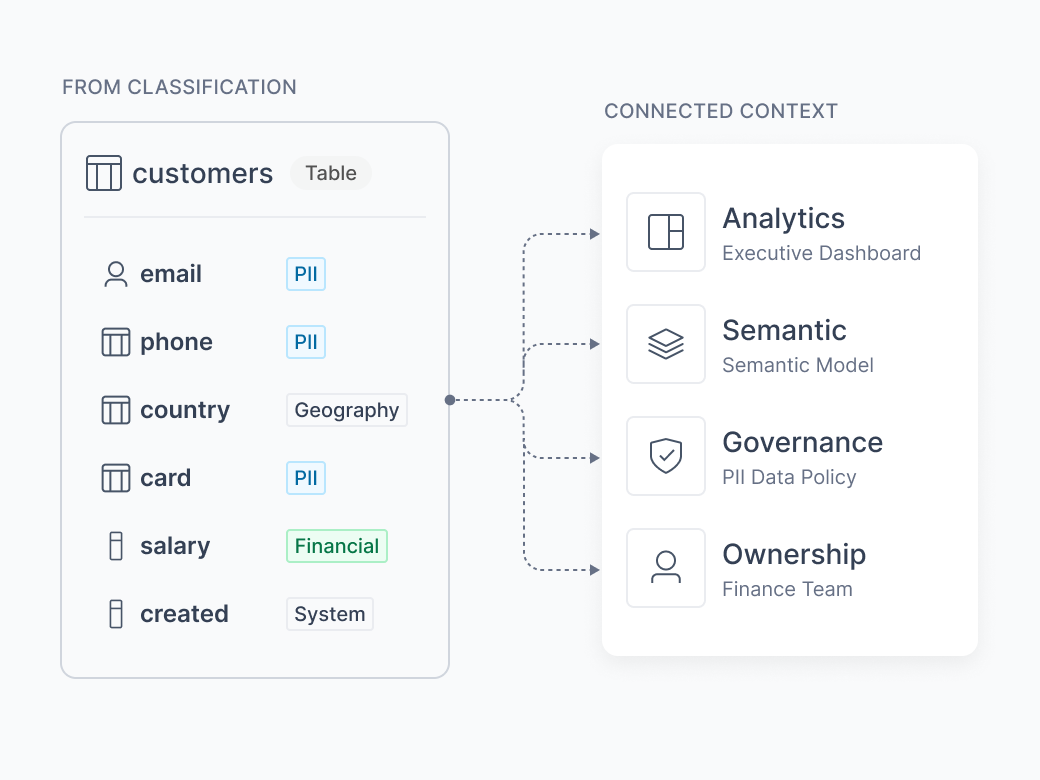
Every catalog entry links to the same lineage, governance policies, and semantic definitions on the shared metadata repository. The catalog isn't a silo. It's connected to the infrastructure that governs it.

Features

A catalog connected to the infrastructure it describes

Active metadata harvesting

Automatically pulls metadata from 400+ sources. New assets appear without manual registration. Changes are applied uniformly to the unified metadata.

Data profiling at scale

Column statistics, null rates, cardinality, and data quality indicators computed automatically across the full estate.

Automated PII and sensitive data classification

Detects and tags sensitive data without manual review. Findings trigger stewardship workflows and masking enforcement.

Semantic and relationship discovery

Automatically maps relationships between tables, fields, and business terms. Building a business glossary from scratch gets a running start.

Social curation and data products

Data stewards annotate, rate, and certify datasets. Trusted data products get surfaced to analysts who need them.

Connected to lineage and governance

Every catalog entry carries full lineage context and links to the governance policies that apply to it. The catalog is operational, not decorative.

The Architectural Difference

Documentation-first vs. infrastructure-connected catalogs

Documentation-first catalogs

Accurate on day one, stale by month six.

Documentation-first catalogs depend on humans to keep them current. Data stewards register assets, tag fields, and write descriptions. When the underlying data changes, someone has to notice and update the catalog manually.

Drawbacks

Catalog accuracy degrades when the data estate changes faster than humans can document it

PII detection depends on manual tagging, creating compliance gaps wherever coverage slips

Catalog entries carry no lineage context. You can find a dataset but can't trace where it came from or what depends on it

Governance policies live in the catalog UI, separate from the systems that actually implement them

MetaKarta Data Catalog

Harvested automatically, connected to the infrastructure.

MetaKarta's catalog harvests metadata continuously from 400+ sources. It doesn't wait for a human to register an asset. The catalog reflects the live estate. PII is classified automatically. Every entry connects directly to lineage, governance policies, and semantic definitions within the shared metadata repository.

Advantages

Active harvesting keeps your catalog current and connected without the manual maintenance overhead

Automated PII classification scales compliance across the full estate, with no tagging gaps

Every catalog entry carries column-level lineage context: where the data came from, what transformation touched it, what depends on it

No integration needed between lineage, catalog, governance, and semantics

How It's Used

Find the right data and trust what you find

Get analysts to the right data faster, without a ticket to the data team.

Federated data discovery

Analysts search a single catalog that reflects the full estate: cloud warehouses, on-prem databases, BI tools, and data lakes.

Certified data products

Data stewards certify trusted datasets and surface them prominently. Analysts spend less time second-guessing data and more time using it.

Connected business glossary

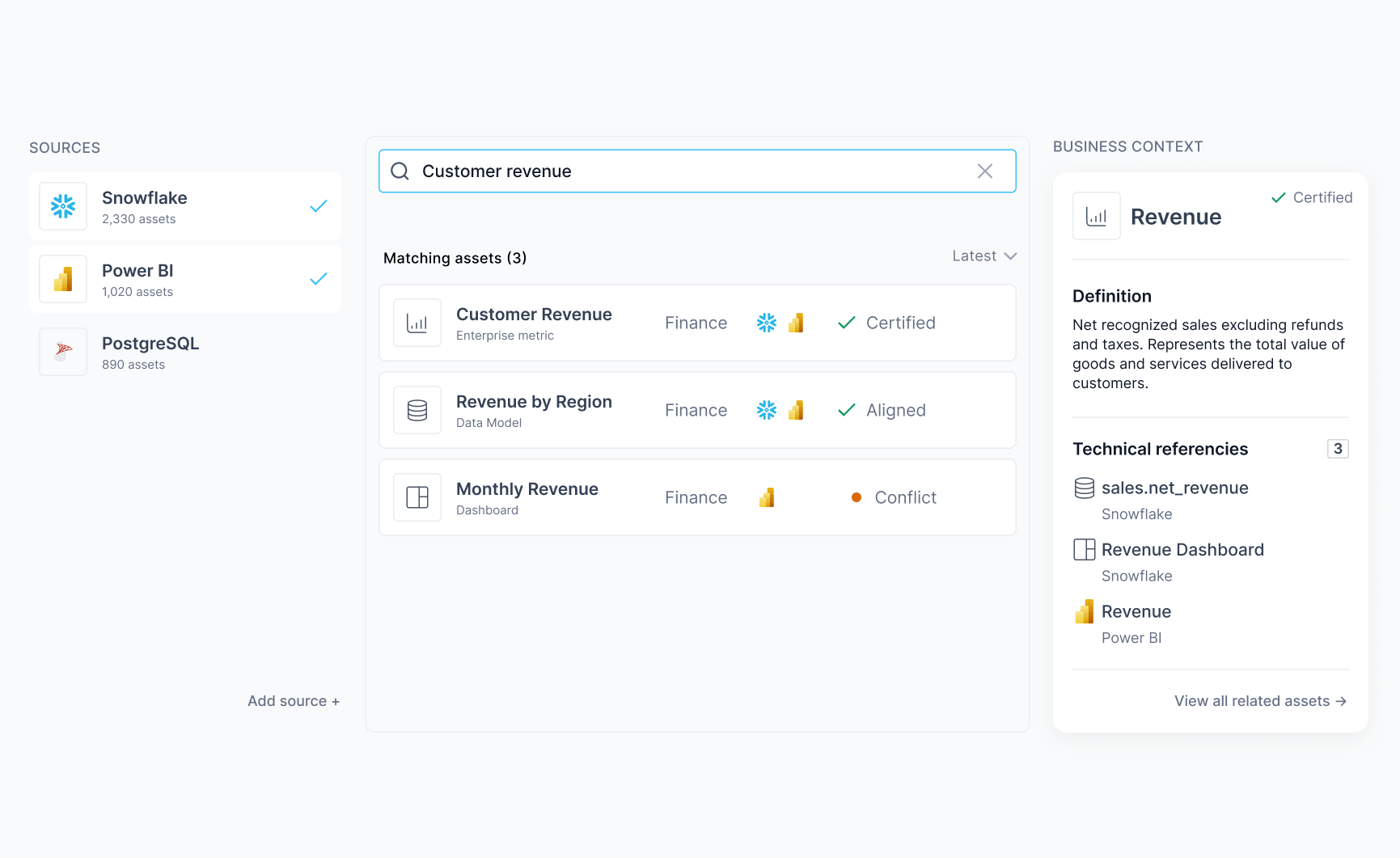
Business terms link directly to technical fields. Semantic lineage traces how definitions flow from source through transformation to report.

Scale your compliance program without scaling your headcount.

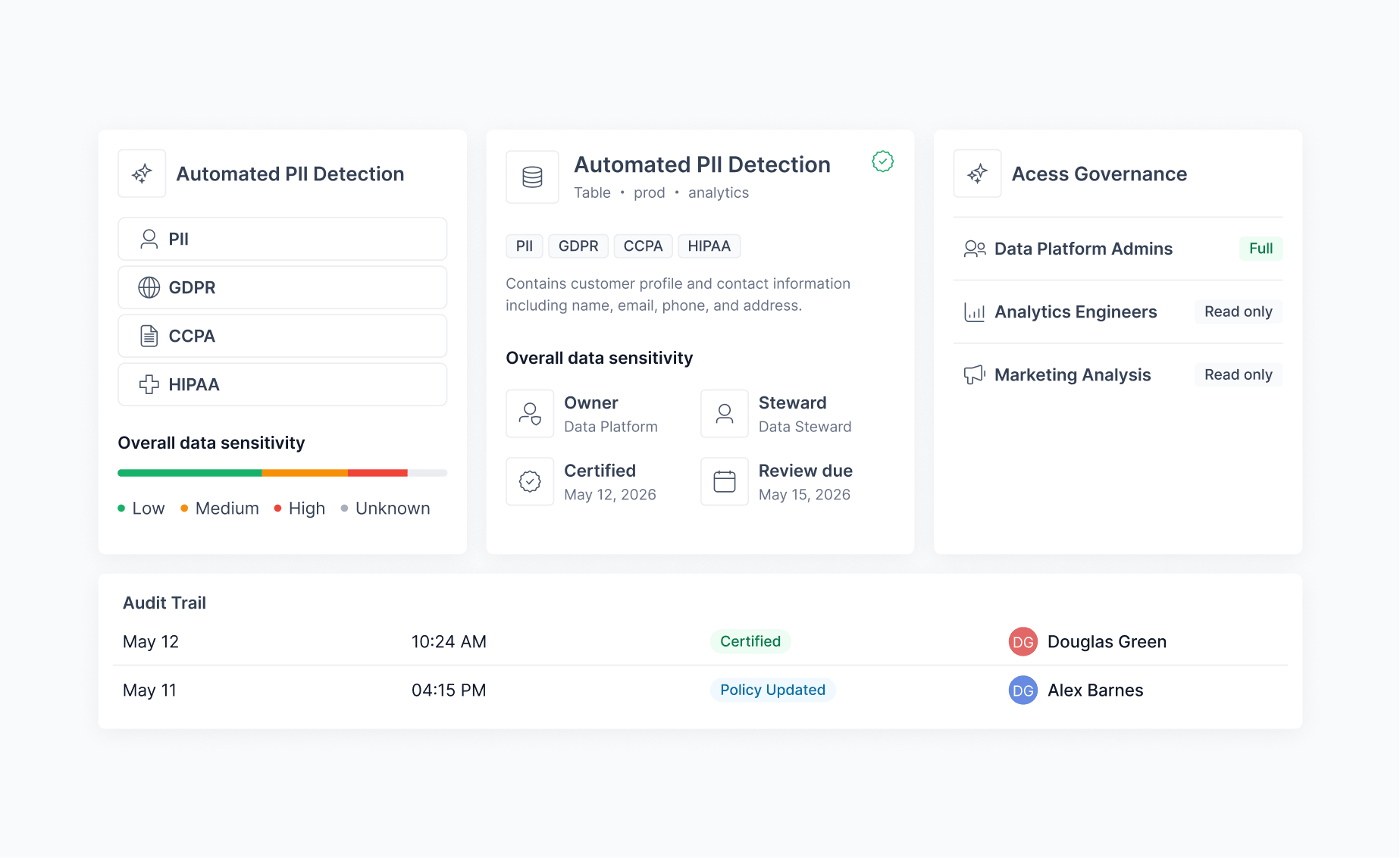
Automated PII detection (GDPR, CCPA, HIPAA)

PII and sensitive data classification runs automatically across the full estate. No manual tagging campaigns.

Data access governance

Catalog entries connect directly to access control policies. Who can see what is enforced, with a complete audit trail.

Audit readiness on demand

Every metadata change is versioned, attributed, and timestamped. Auditors ask for documentation. You produce it.

Ground AI initiatives in data you can actually vouch for.

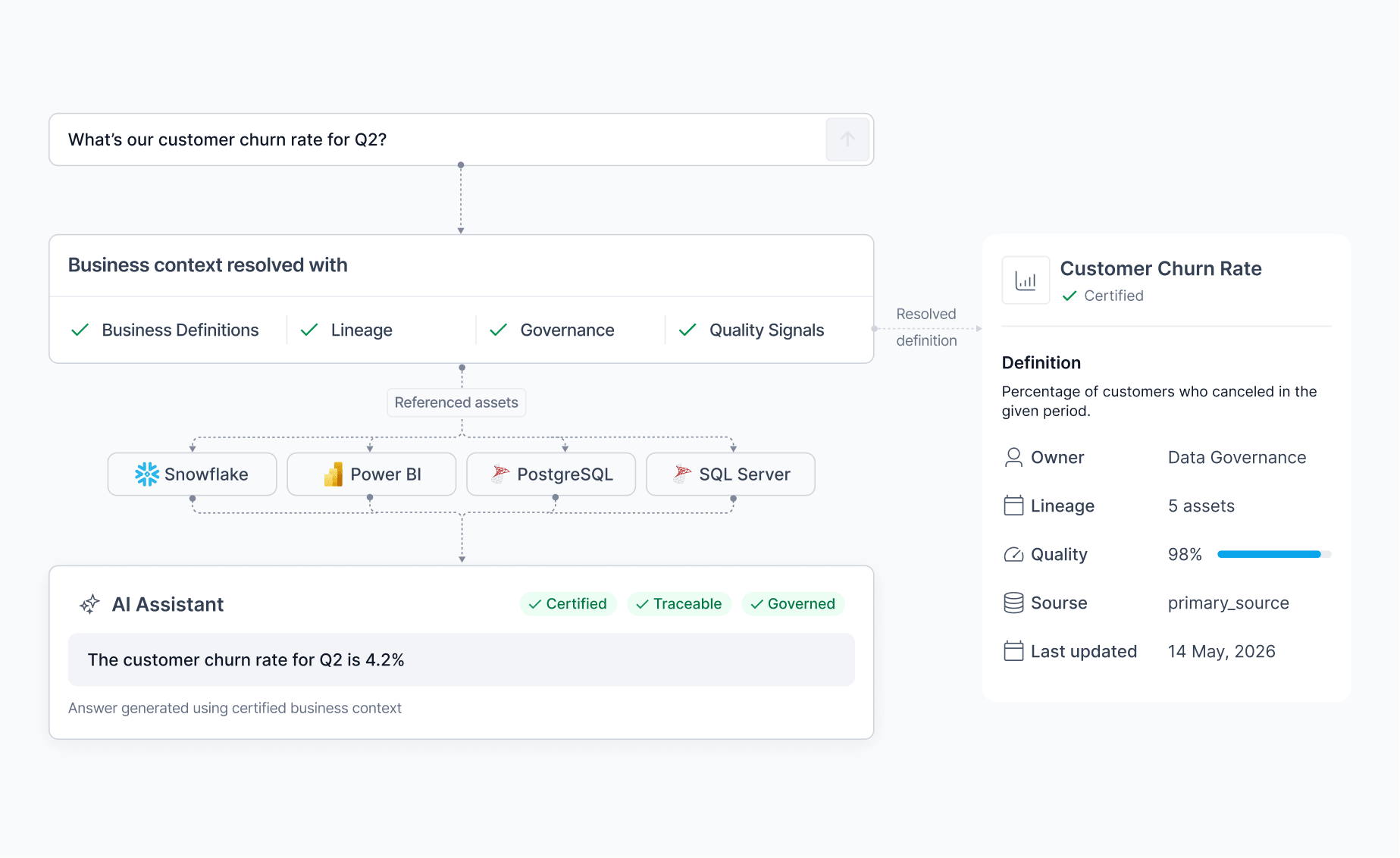
Compiled context for AI agents

AI agents and text-to-SQL tools query against catalog-connected definitions with full provenance, not raw schema.

Data quality visibility before AI consumption

Profiling results surface data quality indicators before any dataset feeds an AI pipeline.

MCP-delivered catalog context

MetaKarta MCP Metadata Management Tools access delivers catalog data, lineage context, and governance status to AI consumers across the full shared metadata foundation.

Frequently asked questions

How does the catalog stay current?

Active harvesting. MetaKarta connects to 400+ sources and pulls metadata continuously, so new assets appear and changes propagate without anyone registering or re-tagging them. The catalog tracks the estate, and drift between the two has no place to accumulate.

We already have a catalog. What does MetaKarta add?

Connection. Every MetaKarta catalog entry carries column-level lineage and links to the governance policies that apply to it, because catalog, lineage, governance, and semantic definitions all read from one shared metadata repository. A standalone catalog documents assets; a connected one lets you trace and defend them.

How is MetaKarta different from a data catalog?

MetaKarta includes a full data catalog and goes further: it compiles governed definitions into the systems that consume data. Documentation describes what should be true. Compilation makes it true.

How does PII classification work?

Automated classification detects and tags PII and sensitive data across the full estate, and findings immediately trigger stewardship workflows and masking enforcement. That's how GDPR, CCPA, and HIPAA coverage scales past what a manual tagging program can sustain.

Can business users make sense of what they find?

Yes. Semantic and relationship discovery maps tables and fields to business terms automatically, stewards certify trusted datasets, and the connected business glossary shows what each term means and which technical fields implement it.

How does the catalog support AI initiatives?

AI agents and text-to-SQL tools work against catalog-connected definitions that carry lineage and governance status, so every answer traces to governed meaning. Profiling results also flag data quality issues before a dataset ever feeds a pipeline.