Impact & Root Cause Analysis

Know what breaks before you ship the change

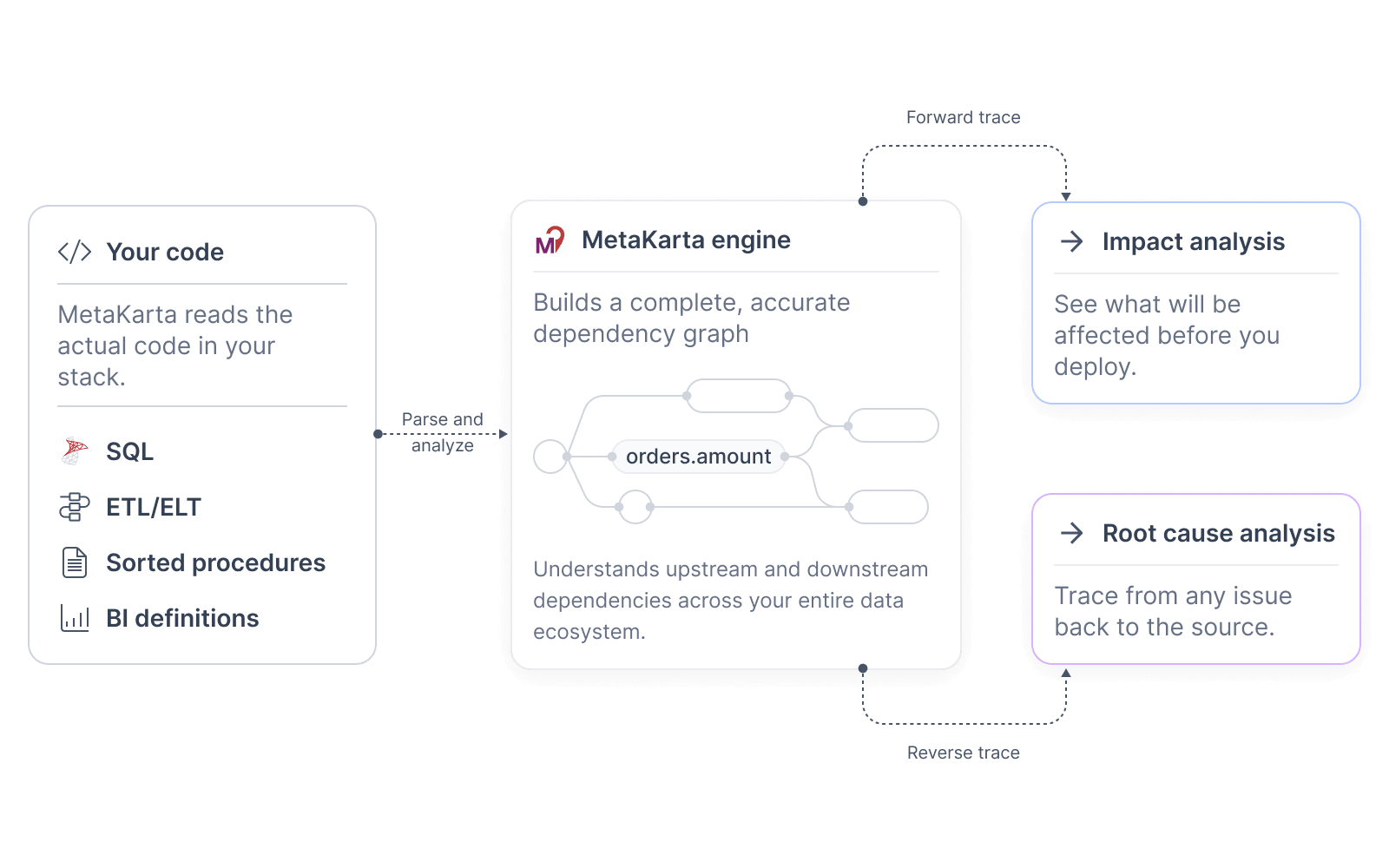
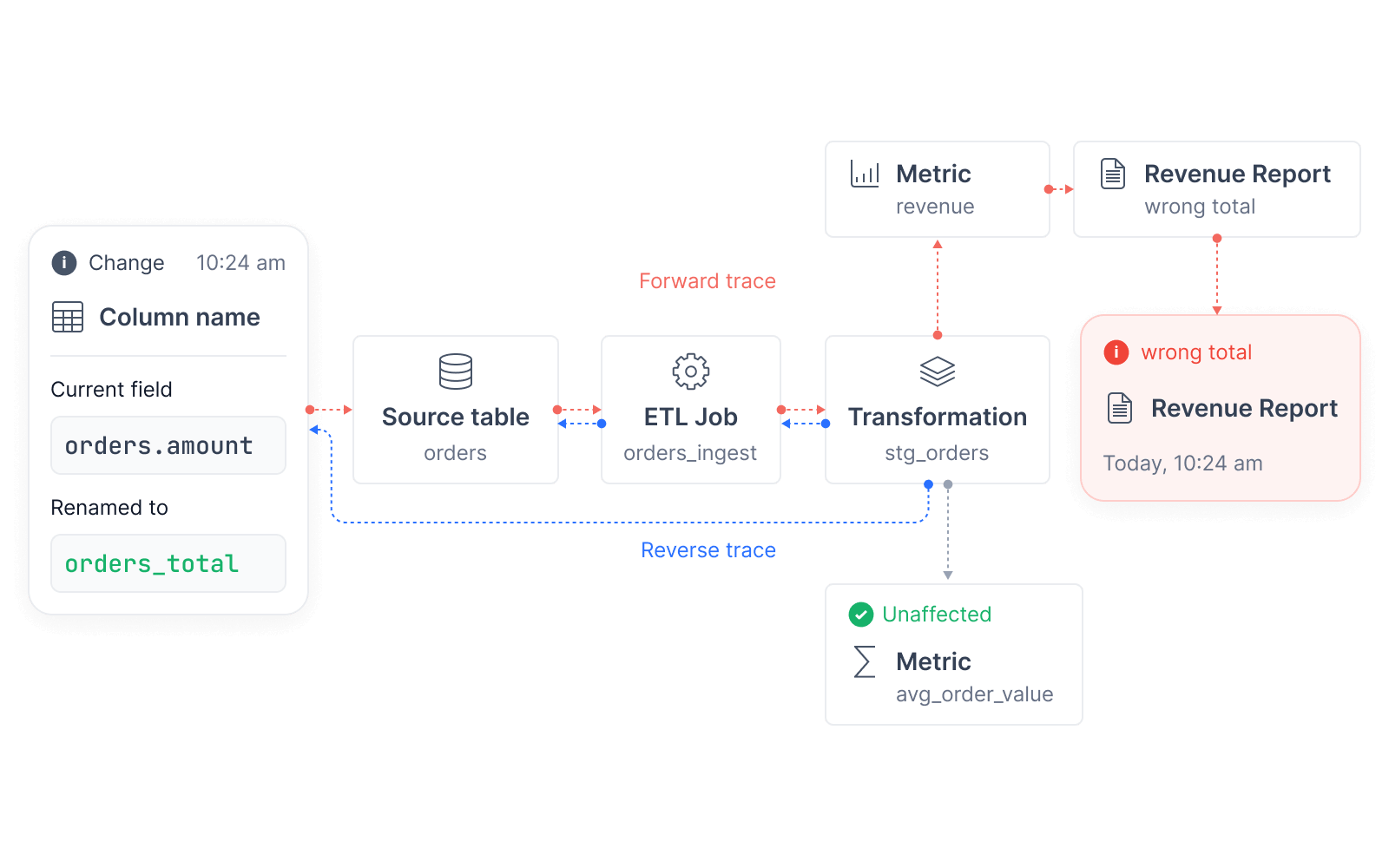
Parser-based lineage computes every upstream and downstream system of a column from the code itself, so impact analysis runs at design time. When something breaks, the same engine traces the number back to the transformation that produced it.

Key capabilities

Column-level lineage, cross-system, computed from source code

Covers systems whose jobs haven't run recently

400+ connectors across legacy, cloud, and hybrid sources

Root cause traced to the specific transformation

The Problem

Schema changes ship on guesswork

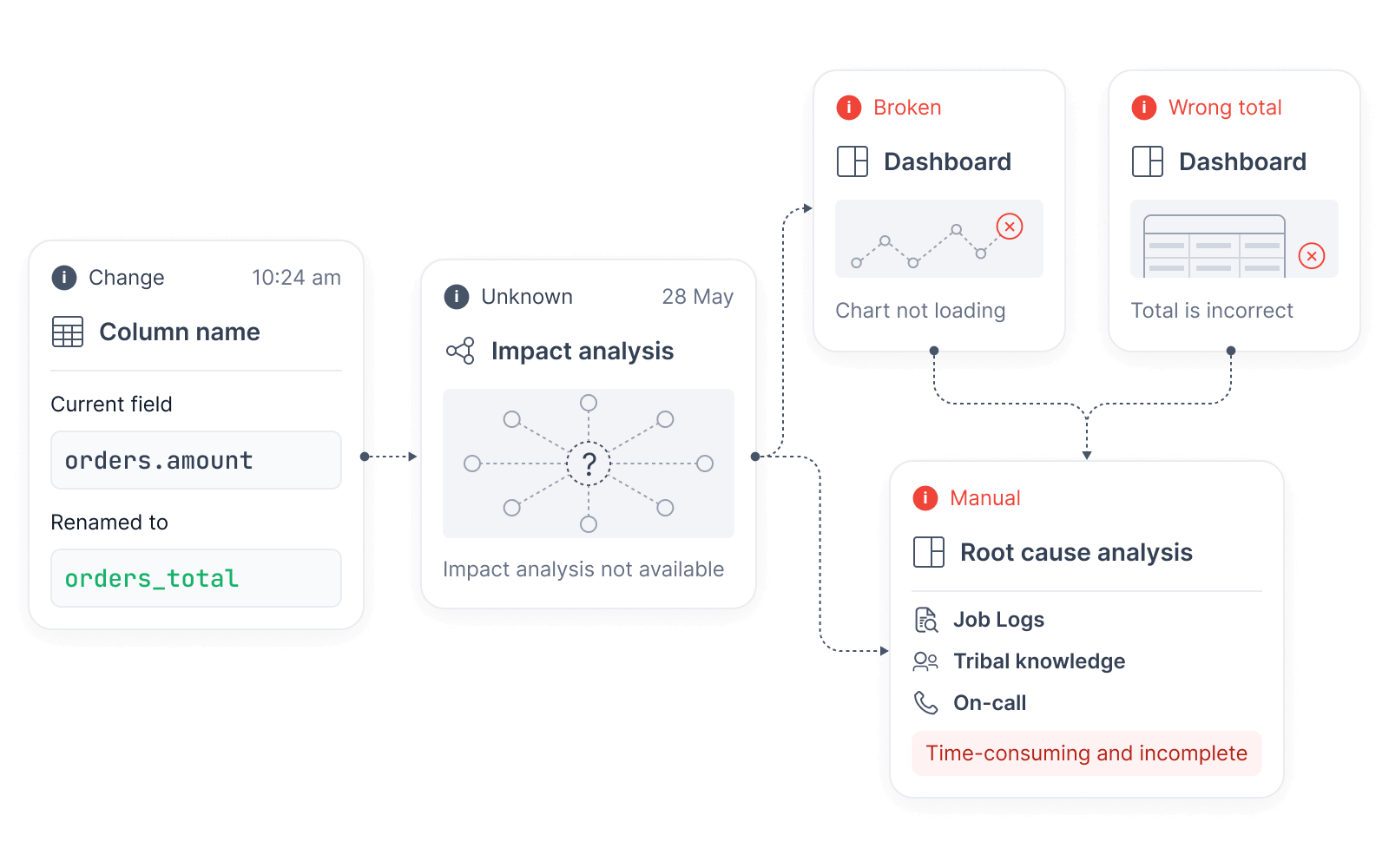
A column gets renamed, a table gets restructured, and the downstream damage surfaces in production when a dashboard breaks or a report goes out wrong.

After the incident, root cause means tracing by hand through disconnected systems: job logs, tribal knowledge, whoever happens to be on call that week.

The analysis that should have run before the change ends up running after something already broke.
The Approach

Compute the blast radius from the code, before the change deploys

MetaKarta parses the actual code: SQL, ETL logic, stored procedures, BI definitions. The dependency graph reflects what was designed. Log inference reports what happened to execute inside an observation window.

That makes impact analysis complete by construction. Every downstream consumer of a column appears, including the ones sitting in systems whose jobs haven't run in months.

When something breaks anyway, the same engine runs in reverse: from the wrong number on the report back to the transformation that produced it.

Lineage by design, not by observation.

What Changes

Impact analysis before the ticket

Know the blast radius before the first ticket lands.

Root cause in minutes

The trace from a broken number to its transformation is a query against the repository.

Trust that survives questioning

A definition you can't trace is a definition you can't trust.

Frequently asked
questions

How does parser-based lineage differ from log-based lineage?

Log-based tools infer lineage from queries that execute during an observation window, so anything that didn't run in that window is missing. MetaKarta parses the code itself (SQL, ETL logic, stored procedures, BI definitions), so the dependency graph includes everything that was built, including the job that runs once a quarter.

How granular is the lineage?

Column level, across systems, traced to the line of code that defines each transformation. One column in a Snowflake table can be followed upstream to its sources and downstream to every view, ETL job, semantic model, and report that reads it.

When can impact analysis run?

At design time, before the change deploys. Because the graph is computed from code, a proposed rename or restructure can be checked against every downstream consumer while it's still a proposal.

Does impact analysis reach BI reports and governed metrics?

Yes. BI definitions are parsed along with the warehouse and ETL code, and governed metrics sit in the same shared metadata repository, so a column change shows which reports, which metrics, and which compiled targets it affects.

How does root cause analysis work once a number is already wrong?

The same lineage runs in reverse. Start from the wrong value on the report, follow it back through each transformation to the one that changed, then check version history for who changed it and when.

Which systems does MetaKarta parse?

400+ connectors across legacy, cloud, and hybrid sources, from mainframe-era databases and ETL tools through Snowflake, Databricks, Power BI, and Tableau. The Connector Explorer lists every supported system.

Can people and AI agents query the lineage directly?

Ask MetaKarta lets business and technical users ask about lineage in plain language. MetaKarta MCP's Metadata Management Tools expose the same lineage to external AI agents, with every response permissioned to the person behind the request.