Connect with us

MetadataOps brings software engineering discipline to business meaning, giving metadata a lifecycle, measurable state, and clear ownership. It connects people, process, and technology so definitions stay consistent across BI, AI, and governance as the data estate changes.
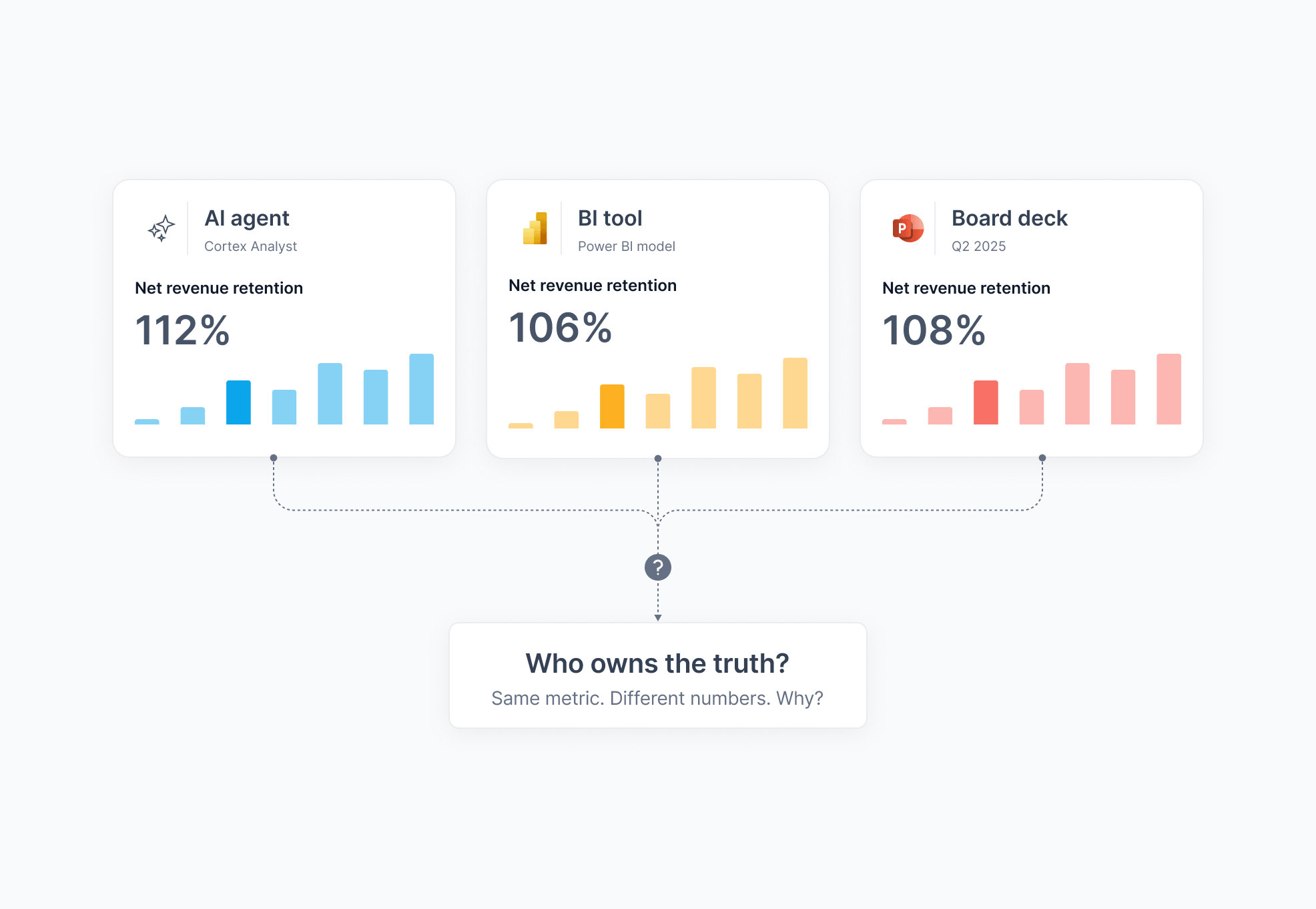
The agent in Snowflake Cortex Analyst says net revenue retention was 112% last quarter. The board deck says 106%. The Power BI model the finance team trusts says 108%, and all three read from tables that loaded cleanly overnight.
Every pipeline ran and every test passed. The drift came from a definition: in March, someone changed how churned accounts get excluded, and the change reached one system, partly reached a second, and never reached the third.
The postmortem lands on the same question it always does: whose job was it to catch that change before it shipped?
Most enterprises pay for metadata work several times over. There's a cataloging project, a lineage project, a governance program, and now an AI initiative, each with its own budget, its own tool, and its own definition of done.
Each one handles its slice. None of them owns whether the estate as a whole is described well enough for a report, an agent, and an auditor to reach the same answer. Metadata work ends up funded in four places, without full ownership or measurement.
MetadataOps is the name for the practice that closes that gap: running the metadata estate as an operated system, with a lifecycle, a measurable state, and an owner.
Over the last 15 years, application code, infrastructure, and transformation logic all picked up the same operating discipline. Changes get built, tested, deployed, diffed, and rolled back when they go wrong. An engineer who pushed a breaking change to production with no history and no way back would have a very long week.
Business definitions still change the old way. Someone edits a measure in a BI tool, updates a wiki page if they remember, and hopes the other five places that metric lives get the memo.
MetadataOps applies build, test, deploy, diff, and rollback to meaning. The definition of net revenue retention becomes something you can version, review, promote, and trace, with the same rigor your team already expects from a pull request.
The lifecycle has five stages: Harvest, Model, Version, Compile, Verify. They depend on each other, so each skipped stage fails in its own recognizable way, usually months later and usually blamed on something else.
Harvest without Model leaves you with an inventory: thousands of assets and no agreement on what any of them mean. Version without Compile gives you a governed definition that no system actually consumes, which is roughly what happened to net revenue retention in March.
Most teams can point to the stage where their own chain breaks within a minute of seeing the list. The MetadataOps Kit walks through every gap, what it costs, and how to spot it in your own estate.
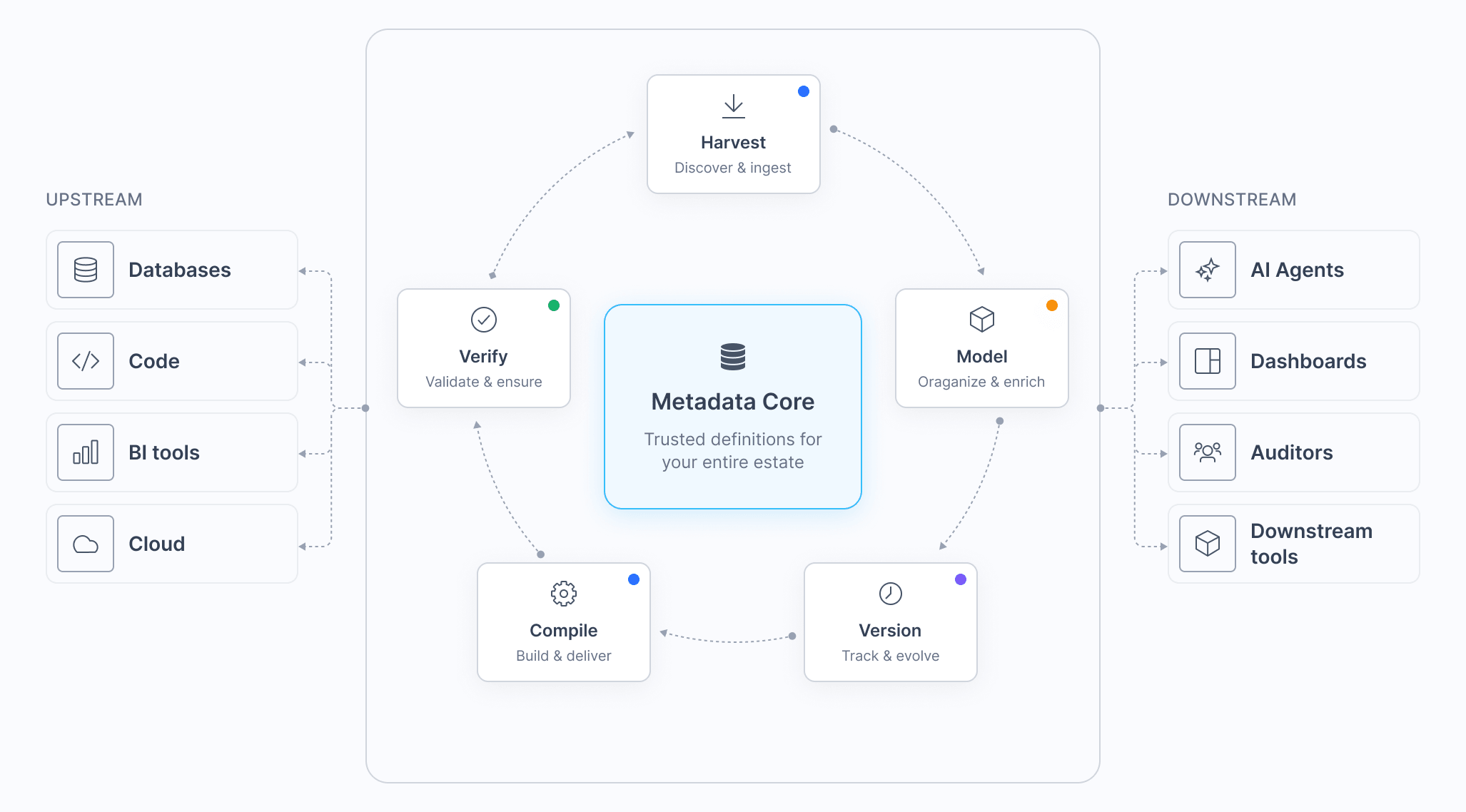
A dashboard with a bad number gets caught by an analyst who knows the business. An agent that reads the same bad definition answers with confidence and moves on to the next question.
That pressure has put a new role into job postings: the context engineer, who decides what reaches an agent's window. Which definitions, which policies, which lineage, in what order, under what token budget. It's a retrieval discipline.
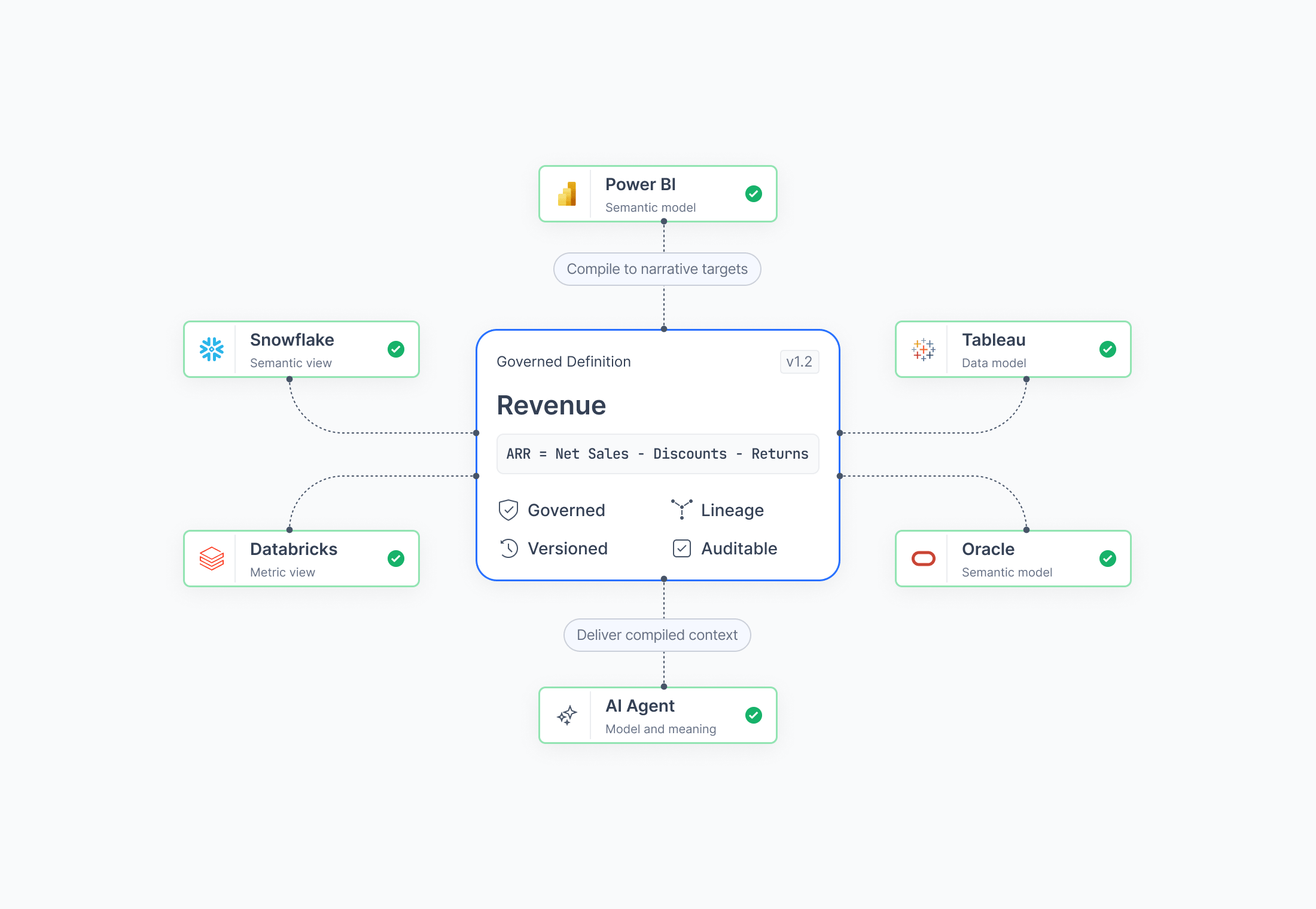
Retrieval can only serve what exists, though. MetadataOps is the supply discipline upstream: it decides what's there to be retrieved and whether it's accurate when it arrives. The two roles are showing up at the same time and often get mistaken for each other; they sit on opposite sides of a process, and the object that passes between them is the governed definition.
There's a quick test for whether your supply side holds up. Ask for lineage on a job that hasn't run this quarter. Lineage inferred from runtime logs goes quiet, because the logs have nothing to infer from, and the MetadataOps Kit carries nine more questions in the same spirit, written so you can put them to any vendor.
The MetadataOps Kit is the working body of the practice. It's organized the way the work is: People, Process, and Technology.
The People articles cover the role: what a MetadataOps engineer owns, where strong candidates come from, how to make the case for the headcount, and a ready-to-post job description. It's leveled on work products, because very few people have held the title long enough for tenure to separate candidates.
The Process articles are where measurement lives. The Metadata Completeness Index scores three of your own business metrics out of 20 and hands back a gap list with real system names on it. It includes the principles and operating model to customize and adopt in your organization.
While People and Process remain vendor-neutral, the Technology section is described in terms of MetaKarta.
MetadataOps gives the meaning of your data what your code already has: a lifecycle, a measurable state, and an owner who answers for it. It works on any stack, and you can start it with the MetadataOps Kit before buying anything.
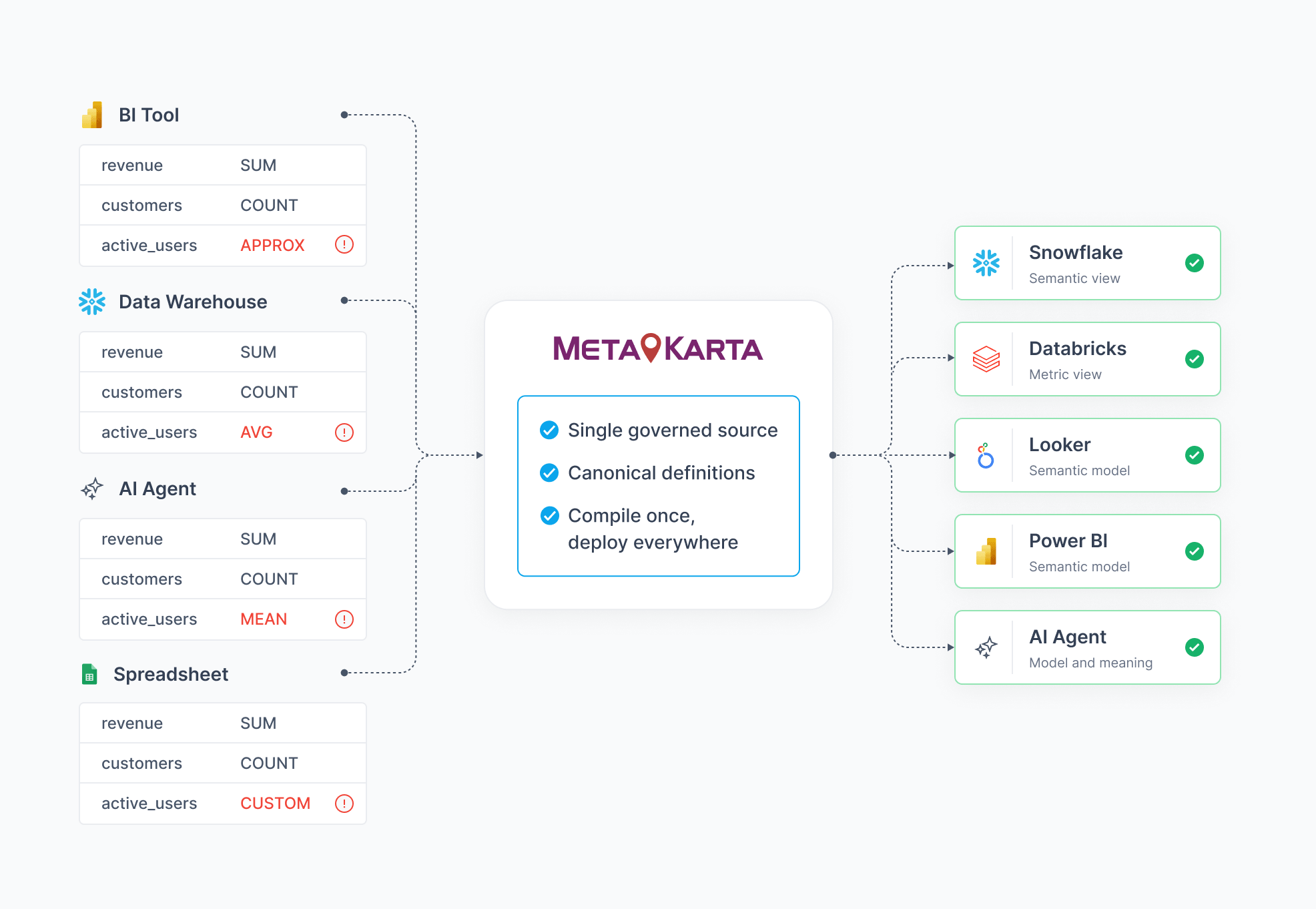
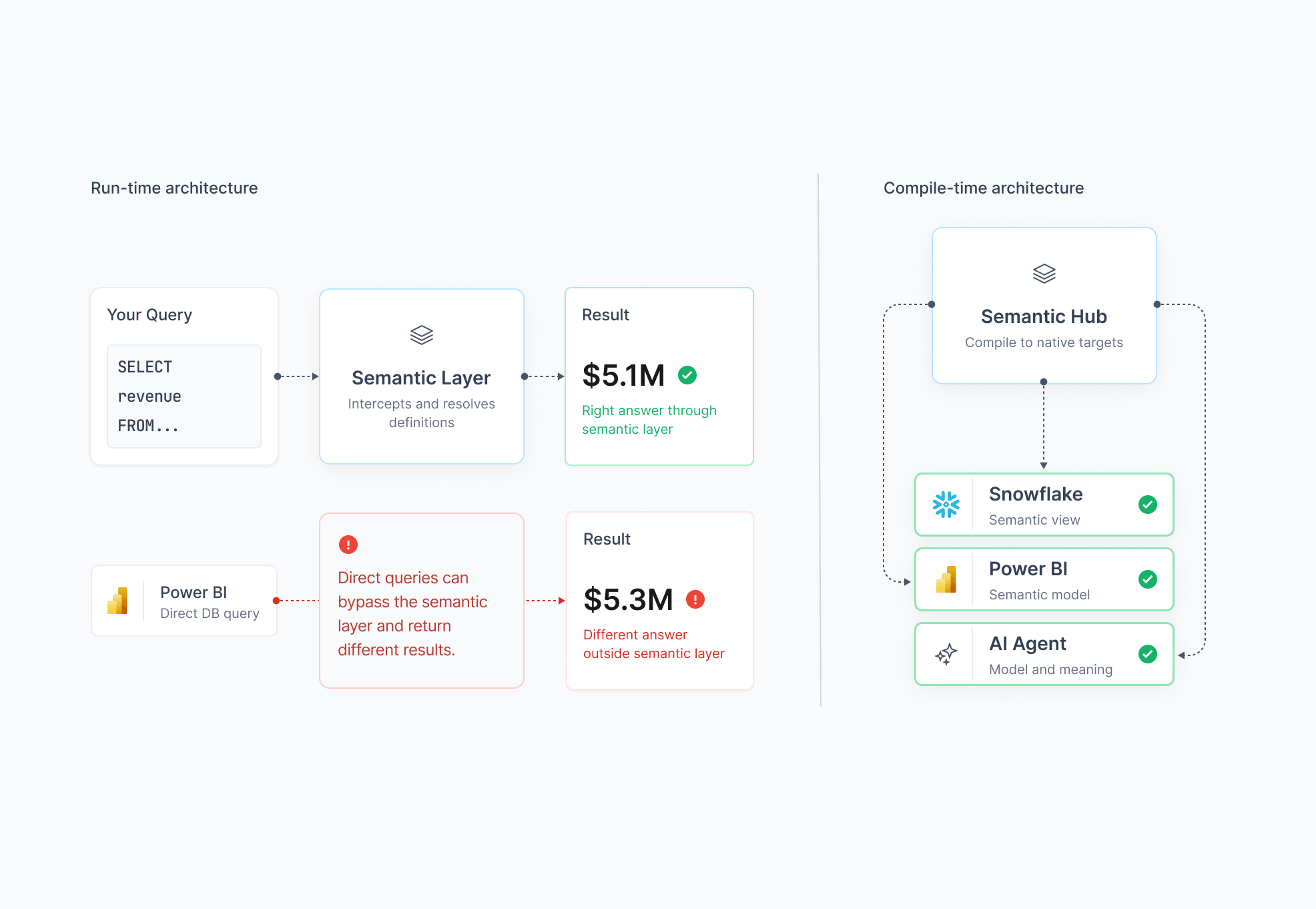
MetaKarta is a platform built for that practice. It parses column-level lineage from code across legacy and modern systems, versions definitions with attribution and a way back, and compiles them into native artifacts, such as Snowflake Semantic Views, Databricks Metric Views, Power BI semantic models, and Tableau data models, that keep executing if MetaKarta is switched off. Agents get the same definitions as compiled context through MetaKarta MCP.
The best place to start is your own numbers. Score three metrics with the Completeness Index, read the operating model paper for the full discipline, or take the job description into your next hiring conversation.
Get in touch to learn more about how MetaKarta supports a MetadataOps practice across your data estate.