Mike Hetrick
Director, Product Marketing
Connect with us

Ask these five questions about any number in the business. Most teams can answer one or two of those quickly. The rest is archaeology.
An auditor asks where a number came from. It's the routine question that shows up every quarter: prove this figure is what you say it is.
The team that owns the number doesn't have a ready answer. Someone pulls a spreadsheet. Someone else searches Slack for a thread from eight months ago. A third person remembers the engineer who built the original pipeline, except that engineer left in March.
Three days later, the team hands over an answer. The number turns out to be right. What cost three days was proving it, and how much of that proof lived in people's memory instead of in any system.
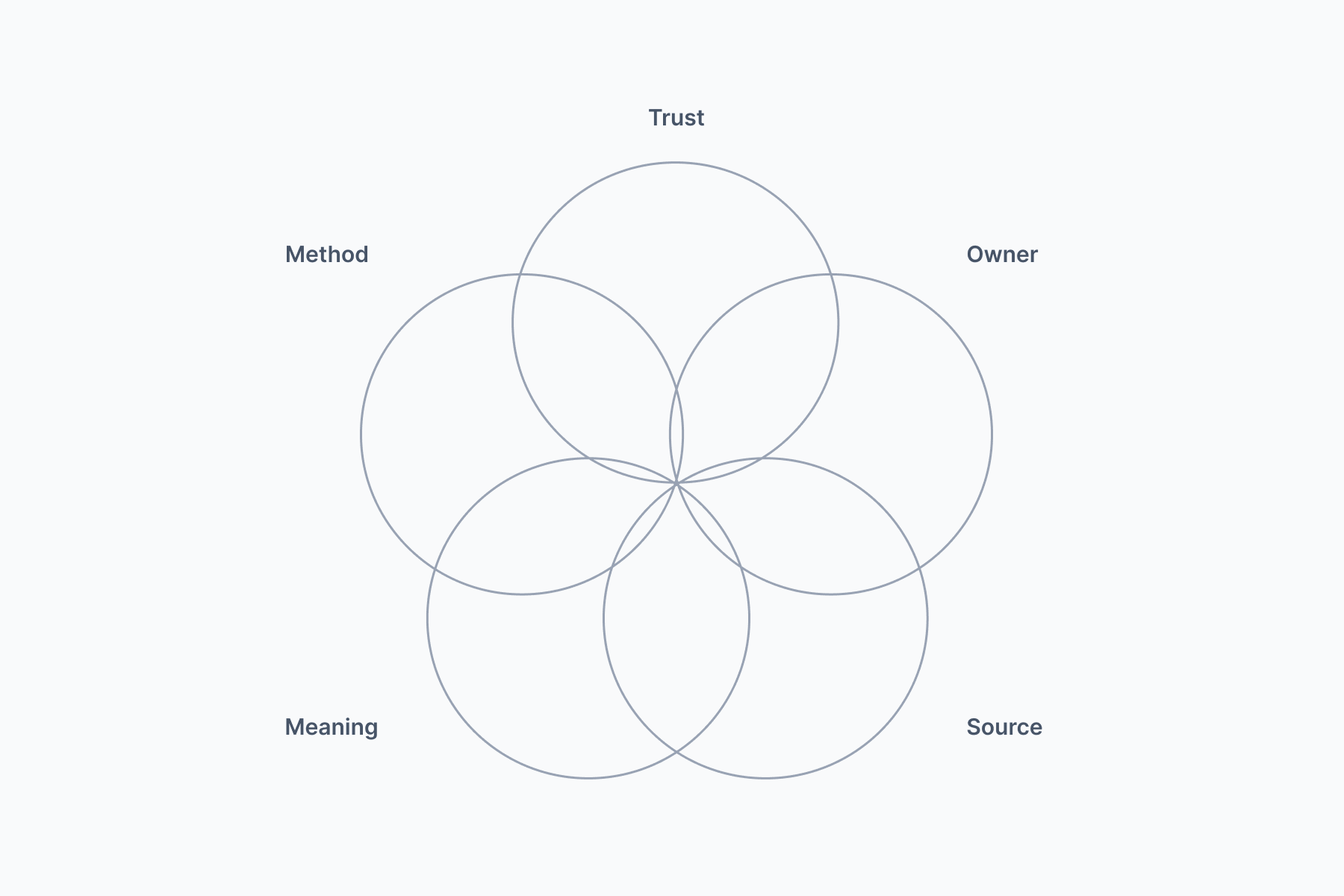
Ask the same five questions about any number in the business. Where did it come from? What happened between there and the report? What does it actually mean in this context? Who's allowed to change it and who signed off? Where does the answer actually run? Most teams can answer one or two of those quickly. The rest is archaeology.
MetaKarta answers all five from the same place: a shared metadata repository that every discipline, lineage, cataloging, governance, and the systems consuming the data, reads from and writes to. One record connects the whole chain, replacing five separate tools each holding a different fragment of the story.
The source system tells you where a value first appeared. An ERP field, a CRM entry, a sensor reading. It doesn't tell you what happened after that, which reports it feeds today, or whether the field even still exists in the same form.
Most catalogs go stale the moment someone stops maintaining them by hand. MetaKarta harvests metadata actively across 400+ native connectors, so the picture of where every number originates stays current with the estate as it changes.
Between the source field and the number on the dashboard sits a chain of ETL jobs, stored procedures, and transformation scripts, sometimes a dozen hops deep. Tools that infer lineage from execution logs only show what ran during the observation window. A job that fires monthly looks invisible to a tool that's been watching for a week.
MetaKarta parses the actual code, SQL, Python, stored procedures, mapping files, so the lineage is complete by construction and traceable to the specific line that defines each transformation, column by column, across systems. A definition you can't trace is a definition you can't trust.
"Revenue" means something different to finance than it does to sales operations. A column called cust_id says nothing about who owns the definition of "active customer" or what counts toward it. Most organizations manage that gap with a glossary that lives apart from the data it's supposed to describe, and the glossary loses the race the moment the estate changes.
In MetaKarta's shared metadata repository, the governed business definition attaches directly to the physical column it describes and travels with it as the estate evolves, current the moment the data is.
A masking rule documented in a wiki doesn't stop an analyst with legacy access from seeing raw account numbers. A stewardship policy that only lives on a page is a paragraph someone has to remember to enforce. Ownership and approval history stored in a project tracker are exactly as durable as whoever remembers to update the tracker.
MetaKarta attaches policy, ownership, and version history to the same governed definition as everything else, then forward-engineers that policy into the platforms enforcing it: row-level security and column masking compiled into the database's own security engine. Who approved a definition, and when, is a fact already sitting in the repository, ready the moment someone asks.
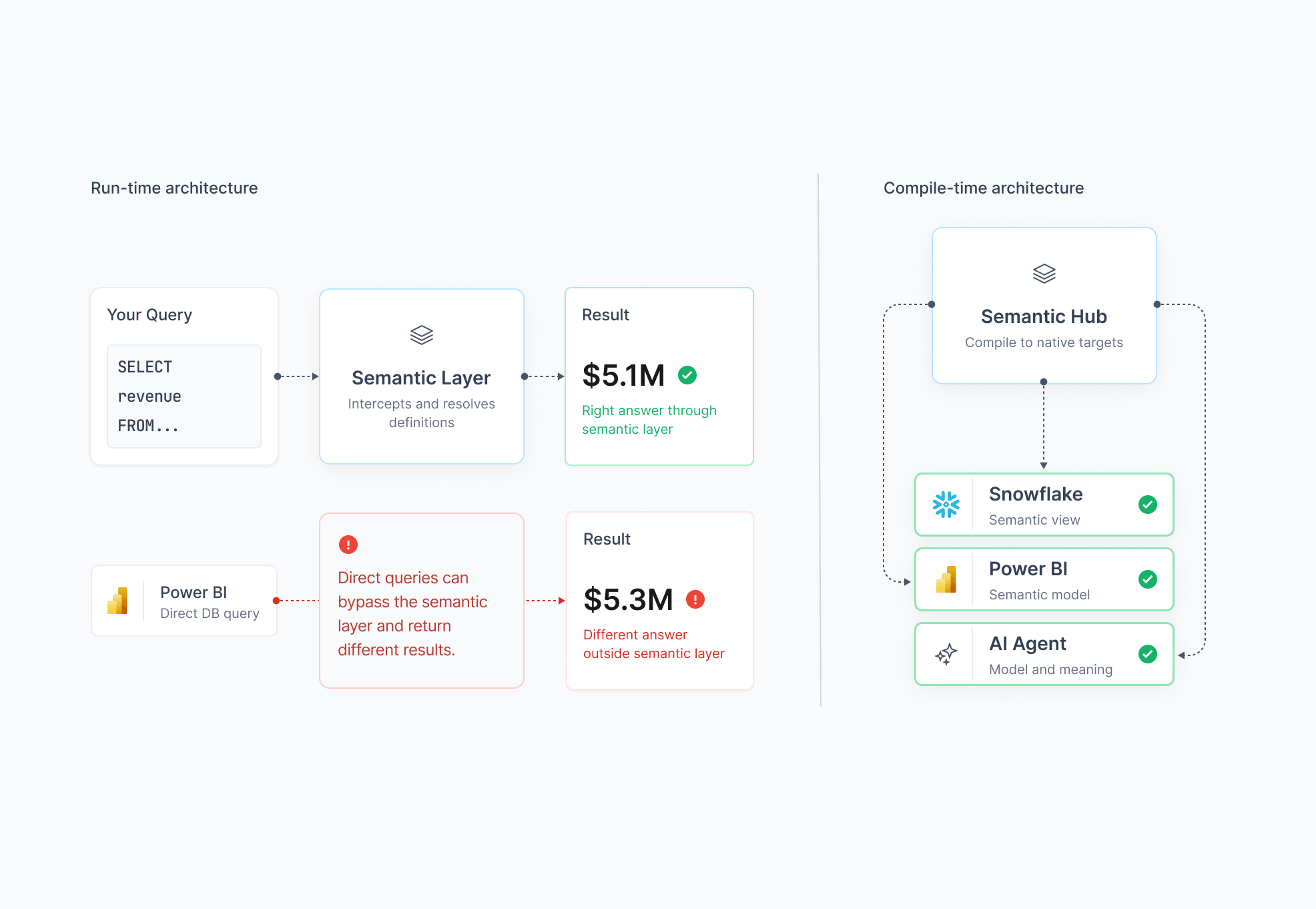
Knowing the source, the transformation logic, the meaning, and the control only matters if the number a system actually produces, in the warehouse, in the BI tool, in an AI agent's response, matches what the repository says it should be. This is where most metadata tools stop. They can describe the correct definition. Turning that definition into the number a system runs is a separate problem they leave to someone else.
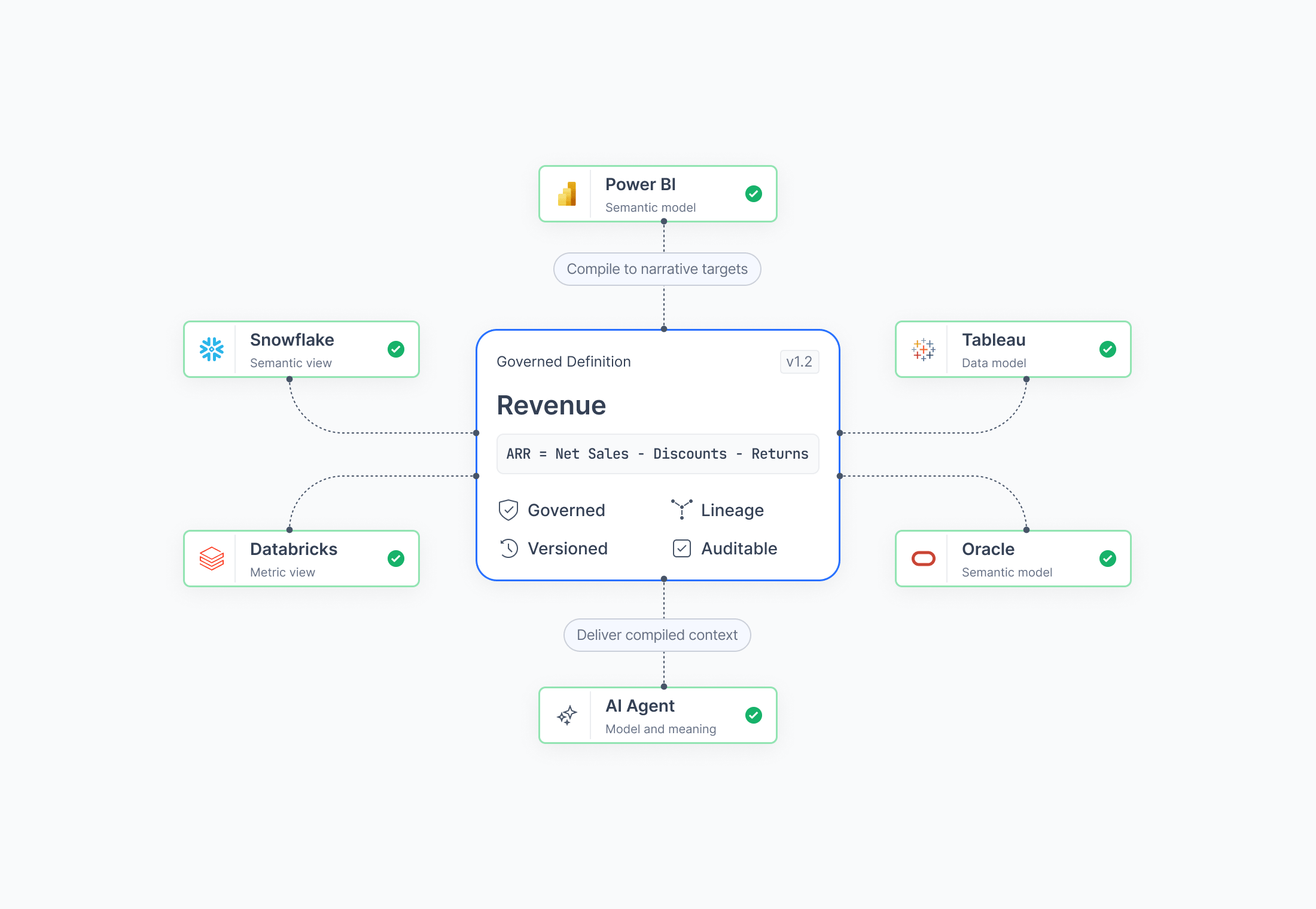
The shared metadata repository compiles the governed definition directly into the native format each downstream system already runs on: a warehouse view, a BI semantic model. Every consuming system inherits the rule already built in. Documentation describes what should be true. Compilation makes it true.
Go back to the auditor. In a business running on a shared metadata repository, the answer to "where did this number come from" is a query against a record that was already there before anyone asked: the source, the transformation, the meaning, the approval, and the compiled result, connected from the start.
That's the difference between proving a number and explaining one after the fact.
Want to see what a source-to-execution trace looks like? Get in touch, and we'll walk one number through the full chain, live.