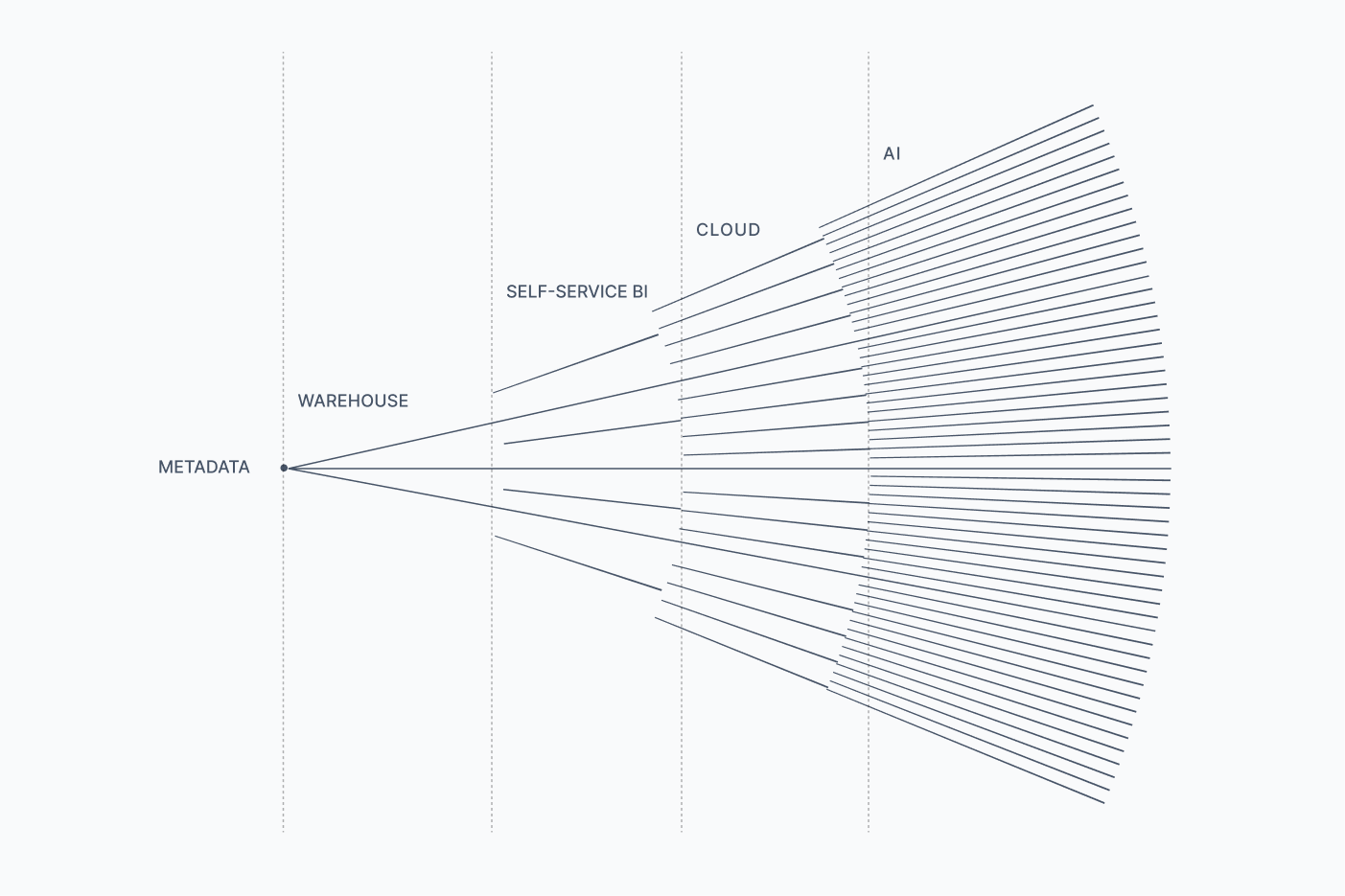
Ask two different AI assistants, "What was our revenue last quarter?" and you'll often receive two different numbers. The problem isn't that the models are hallucinating. The problem is that they're being grounded on different semantic definitions.
Large Language Models don't understand your business. They understand the context you provide. If that context is fragmented, outdated, or inconsistent, even the most advanced model will confidently produce the wrong answer.
The real bottleneck isn't AI
Organizations spend enormous effort experimenting with prompts, model selection, and retrieval pipelines. Meanwhile, the business definitions underneath remain scattered across dashboards, SQL scripts, spreadsheets, and BI tools. Revenue means one thing in Power BI. Something slightly different in Tableau. Another variation exists in SQL. Each definition may be valid within its own context, but AI has no way of knowing which one represents the organization's actual business meaning. The problem isn't intelligence. It's semantics.
Business context is infrastructure
Every useful AI application depends on business context. Not just table names. Not just column descriptions.
Real business meaning includes:
- governed metric definitions
- business terminology
- synonyms
- dimensions
- hierarchies
- security policies
- ownership
- lineage
- valid values
Without that information, AI is forced to guess. Organizations spend enormous effort experimenting with prompts, model selection, and retrieval pipelines. Meanwhile, the business definitions underneath remain scattered across dashboards, SQL scripts, spreadsheets, and BI tools. Revenue means one thing in Power BI. Something slightly different in Tableau. Another variation exists in SQL. Each definition may be valid within its own context, but AI has no way of knowing which one represents the organization's actual business meaning. The problem isn't intelligence. It's semantics.
A semantic model becomes the source of truth
Instead of teaching every AI assistant independently, Semantic Hub creates a single governed semantic model.
- Business logic is authored once.
- Descriptions are written once.
- Relationships are defined once.
- Security is configured once.
Business logic is authored once. Descriptions are written once. Relationships are defined once. Security is configured once. Everything becomes part of the same semantic definition. When Semantic Hub compiles the model, it doesn't only generate native database objects. It also compiles the business context required by AI.
Native AI instead of another middleware
Modern data platforms already include impressive AI capabilities. Databricks. Snowflake. Microsoft Fabric. Google BigQuery. The missing piece isn't another AI layer sitting in front of them. The missing piece is governed semantic context.
Semantic Hub compiles that context directly into each target platform using native capabilities. The database remains responsible for execution. The platform remains responsible for AI.Semantic Hub provides the governed meaning.
One definition for every consumer
Once business logic exists as a compiled semantic model, every consumer works from exactly the same definition. Dashboards. SQL queries.
Excel. AI assistants. Custom applications. Instead of asking which version of Revenue is correct, every tool reads the same governed definition. Consistency stops being a governance exercise. It becomes part of the architecture.
Governance that scales with AI
As organizations deploy more AI agents, semantic consistency becomes even more important. Without governed definitions, every new assistant becomes another place where business logic can drift. With Semantic Hub, AI inherits the same governed model already trusted by analysts, engineers, and business users. No duplicate definitions. No prompt engineering to recreate business meaning. No additional semantic layer at runtime. Just one semantic model, compiled everywhere it needs to exist.