






top of page

Semantic Modeling & Engineering:
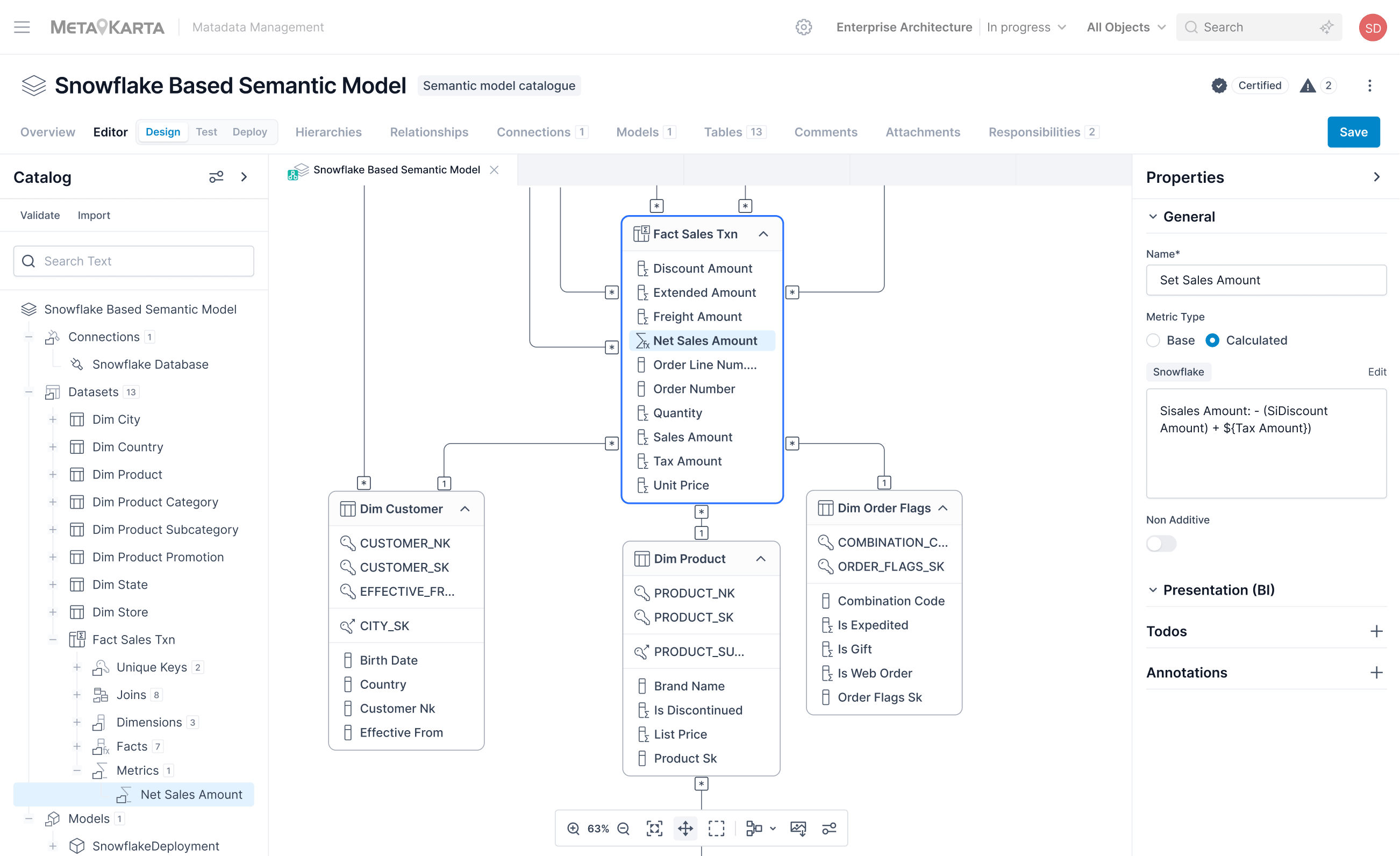
The "Write Once, Compile Anywhere" Standard

Stop redefining metrics. Start compiling them. Defining mission-critical business metrics inconsistently across BI reports, dashboards, and spreadsheets leads to logic sprawl and a chaotic data environment, creating confusion, inefficiency, and a risk of incorrect decisions.


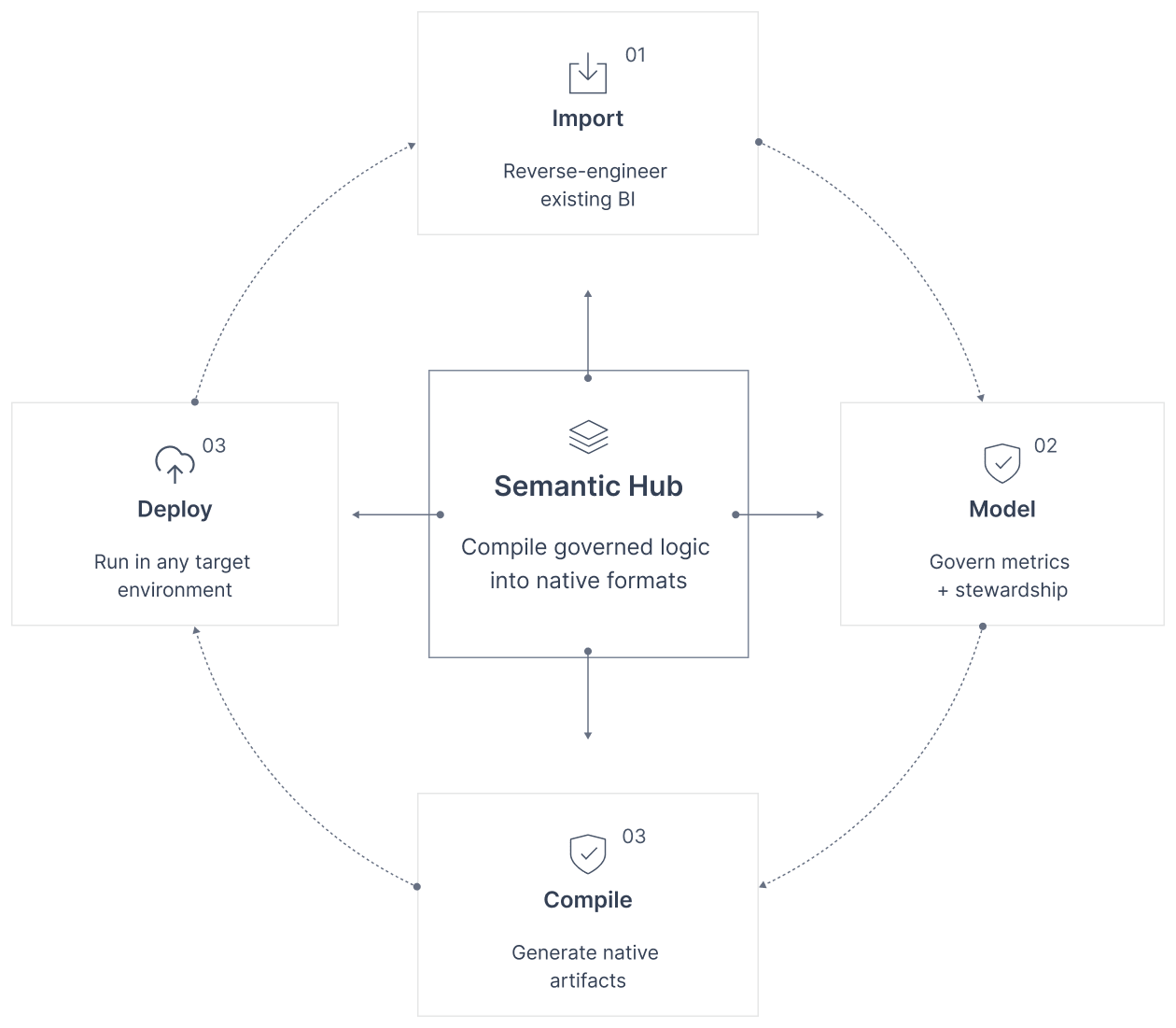
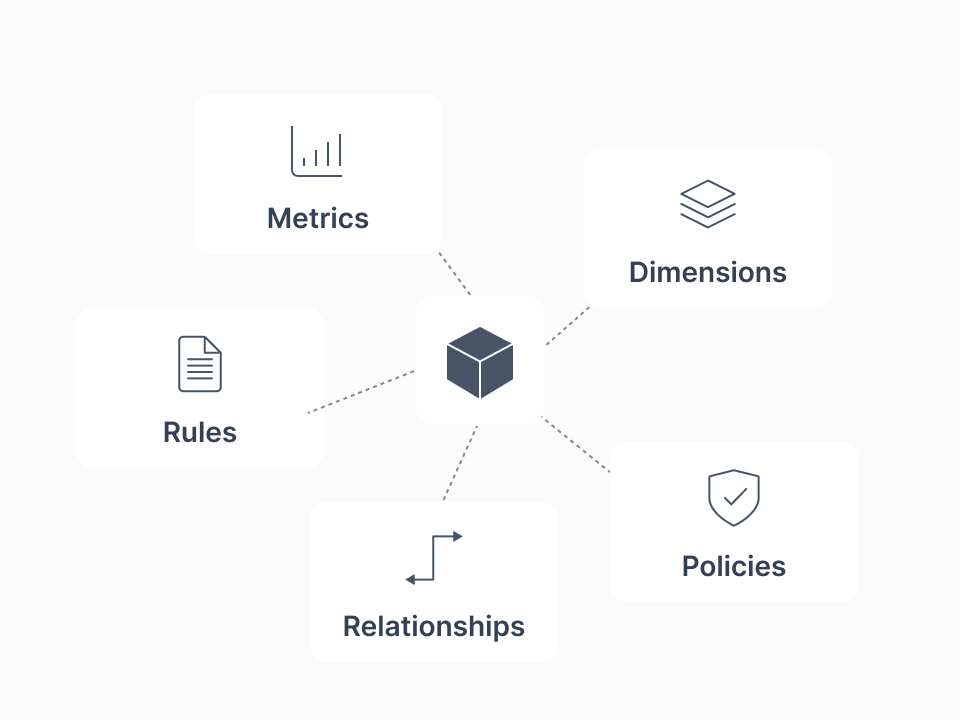
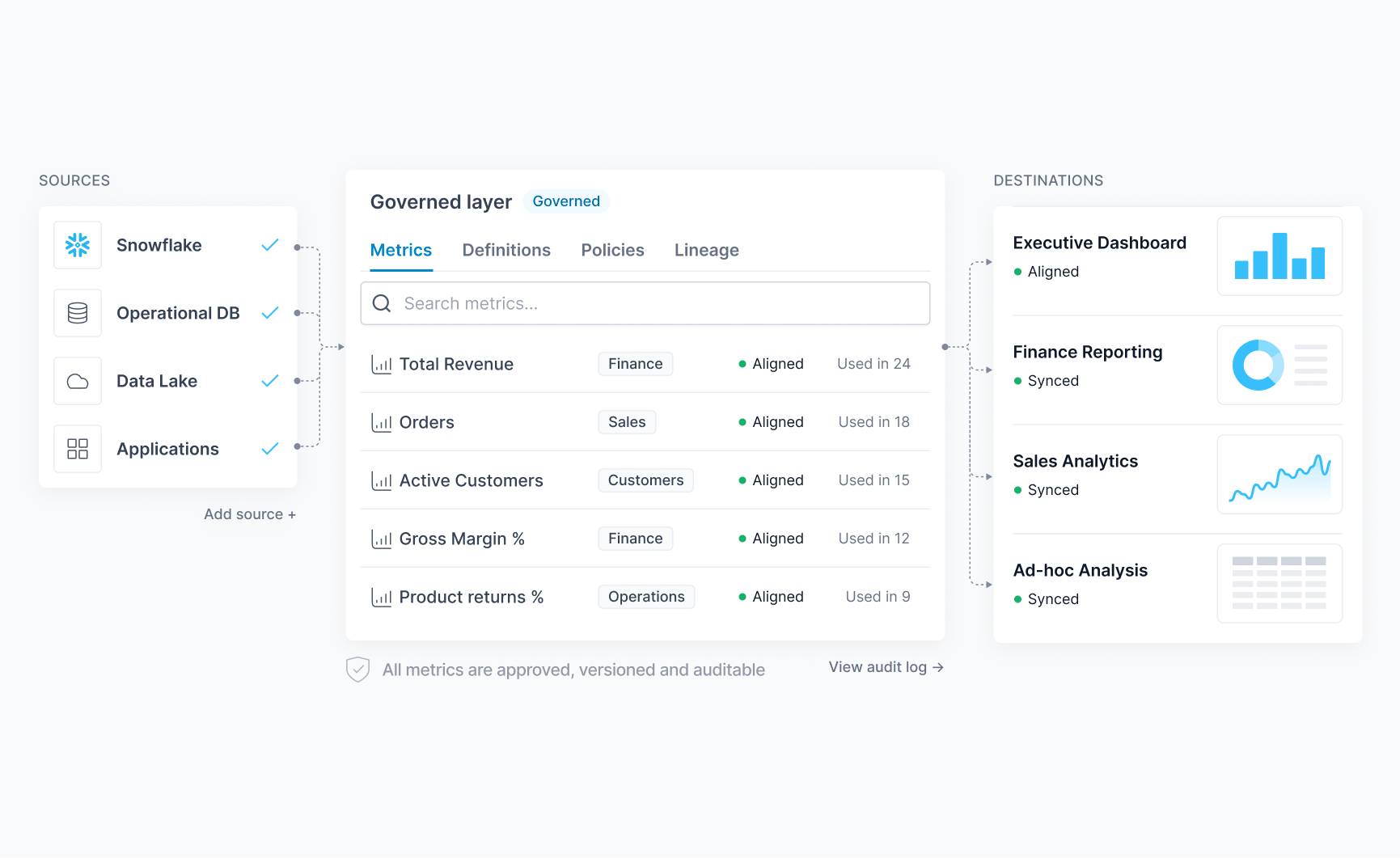
MetaKarta Semantic Hub solves this by acting as a Semantic Compiler. Instead of manually redefining metrics for every new dashboard or BI report, you define your logic once in a universal, upstream model. MetaKarta then compiles and simultaneously pushes that logic to where it belongs:

  • Compute Logic (Metrics/Dimensions) is pushed to the Database, including Databricks metrics views, Snowflake semantic views, Oracle analytics views, and more.

  • Navigation Logic (Hierarchies/UX) is pushed to the BI Tool, including Power BI semantic models, Tableau logical data model, Looker modeling language (LookML), and more.


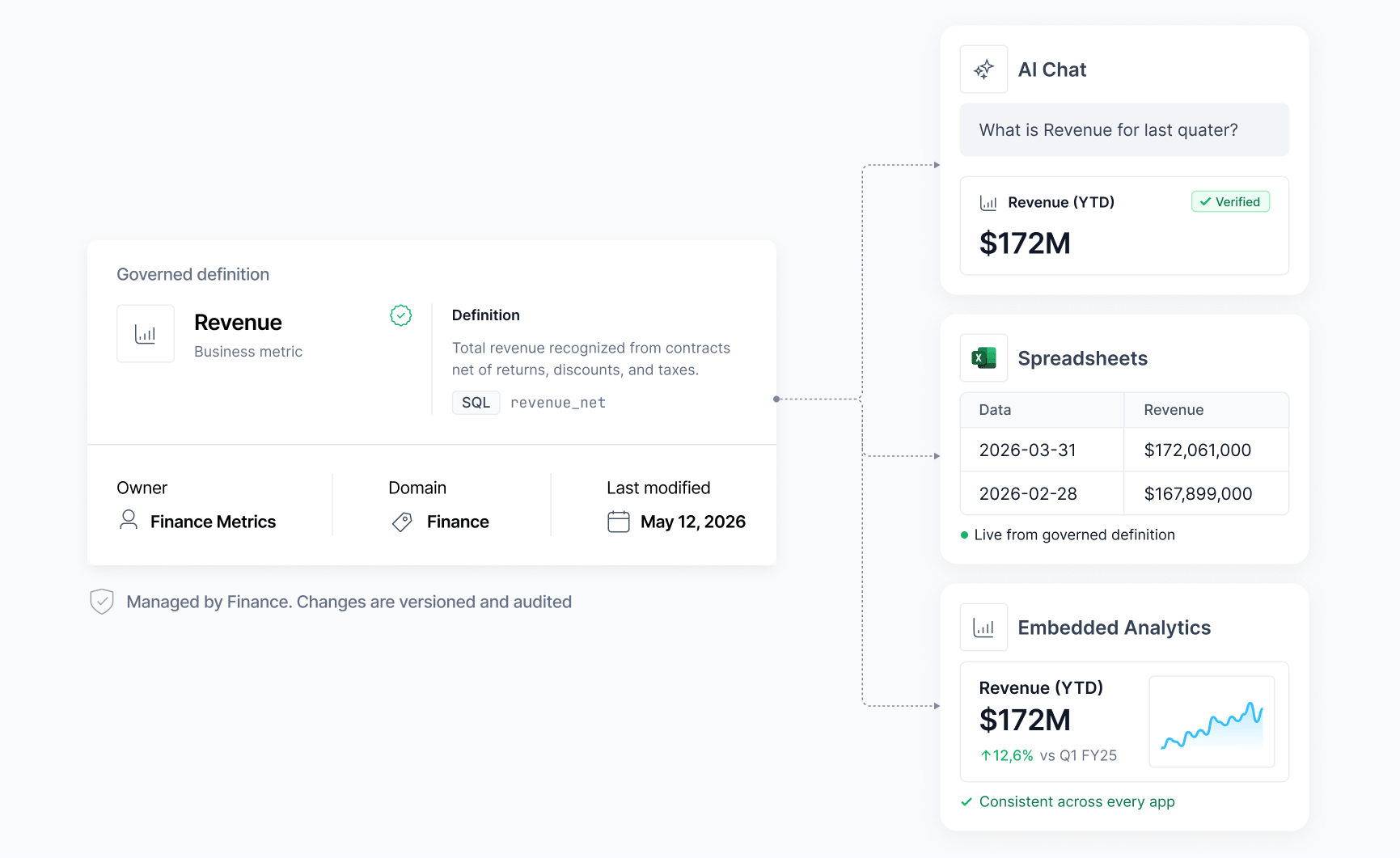
This ensures every downstream app, whether it’s a dashboard, a spreadsheet, an embedded analytics application, or an AI agent, consumes the exact governed definition without added business friction and inaccuracy.

Semantic Hub v2.png

Don’t Rebuild: Standardize and Modernize.

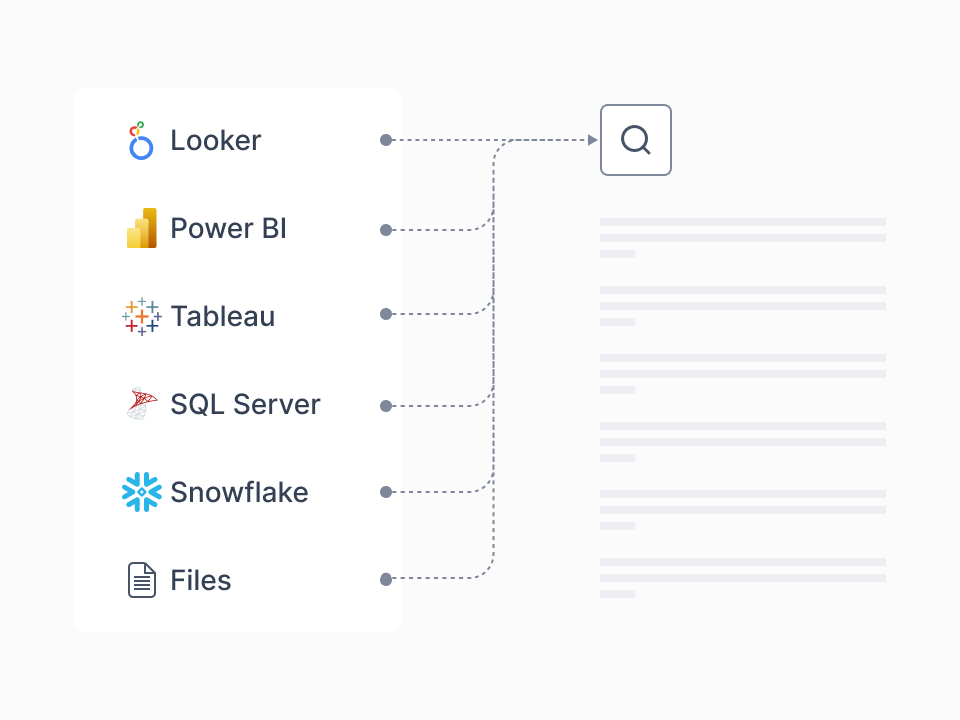
Reverse-engineer. Most organizations aren't starting from scratch; they are buried under years of technical debt. MetaKarta Semantic Hub includes a powerful reverse-engineering engine that scans your existing assets (Power BI semantic models, Tableau data models, Database schemas) to extract and merge disparate metadata into a unified model.

Reuse years of logic. Stop wasting time rewriting existing rules. Import your BI semantic layers, clean them up in the Hub, and redeploy them as governed standards. Our toolkit, including the Semantic Model Integrated Development Environment (IDE), AI copilot, and playground, dramatically reduces the time spent authoring and debugging data models, letting you focus on architecture rather than archaeology.

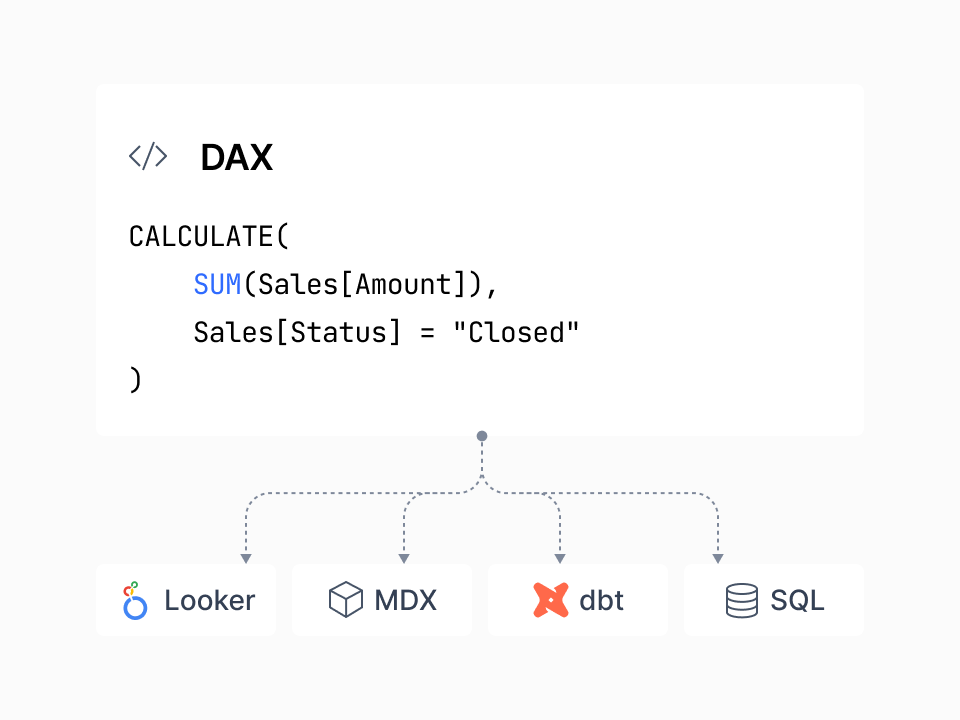
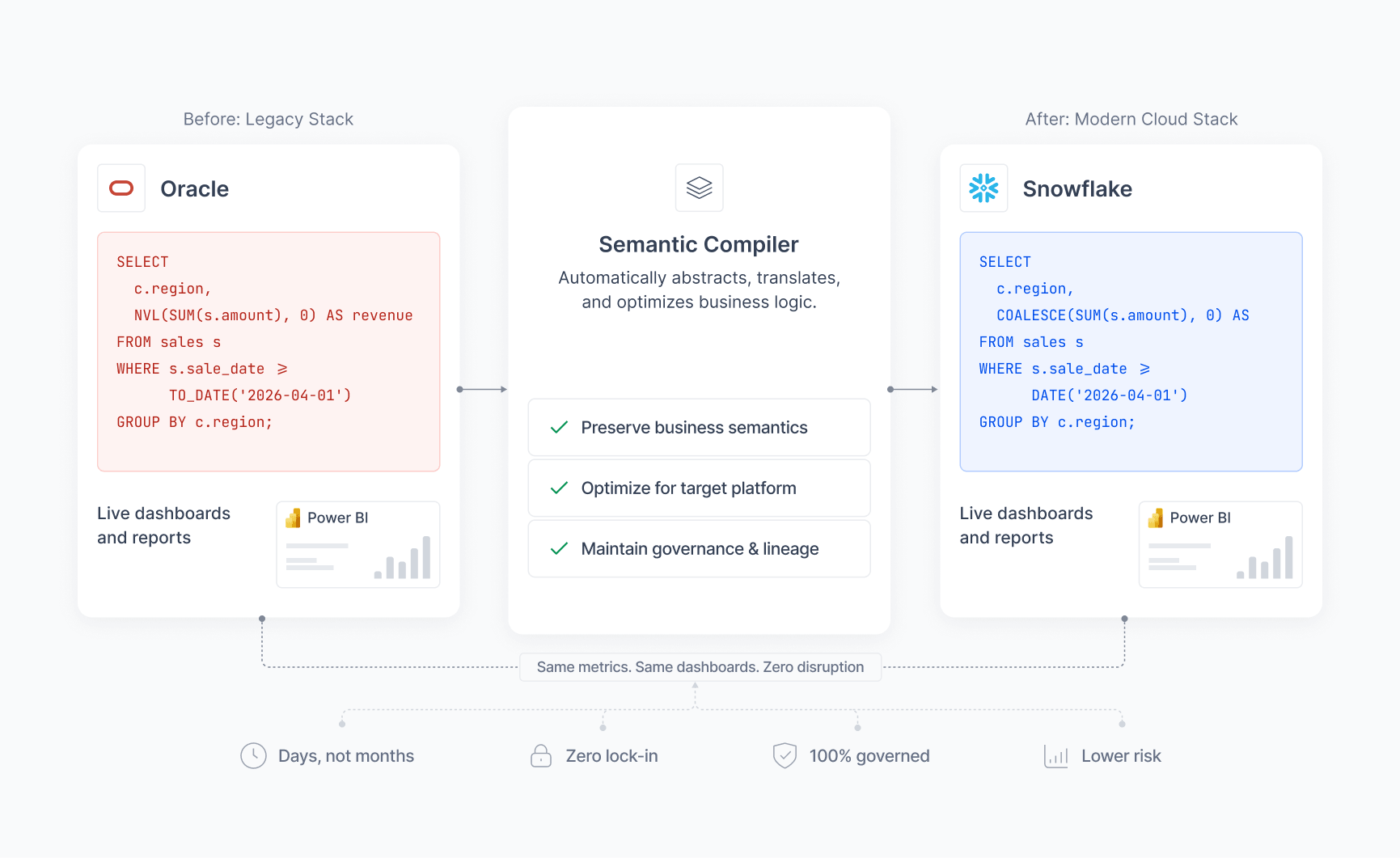
Automated Logic Translation. The hardest part of migration is translating complex expressions (e.g., DAX to SQL). MetaKarta Semantic Hub uses advanced AI to automatically convert your proprietary BI expressions into optimized SQL for the database. You can also describe logic in natural language and let the Hub generate the precise syntax required for both your database backend and your BI frontend.

Standardize and Modernize..png

Universal Interoperability (Built on 20 Years of Connectivity)

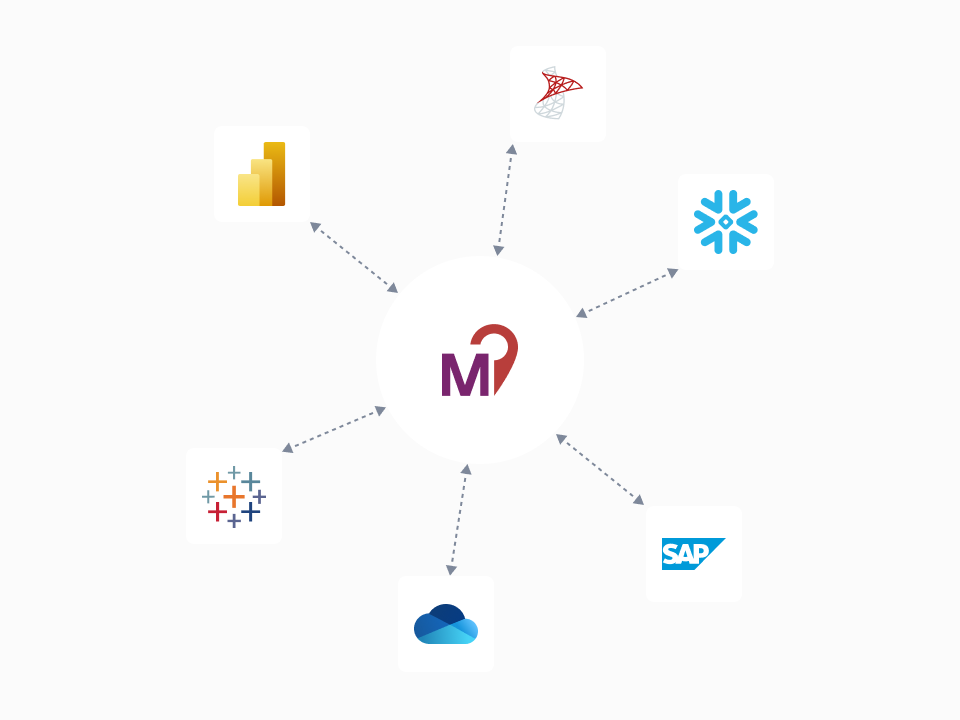
We built the bridges the industry runs on. MetaKarta leverages 20 years of OEM experience building the metadata connectors for the world’s leading data platforms. We don't just integrate via generic APIs; we understand the deep internals of the tools you use.

Compiles to the SQL you trust. Unlike virtualization layers that require you to learn a proprietary query language (DAX, M-Language, etc.), MetaKarta Semantic Hub compiles directly to the native SQL of your underlying platform (Databricks, Snowflake, Oracle, SAP HANA, etc.). This native push architecture means there is no learning curve for your team and no black box query engine to debug.

Instant BI Population. Reduce time-to-insight from days to minutes. Once your model is defined, MetaKarta Semantic Hub automatically populates your connected BI tools with the correct dimensions, hierarchies, and metrics. No more manual setup in the reporting layer.

Performance, Cost Optimization through Database Caching

Push-down Performance. Zero Middleware Latency. Traditional semantic layers cache data in the middle tier, creating an additional bottleneck. MetaKarta Semantic Hub takes a more innovative approach.

Smart Database Aggregates. We instruct your database to create and manage cached aggregates (e.g., Sales by Year/Department) using its native capabilities (like Materialized Views). This enables sub-second response times on billion-row datasets without moving data out of your secure warehouse and constantly updating your middle layers. You orchestrate the caching strategy in the Semantic Hub, and we enforce it upstream for all consuming applications.

Performance Optimization (1)_edited.jpg

Accelerate AI Text-to-SQL Database Grounding

Leverage Database AI Technology. Databases such as Databricks and Snowflake offer the most secure and advanced capabilities for a chat-style text-to-SQL user experience and for automation.  The problem is that it takes time to create business context, metadata, descriptions, synonyms, and valid column values, which enable users and AI agents to understand user intent and avoid hallucinations. 

MetaKarta Semantic Hub provides the automated compilation and deployment of database-specific semantic models. This includes security policies, performance optimization, and complex calculations.  It's the quickest, easiest, and most secure way to bridge the gap between unstructured natural-language questions and structured enterprise data.

Open Standards for Semantic Automation

MITI provides the MetaKarta Semantic Hub Language (SHL), an open-source, YAML-based specification designed for semantic automation and interoperability. It gives enterprises, consultants, and technology vendors the flexibility to:

  • Extend the semantic model

  • Automate continuous integration/continuous delivery (CI/CD) using tools they choose.

  • Apply agent AI and traditional automation for lifecycle and governance management of their business logic.

Unified Governance and Native Security Inheritance

Unified Policy, Native Enforcement. Stop managing security in five different tools. MetaKarta Semantic Hub allows you to define granular access controls, Row-Level Security (RLS), Column Masking, and Role-Based Access Control (RBAC) within a single central policy engine.

We enforce it at the source. Instead of simply applying security in a middleware layer, MetaKarta Semantic Hub compiles these policies directly into the database's native security engine. Whether a user queries the data via Excel, an AI agent, or a custom app, the database enforces security rules, giving you complete flexibility and peace of mind.

Native Security Inheritance.png

End-to-End Data Lineage & Observability

Issue Resolution. Auditability. Trust.   A complete semantic layer provides a transparent map of the data ecosystem through automated lineage tracking. MetaKarta visualizes the dependency graph for each metric, allowing teams to trace a metric in a report back through its semantic definitions and transformations to the raw source column in the warehouse. 

This capability is essential for Impact Analysis (understanding which dashboards will break if a database column is renamed) and Root Cause Analysis (diagnosing why a metric is showing unexpected values), fostering trust in the data by making its origins and transformations visible and auditable.

bottom of page